2026 Best Commercial Trash Cans for Global Buyers?
For global buyers, choosing Commercial Trash Cans in 2026 requires more than comparing prices and capacities. A busy airport, hotel, factory, or shopping center needs containers that perform under real pressure. Think of overflowing liners, wet loading docks, narrow service corridors, and thousands of daily touches. Small design choices become operational costs.
Dr. William Rathje, founder of the Garbage Project, once observed, “Garbage is a very honest indicator of what people do.” His insight remains useful today. A trash can reveals how people move, sort, clean, and work. The best Commercial Trash Cans should match those behaviors, not merely look attractive in a catalog.
This guide examines stainless steel, galvanized, heavy-duty plastic, and smart collection options. It compares volume, lid design, mobility, odor control, corrosion resistance, cleaning effort, and replacement-part availability. It also considers local waste systems, facility layouts, and regional product requirements. A 120-liter bin may suit a restaurant kitchen, but it can fail in a crowded stadium. Bigger is not always better.
Global sourcing also brings uncertainty. Product photos can hide thin panels, weak hinges, or difficult-to-find liners. Some specifications remain unclear. Buyers should request samples, test wheels on actual flooring, and confirm documentation before placing large orders. That extra step feels slow.
It often prevents expensive mistakes.
The following recommendations focus on practical performance, responsible purchasing, and long-term value. They are designed for buyers who need dependable Commercial Trash Cans across changing climates, industries, and daily operating conditions.
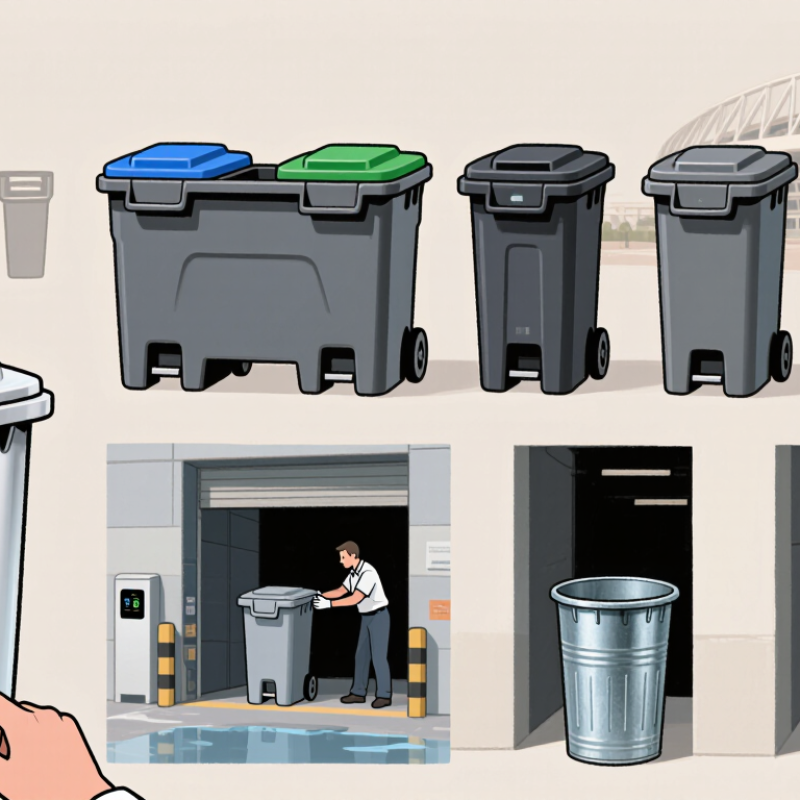
What Defines a Commercial Trash Can in 2026?
A commercial trash can in 2026 is more than a larger household bin. It must survive constant use, heavy loads, cleaning chemicals, and accidental impacts. In a busy food court, a loose lid or cracked wheel can disrupt service within minutes. Reliable construction matters more than impressive product descriptions.
Capacity should match the waste stream, not just the building size. A 60-liter container may suit an office corner, while a 120-liter model fits a crowded cafeteria. Clear labels, wide openings, and separate compartments can reduce sorting mistakes.
Smooth surfaces help staff wipe away spills. Rounded edges also make daily handling safer and easier. Small details count.
Modern units may include fill-level sensors, touch-free lids, or odor-control features. These tools can improve maintenance, but they are not automatically worth the extra cost. Batteries fail. Sensors need calibration. A simple pedal can sometimes outperform a complicated system. Global buyers should check material quality, replacement-part access, cleaning instructions, and local safety requirements before ordering. Specifications can look complete and still hide practical weaknesses. A commercial trash can should fit the workers who empty it, the waste it receives, and the environment where it operates.
Key Types of Commercial Trash Cans for Different Environments
Choosing the right commercial trash can depends on the environment, not only its capacity. In busy offices, slim rectangular bins fit beneath desks and beside printers. Open-top cans suit cafeterias because staff can discard waste quickly. They can look untidy, though. Swing-top models hide contents and odors in reception areas, hotels, and meeting rooms.
Pedal-operated cans work well in clinics, kitchens, and washrooms because users avoid touching the lid. Stainless steel is easy to clean, but it may show fingerprints. Rolling cans with strong wheels support warehouses, schools, and outdoor service areas.
For wet or windy locations, choose weather-resistant bodies, secure lids, and stable bases. Recycling stations need clear openings and separate compartments. Confusing labels reduce sorting accuracy. A larger bin is not always better; oversized units can encourage longer storage and unpleasant smells.
Tips: Check the collection route before ordering. Measure doorways, elevators, and storage corners. Ask cleaning staff which lid fails most often. That detail matters. Use removable liners, rounded inner edges, and rust-resistant hardware. Test the pedal, hinges, and wheels during inspection. Specifications may look convincing, but daily use reveals weaknesses. Leave room for hand cleaning around each unit. Also review local waste-handling requirements, since container placement and materials can vary by country.
How to Compare Capacity, Materials, and Waste-Sorting Features
2026 Best Commercial Trash Cans for Global Buyers?
How to Compare Capacity, Materials, and Waste-Sorting Features
Commercial buyers should compare capacity with real waste volume, foot traffic, and collection schedules. A small restroom may need a 20-gallon container, while a busy food court may require 60 gallons or more. My early mistake was choosing oversized cans for appearance. They occupied valuable floor space and encouraged long collection intervals. Measure the waste produced during your busiest hour, not an average day.
Material affects service life and cleaning effort. Stainless steel suits visible indoor areas and resists stains, while galvanized steel can perform well in demanding utility spaces. Heavy-duty plastic is lighter and often easier to move. Check wall thickness, rim strength, lid fit, and wheel quality. A weak lid becomes noisy quickly. Smooth interiors also reduce residue around seams. Specifications help, but hands-on inspection remains important.
Waste-sorting features should make the correct action obvious within seconds. Separate openings, clear pictograms, and consistent colors can reduce contamination. However, color meanings differ across markets, so labels should include simple words or images. Test the opening with common items, such as a drink cup, food tray, or flattened carton. If users hesitate, the design needs revision. A short pilot in one busy area can reveal problems that product sheets miss. Even experienced buyers should review local collection practices before placing a large order.
2026 Best Commercial Trash Cans for Global Buyers: Capacity, Materials, and Waste Sorting
Nominal capacities and practical 80% working capacities for common commercial waste-container configurations. Capacity is shown in litres; actual dimensions vary by supplier and local standards.
Buying guidance: HDPE is lightweight, impact-resistant, and suitable for indoor or outdoor use, while galvanized or stainless steel offers greater rigidity and fire resistance. Single-compartment cans simplify general waste collection; two- and three-compartment models support source separation for landfill waste, recyclables, and organics.
Safety, Hygiene, Accessibility, and Regulatory Considerations
2026 Best Commercial Trash Cans for Global Buyers?
For global buyers, a commercial trash can is more than a container. It affects hygiene, staff safety, and visitor confidence. Choose smooth, nonporous surfaces that tolerate frequent cleaning. Rounded edges reduce injury risks in busy corridors. Secure lids help control odors and prevent contact with waste. Hands-free operation is often preferable near food areas. Yet, sensor lids can fail when batteries weaken. Simple foot pedals may prove more dependable.
Accessibility needs careful checking. Opening force, reach height, clearance, and placement can affect independent use. A unit blocking a doorway or narrow aisle creates a practical hazard. Confirm dimensions against the destination’s accessibility guidance, not only a supplier’s sales sheet. Materials should also match local fire, sanitation, and waste-separation requirements. These rules vary by country and building type. Ask for test reports, cleaning instructions, and replacement-part information. Documentation builds trust.
Tips: Measure the installation area with doors fully open. Test the lid, pedal, and liner-changing process before ordering. Select color-coded units only when local recycling rules support them. Stainless steel can be durable, but its finish may show fingerprints. Plastic can be lighter, yet it may scratch sooner. Review lifecycle costs, including liners, batteries, servicing, and disposal. A perfect specification on paper may still frustrate cleaners during a busy shift.
