2026 Best Kraft Paper Tape Laminating Machine for Buyers
Choosing the 2026 best Kraft Paper Tape Laminating Machine requires more than comparing advertised speed. Buyers must examine paper quality, adhesive behavior, web tension, and daily production demands. A machine may promise 120 meters per minute, yet unstable tension can wrinkle a 60-micron kraft paper web. That small defect becomes expensive during long runs.
Packaging machinery specialist Dr. Susan M. Selke offers a useful principle: “Packaging performance depends on the whole system, not one attractive specification.” Her observation applies directly here. A reliable Kraft Paper Tape Laminating Machine should coordinate unwinding, coating, laminating, drying, slitting, and rewinding without creating hidden quality losses. Operators should inspect roller alignment, temperature control, emergency stopping, and cleaning access before approval. Ask for trial samples. Real production evidence matters more than polished brochures.
The right choice also depends on adhesive type and tape structure. Water-based adhesives may need longer drying zones. Hot-melt systems can require tighter temperature control. Paper rolls with uneven moisture may expose weaknesses quickly. Some buyers focus too heavily on maximum speed. That is understandable, but incomplete. Stable output is usually more valuable than impressive peak performance.
This guide compares important machine features, practical operating details, supplier support, and ownership costs. It also recognizes an uncomfortable truth: even excellent equipment can perform poorly with weak maintenance or poorly trained operators. Buyers should measure waste, changeover time, energy use, and finished-roll consistency. The best machine is not always the fastest. It is the one that repeatedly produces clean, strong, accurately laminated kraft paper tape.
Kraft Paper Tape Laminating Machines: Definition, Process, and 2026 Uses
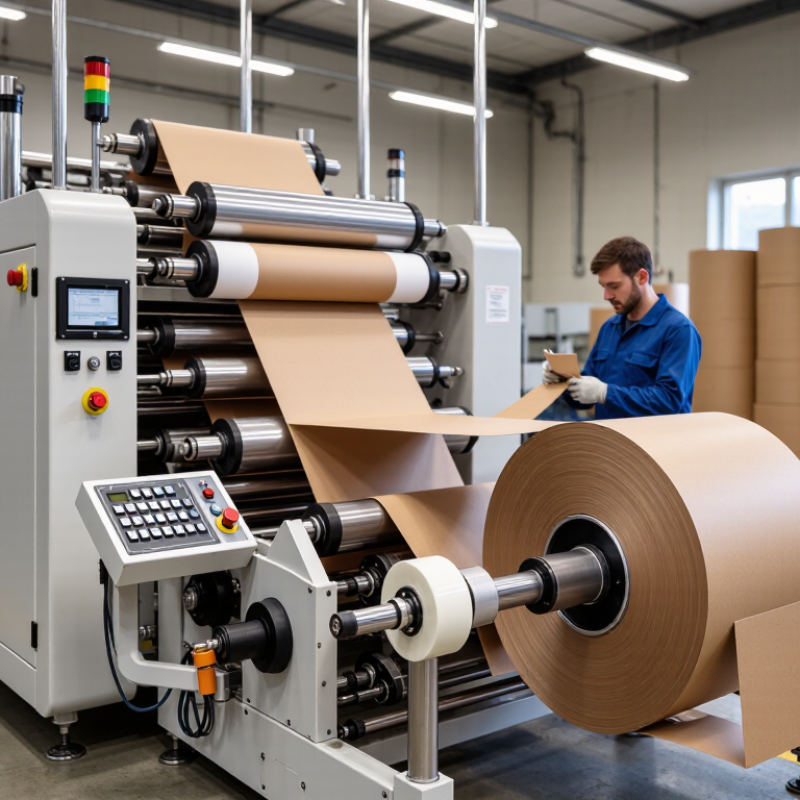
Kraft paper tape laminating machines bond kraft paper with adhesive films, tissue, fiberglass, or reinforced scrims. The process usually includes unwinding, coating, drying, laminating, slitting, and rewinding. A controlled nip roller removes air pockets and improves adhesion. In production, small changes in tension can create wrinkles, telescoping rolls, or uneven edges. These problems are easy to underestimate.
Smithers’ paper packaging outlook reports that the global paper packaging market is expected to approach USD 490 billion by 2028. This growth supports wider demand for paper-based tapes and converting equipment. Industry data from the Confederation of European Paper Industries also shows paper recycling rates above 80% in Europe. However, recyclability depends on adhesive chemistry and the amount of mixed material. Paper alone does not guarantee easy recycling.
In 2026, buyers may use laminating machines for carton sealing tapes, packaging splices, surface protection, and e-commerce shipping applications. A suitable machine should provide stable web tension, accurate temperature control, adjustable coating weight, and quick roll changes. Experienced operators should test kraft paper grammage, adhesive viscosity, and curing time before purchase. Higher speed is not always better. A fast line can waste more material when alignment control is weak. The real buying decision should compare output quality, energy use, maintenance access, and operator skill requirements. Perfect operation is unlikely. Practical reliability matters more.
Material Specifications: 40–120 GSM Kraft Paper and 10–25 GSM Adhesive
2026 Best Kraft Paper Tape Laminating Machine for Buyers
For kraft paper tape, the stated range is demanding: 40–120 GSM paper with 10–25 GSM adhesive. A suitable laminating machine must control web tension across thin and heavy substrates. ISO 536 defines paper grammage measurement, while TAPPI T 410 supports reliable basis-weight testing. Buyers should request test certificates, not rely only on machine brochures.
Smithers’ recent paper-packaging outlook identifies lightweighting and recyclable structures as continuing industry priorities. That trend makes accurate adhesive dosing more important. At 10 GSM, uneven coating can create dry edges and weak bonding. At 25 GSM, excess adhesive may cause blocking, curl, or slow rewinding.
Look for gravure, slot-die, or precision roll coating systems with closed-loop weight control. Drying temperature should remain stable, especially when kraft paper leaves the oven with reduced moisture. A small moisture change can distort the roll.
Tips: Test three paper weights before purchase. Measure dry adhesive GSM at the center and both edges. Inspect a rewound roll after 24 hours. I would also test low-speed startup, because many machines perform well only after reaching production speed. That result can be disappointing, but it reveals practical risk. Keep tension records for every trial. A clean data sheet is more useful than a confident sales promise.
Core Machine Metrics: 100–300 m/min Speed and ±1 mm Slitting Accuracy
2026 Best Kraft Paper Tape Laminating Machine for Buyers
For kraft paper tape production, machine speed must match real operating conditions. A rated range of 100–300 m/min sounds impressive, but actual output depends on paper weight, adhesive viscosity, web tension, and roll width. In my experience, stable running at 180 m/min can outperform short bursts at 300 m/min. That distinction matters. Buyers should request a production trial using their actual kraft paper and adhesive.
Slitting accuracy is equally important. A tolerance of ±1 mm helps maintain consistent tape widths and reduces edge waste. Operators should inspect finished rolls with calibrated measuring tools, not visual judgment alone. Automatic tension control can prevent wrinkles, telescoping, and uneven winding. Still, no control system removes every variable. Humidity changes can affect paper behavior. Small alignment errors may also appear after several hours.
A practical evaluation should include acceleration, continuous running, stopping, and roll changes. Check whether the machine holds speed without frequent manual correction. Review splice quality and adhesive coating uniformity under normal production pressure. Maintenance access deserves attention too. A difficult cleaning routine may reduce the advertised output. I would also leave room for uncertainty, because supplier data often reflects ideal materials and skilled operators. The best choice is the machine that delivers repeatable 100–300 m/min performance while keeping slitting within ±1 mm on your own production floor.
Buyer Comparison: Solventless, Hot-Melt, and Water-Based Laminating Systems
2026 Best Kraft Paper Tape Laminating Machine for Buyers
Choosing the right laminating system depends on tape structure, production speed, and available floor space. Solventless machines apply adhesive without evaporation, reducing emissions and drying equipment. They suit heat-sensitive kraft paper, but precise mixing and coating control are essential. Small ratio errors can create weak edges or uneven winding.
Hot-melt systems offer fast bonding and strong initial tack. They work well for high-speed production, although excess heat may wrinkle thin paper. Water-based systems provide stable coating performance and easy cleaning. However, they need drying energy and longer curing time. Moisture can also cause paper curl.
Tips: Test each system with your actual kraft paper, adhesive weight, and release liner. Check coating width, line speed, oven temperature, and finished-roll tension. A short trial often reveals defects that specifications hide.
In practical evaluations, solventless equipment usually needs the most disciplined setup. Hot-melt equipment may be easier to start, but temperature drift can affect consistency. Water-based machines can deliver clean results when drying capacity is generous. Buyers should inspect splice quality, web alignment, and waste levels during a full-shift test. Do not judge performance from one sample roll. That approach sounds efficient, but it can be misleading. A slightly slower machine may produce fewer rejects and better usable output. Operator training, maintenance access, and spare-part availability also deserve attention before purchase.
2026 Best Kraft Paper Tape Laminating Machine for Buyers
Buyer comparison of solventless, hot-melt, and water-based laminating systems
The chart uses representative midpoints from common industrial operating ranges rather than brand-specific machine data. Solids content indicates the adhesive material remaining after water evaporation; web speed and process temperature vary with kraft paper grade, coating weight, adhesive formulation, and drying capacity.
Safety and Quality Criteria: ISO 9001, CE Marking, and ASTM Testing
When buying a kraft paper tape laminating machine in 2026, safety evidence deserves close inspection. ISO 9001 shows that the supplier controls design, production, inspection, and corrective actions. It does not prove that every machine performs perfectly.
Ask for the machine’s CE documentation, risk assessment, and electrical safety records. CE marking indicates conformity with applicable European safety requirements. Check the guarded rollers, emergency stops, thermal controls, and access doors during a factory acceptance test. Small details matter. A loose cover can become a serious production risk.
ASTM testing ASTM testing helps evaluate finished tape and machine consistency. Request test data for adhesion, tensile strength, thickness, and delamination resistance. ASTM D3330 may support peel adhesion testing, while ASTM D3759 can help assess tape tensile strength. The selected methods must match your kraft paper, adhesive, and application. Generic reports can mislead buyers.
Run sample material before signing the order. Measure coating uniformity across the roll width. Inspect edges, wrinkles, curing, and rewind tension. Keep batch records and calibration certificates. ISO procedures are useful, but paperwork alone cannot replace operating evidence. I have seen technically impressive equipment produce unstable rolls after long running periods. That possibility deserves honest discussion. Ask how defects are handled, not only how they are prevented. Supplier responses often reveal more than certificates.
