INTERNATIONAL FLUID POWER, INC.

The Experts for Hydraulic Power Units, Components, and Custom Hydraulic Systems
Slider

7 Tips for Choosing the Right Conveyor Rollers

A conveyor can look simple until a roller starts dragging, a belt wanders, or a noisy bearing interrupts a shift. Choosing the right Conveyors Roller is therefore more than matching a diameter to a frame. Roller material, load rating, spacing, speed, and operating conditions all shape performance. A small mismatch can become visible quickly: cartons skew, product edges wear, and maintenance calls multiply.

Industry data helps explain why careful selection matters. MHI’s 2024 Annual Industry Report found that 55% of surveyed supply-chain professionals planned to increase investment in technology and innovation. The report does not measure roller failures, but it reflects a broader push toward more capable, dependable material-handling systems. CEMA’s conveyor engineering guidance likewise emphasizes selecting components for their actual application—not just their purchase price. That distinction matters on a damp packing line, in a dusty warehouse, or beneath a heavy pallet.

A useful selection principle, expressed here as a paraphrase rather than a direct quotation, comes from conveyor engineer and CEMA technical contributor Dr. M. A. Alspaugh: match conveyor components to operating conditions and system demands. The exact roller choice still deserves a closer look. This guide examines seven practical factors, from load and roller diameter to bearings, environment, and maintenance access. Some details are easy to overlook. That is often where the trouble begins.
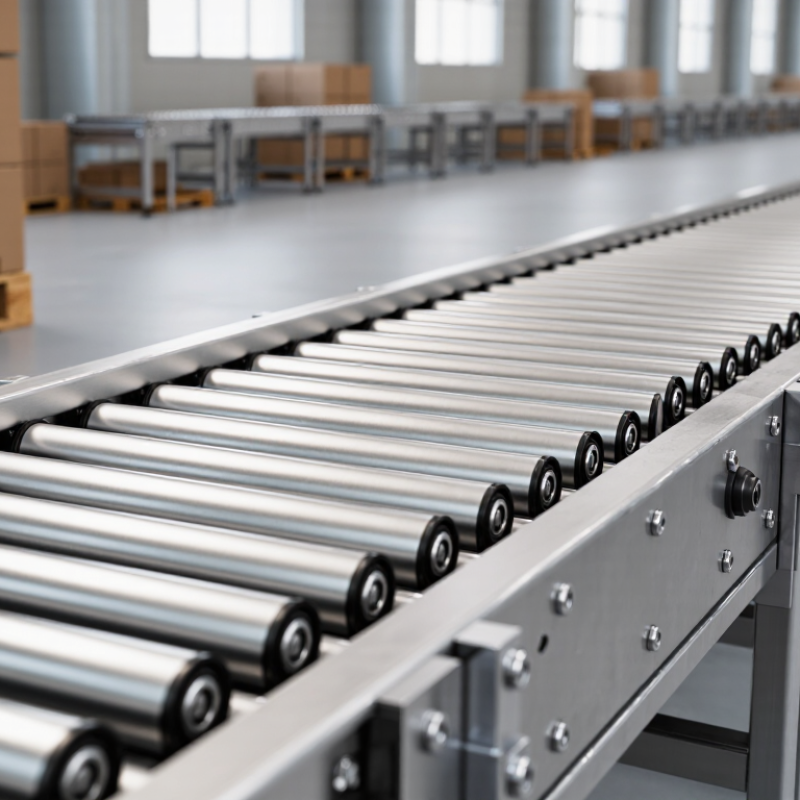
7 Tips for Choosing the Right Conveyor Rollers

Identify the Conveyor’s Operating Requirements

Before choosing conveyor rollers, define how the conveyor operates each shift. Record load weight, package dimensions, speed, duty cycle, and accumulation needs. A roller carrying light cartons differs greatly from one handling steel parts. Measure the heaviest realistic load, not the average. That detail matters. During field inspections, I have found that “normal” loads often hide sudden peaks. Ask whether products arrive warm, wet, dusty, or oily. These conditions can change material and bearing requirements.

The operating environment sets the practical specification. Note ambient temperature, washdown frequency, humidity, and chemical exposure. Choose roller diameter and spacing according to the smallest package and its support points. Poor spacing lets flexible cartons sag between rollers. This creates drag, noise, and unstable transfers. Check the conveyor frame, drive arrangement, and available shaft clearance before ordering. A technically strong roller can still fail when its axle does not fit.

Calculate required capacity with a safety margin, but avoid guessing. Consider starting loads, stopping loads, incline sections, and frequent reversals. If the line runs continuously, select components rated for the actual duty cycle. For intermittent use, over-specification may increase cost without improving performance. I sometimes see teams focus on roller coating first. That is backwards. Operating data should guide the surface choice. Keep a written record of measurements and assumptions. Recheck them after a trial run, because real cartons rarely behave like perfect test samples.

Choose the Roller Material and Surface Design

Choosing the Right Conveyor Rollers

Choose the Roller Material and Surface Design

Roller material should match the load, environment, and cleaning routine. Carbon steel handles heavy cartons and pallets well. Stainless steel suits washdown areas and humid production rooms. Polymer rollers reduce noise and protect delicate packages, but they may deform under concentrated loads. Check the rated load, operating temperature, and bearing capacity before ordering. Moisture changes everything.

Surface design controls movement and product contact. A smooth surface works for stable boxes and sealed containers. Rubber-coated rollers improve grip on slopes, yet soft coatings can wear under sharp edges.

Grooved rollers help guide cables or round products. A crowned surface can keep belt-driven loads centered. That choice matters. Avoid aggressive textures when products need gentle handling.

In practical testing, place the heaviest product on several rollers, not one. Watch for slipping, vibration, and uneven rotation. Listen for bearing noise after continuous operation. I once assumed a rough coating would improve control, but it collected dust and reduced consistency. The better solution was a moderate finish with regular cleaning access. Measure twice. Also confirm shaft size, roller spacing, and surface hardness with a qualified conveyor technician. Small mismatches can create premature wear, damaged packaging, or unsafe stoppages.

Match Roller Size to Load and Conveyor Dimensions

Choosing conveyor rollers starts with the load, not the catalogue page. A roller that looks suitable may bend under concentrated weight. Measure the product’s length, width, height, and actual operating weight. Include temporary impacts during loading.

Roller diameter should support the load without excessive deflection. Heavier products usually need larger diameters, stronger axles, or closer roller spacing. As a practical rule, keep at least three rollers under the smallest product during movement. For uneven items, four or more contact points may provide steadier support. I have seen cartons wobble when spacing matched the frame but not the product base.

Check the conveyor’s inside width before ordering. The roller face should extend slightly beyond the product, while the total axle length must fit the frame accurately. Too little clearance can cause binding. Too much clearance can create side movement and noise. Measure the frame at several points, because welded structures are not always perfectly square. This detail is easy to miss.

Load distribution also affects surface choice. Smooth packages may need low-friction rollers, while rough containers may require better grip. Confirm speed, incline, temperature, and cleaning conditions before final selection. These factors can change performance. A sizing table helps, but it should not replace a trial under real load. My own first estimates have occasionally been optimistic. Rechecking measurements is cheaper than replacing a crowded roller section.

7 Tips for Choosing the Right Conveyor Rollers: Match Roller Size to Load and Conveyor Dimensions

These examples use a simple dimensional guide: allow 25 mm of clearance on each side of the package, making roller face width 50 mm greater than package width. This is a starting point, not a universal specification. Check the load rating of each roller and confirm that the load is supported by enough rollers; capacity depends on roller construction, spacing, and load distribution.

Evaluate Bearing Type, Speed, and Maintenance Needs

Choosing the right conveyor rollers begins with the bearing, not the tube diameter. The bearing carries rotating loads and controls how smoothly each roller moves. Sealed bearings suit dusty areas because their covers limit contamination. Shielded bearings can reduce friction, but they need cleaner surroundings. For heavy loads, confirm the bearing’s rated capacity and expected service life. A small mismatch can create vibration, heat, and early failure.

Speed changes the bearing decision. Higher conveyor speeds increase rotational heat and demand accurate balancing. Check the roller diameter, shaft size, and revolutions per minute together. Do not judge speed by motor output alone. A roller turning too quickly may produce noise before visible damage appears. I have seen operators reduce speed to solve noise, while the real problem was poor alignment.

Maintenance needs should be practical for the site. Choose accessible rollers when inspections are frequent or downtime is costly. Sealed units may reduce lubrication work, but they are not maintenance-free. Inspect for unusual sound, rough rotation, material buildup, and loose shafts. Record temperature readings during normal production. Patterns often reveal trouble earlier than a sudden stoppage. Maintenance plans also need realistic intervals; overly long schedules look efficient, yet they can hide wear. I would review the first inspection results and adjust the schedule, because every conveyor environment behaves differently.

Compare Safety, Cost, and Long-Term Performance

Choosing conveyor rollers is not a simple price comparison. Safety should lead the decision. Check the rated load, shaft strength, pinch-point protection, and emergency access. ISO 12100 recommends identifying hazards before selecting equipment. CEMA’s Belt Conveyors for Bulk Materials also emphasizes correct roller spacing and loading conditions. A roller that works under light cartons may fail under uneven pallets. Test it with real loads.

Cost needs a wider view. Compare purchase price, installation labor, energy demand, cleaning time, spare parts, and replacement intervals. The U.S. Department of Energy’s Motor Systems Market Assessment identifies optimized systems as a major energy-saving opportunity. Smooth-running rollers reduce resistance, but only when alignment and bearing seals are suitable. My early purchasing mistake was choosing cheaper rollers that developed noisy bearings within months. The downtime cost more than the original saving.

Long-term performance depends on seven practical checks: load capacity, bearing quality, surface finish, operating speed, environment, maintenance access, and supplier documentation. In dusty areas, sealed bearings matter; in washdown zones, corrosion resistance matters more. Ask for test data, tolerances, and expected service life. Inspect one roller after several weeks, not only during installation. That small review may expose vibration, uneven wear, or poor tracking before the conveyor becomes a safety problem. Some estimates still look too optimistic. Real operating conditions deserve more weight than a polished spreadsheet.

7 Tips for Choosing the Right Conveyor Rollers - Compare Safety, Cost, and Long-Term Performance

Tip What to Check Safety Considerations Relative Upfront Cost Long-Term Performance
1. Match the roller to the load Determine the weight, dimensions, and underside of each item, plus the number of rollers supporting it at once. Check the roller and conveyor ratings for the actual operating conditions. Underrated rollers can deform or fail, potentially causing loads to shift or fall. Keep loads within the conveyor’s rated capacity. Low to high Correct sizing reduces overload-related wear and helps maintain smooth movement. Capacity depends on the full assembly, not just the roller tube.
2. Select a suitable roller diameter and spacing Compare roller diameter and spacing with the size, weight, and base of the conveyed items. Small or uneven items may need closer support than large, rigid loads. Inadequate support can let items tip, sag, or become trapped between rollers. Assess transfer points and gaps as well as the straight conveyor sections. Low to medium Appropriate support helps prevent product damage and uneven loading. The required spacing varies with the load and conveyor design.
3. Choose materials for the environment Consider moisture, washdown, chemicals, temperature, and contamination. Steel, corrosion-resistant metals, and polymer rollers suit different conditions. Corrosion or material breakdown can create sharp edges or cause components to fail. Select materials compatible with the workplace and cleaning process. Low to high Corrosion-resistant or purpose-selected materials can reduce replacement needs in demanding environments, though they may cost more initially.
4. Check bearings and seals Review bearing type, load and speed ratings, sealing, lubrication requirements, and ease of replacement. Match these features to dust, moisture, and washdown exposure. Worn or damaged bearings can cause noise, drag, heat, or unexpected stoppages. Follow inspection and maintenance procedures. Medium Suitable bearings and seals can help limit contamination and maintenance, but service life depends on load, speed, environment, and upkeep.
5. Match the roller to the conveyor type Confirm whether the system is gravity or powered, and check drive method, operating speed, roller finish, and compatibility with adjacent components. Powered rollers and moving drive components can create entanglement or pinch hazards. Guard hazardous areas and follow applicable workplace safety requirements. Medium to high A compatible roller reduces unnecessary friction, slippage, and premature wear. Powered systems require components suited to their drive arrangement.
6. Evaluate noise, friction, and product contact Consider how the roller surface interacts with the product, whether quiet operation matters, and whether the load needs a smooth or higher-grip contact surface. Excessive noise can make communication harder and may indicate wear or misalignment. Assess workplace noise and investigate changes in sound. Low to medium Appropriate surface and bearing choices can support consistent movement and reduce avoidable noise or product scuffing.
7. Compare total cost, not purchase price alone Include installation, inspection, cleaning, replacement parts, expected downtime, and the availability of compatible replacement rollers. Plan maintenance and safe access before work begins. Isolate powered equipment as required during servicing. Varies by specification A lower purchase price may not mean a lower lifetime cost. Compare expected maintenance and downtime under the same operating conditions.

Cost guide: Relative cost ratings are general comparisons, not quotations. Actual prices and service life depend on roller dimensions, materials, quantity, load, operating conditions, and maintenance.