10 Best ABS Enclosures for Global Buyers?
Choosing the right Abs Enclosure requires more than comparing prices and catalog photographs. Global buyers must assess material quality, ingress protection, heat resistance, mounting options, and supply consistency. A box that looks sturdy on a screen may become brittle under sunlight or distort near a warm power supply.
Industry data supports this careful approach. Grand View Research identifies rising demand for electrical enclosures as connected devices, industrial automation, and distributed power systems expand. MarketsandMarkets also reports continued growth in enclosure applications across manufacturing, energy, telecommunications, and transportation. These trends matter because enclosure performance directly affects equipment protection, maintenance intervals, and installation safety.
This guide reviews 10 Best ABS Enclosures for Global Buyers? It focuses on practical purchasing evidence rather than attractive specifications alone. Each option should be examined against standards such as IEC 60529 for IP ratings, while relevant UL requirements may influence North American projects. Certification claims still need verification. Not every supplier explains testing conditions clearly.
Small details matter. Check wall thickness, hinge strength, cable-gland space, screw durability, and the position of internal mounting bosses. A crowded enclosure can complicate wiring and increase service time. Color stability also deserves attention in outdoor installations. ABS is cost-effective and easy to process, but it is not automatically ideal for severe ultraviolet exposure or extreme temperatures.
The rankings are therefore comparative, not absolute. A compact enclosure may suit a sensor, yet fail a control-panel application. Some product information may remain incomplete across international marketplaces. Buyers should request drawings, material declarations, test reports, and sample units before approving large orders. That extra step is slower. It is usually cheaper than replacing a failed enclosure in the field.
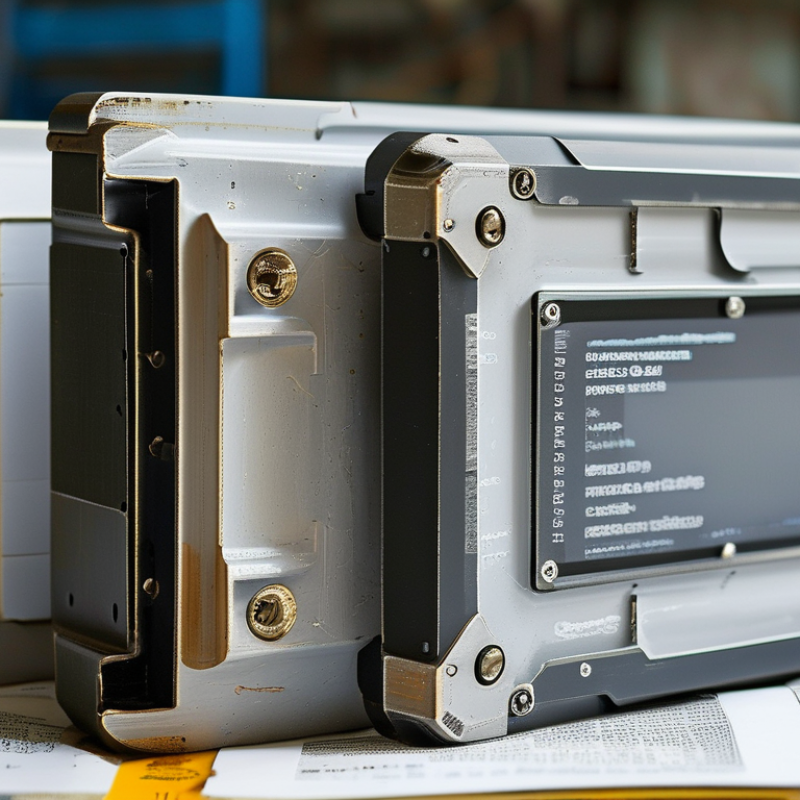
What Is an ABS Enclosure and Why Does It Matter for Global Buyers?
An ABS enclosure is a protective housing molded from acrylonitrile butadiene styrene. It shields circuit boards, sensors, and power components from impact, dust, and accidental contact. That matters.
ABS is popular because it is lightweight, machinable, and relatively economical. Grand View Research estimated the global ABS market at about USD 26.2 billion in 2023, with growth expected through 2030. This expanding material supply can support international purchasing, but price alone should not guide selection.
USD 26.2 billion in 2023 Growth expected through 2030
For global buyers, enclosure performance depends on more than plastic grade. Check wall thickness, mounting bosses, ventilation, cable glands, and flame-retardant ratings. UL 94 classifications help evaluate plastic flammability, while IEC 60529 defines IP protection levels against solids and water. An IP65 enclosure, for example, is not automatically suitable for outdoor temperature cycling or chemical exposure.
A practical sourcing review should request dimensional drawings, resin specifications, test reports, and production samples. Ask whether the color, screw torque, and gasket compression remain consistent between batches. Small variations can cause poor sealing.
No enclosure is perfect. ABS can soften under sustained heat and may degrade under strong ultraviolet exposure. I would test the assembled housing in its real climate, not only in a laboratory. A neat datasheet can still miss installation problems. Global buyers should also verify packaging strength, replacement availability, and regional compliance documents before approving volume production.
Which Technical Features Define a High-Quality ABS Enclosure?
A high-quality ABS enclosure begins with material consistency. Good ABS should resist impact, moderate heat, and everyday chemical exposure. Ask for the resin grade and test data, not vague claims. Flame ratings such as UL94 V-0 may matter for some applications. They must be verified for the finished enclosure.
Fit matters in real installations. A lid should close evenly, without stressing the screw posts. Brass inserts should remain firmly seated after repeated opening. I once rejected a box because its hinge looked strong, but the thin mounting wall cracked during testing. Small details matter. Check wall thickness, corner radii, and dimensional tolerances before ordering large quantities.
Protection ratings also need practical testing. A continuous gasket can improve resistance to dust and water, but poor compression ruins that advantage. Look for a documented IP rating and inspect cable entry points. UV stabilization helps outdoor housings, while stainless or plated hardware reduces corrosion concerns. For sensitive electronics, conductive coatings or shielding accessories may reduce electromagnetic interference. Heat management deserves attention too. A sealed box can trap heat quickly. Vent membranes, thermal pads, or careful component spacing may be necessary. Do not rely on appearance alone. A polished surface can hide weak posts, uneven seals, or brittle plastic. Test samples through impact, temperature cycling, assembly, and cable pulling. Some specifications still look incomplete after testing. That is useful information.
10 Best ABS Enclosures for Global Buyers: Technical Quality Benchmarks
High-quality ABS enclosures are commonly evaluated by measurable specifications such as wall thickness, ingress protection, impact resistance, and operating-temperature range. The representative values below reflect widely used industrial procurement targets rather than brand-specific products.
Reference interpretation: 2.0 mm is a common minimum wall-thickness target for rigid molded housings; IP65 indicates protection against dust and water jets; IK08 represents protection against a 5-joule impact; and an operating range of −20°C to +65°C covers an 85°C temperature span. Actual requirements should be validated against the enclosure material grade, gasket design, tooling, and applicable IEC or UL testing.
How to Compare the 10 Best ABS Enclosures for Different Applications?
How to Compare the 10 Best ABS Enclosures for Different Applications?
Comparing ten ABS enclosures begins with the operating environment, not the lowest price. Check dimensions, wall thickness, and usable internal space against the circuit board. A box may look large but leave little room for terminals or cable bends. Measure twice. Then review the stated protection rating. Sealed gaskets help resist dust and water, while ventilation slots improve heat release but reduce protection. The trade-off matters.
Material quality also deserves close inspection. Look for flame-retardant ABS grades, stable molding, and smooth edges around cable openings. For outdoor equipment, ask about ultraviolet resistance because ordinary ABS can become brittle under prolonged sunlight. I have seen attractive housings crack near screw posts after repeated assembly. Small details matter. Brass inserts can improve service life, but poorly installed inserts may loosen during maintenance.
Application testing should guide the final choice. Place the enclosure near its intended motor, sensor, or control panel, then check heat, vibration, and access space. Confirm whether the lid supports repeated opening without damaging the gasket. For sensitive electronics, remember that standard ABS does not provide electromagnetic shielding unless a conductive treatment is added. Certification documents should match the actual enclosure material and configuration. They are not interchangeable. A comparison table is useful, but it can hide practical weaknesses. One option may offer excellent sealing yet lack enough mounting points. Another may fit the board perfectly but require custom drilling. Those compromises should be recorded before purchase.
How Can Global Buyers Select Suppliers, Costs, and Shipping Options?
Selecting among the 10 best ABS enclosures requires more than comparing online prices.
Global buyers should examine supplier experience, production equipment, and quality controls. Ask for material specifications, wall thickness, dimensional tolerances, and sample photos. A reliable supplier can explain molding limits clearly. Ask for evidence. Request a physical sample before approving a large order. Samples matter.
Cost calculations should include tooling, unit pricing, packaging, inspection, and payment fees. A low quotation may exclude mold maintenance or custom drilling. Confirm the minimum order quantity and replacement policy in writing. For repeated projects, negotiate based on forecasted volume, not promises. I have seen buyers focus on unit price and overlook rejected parts. That approach becomes expensive quickly.
Shipping needs equal attention. Compare air freight, sea freight, and consolidated cargo using the packed carton size and weight. Freight changes everything. Confirm delivery terms, export documents, carton strength, and estimated transit time. Ask whether the supplier can provide protective foam for covers and hinges. A small enclosure may arrive damaged if cartons move loosely during handling. Buyers should also check destination import requirements with a qualified local broker. Supplier answers can be incomplete, and that uncertainty deserves a cost allowance.
