International Fluid Power Inc.
International Fluid Power - Innovative Partners For Global Sourcing Of Fluid Power Products. Your Complete Hydraulic Source in SE Minnesota.
What Are the Best Oil Drilling Rigs in 2026? The answer depends on where a well sits, what it must reach, and how reliably a rig can work. A compact land rig may suit a remote shale basin, while a jack-up can serve fixed offshore locations in suitable water depths. Deeper, harsher environments may call for a semi-submersible or drillship. There is no universal winner.
This guide compares rig types and leading selection factors for Oil Drilling in 2026. It looks at drilling depth, hoisting capacity, mobility, automation, power use, safety systems, and maintenance needs. These details matter in practice: a rig’s deck layout, spare-parts access, or ability to handle changing weather can affect daily operations. Small details count.
A credible comparison also needs more than impressive specifications. Equipment performance depends on the well plan, crew experience, operating conditions, and the quality of maintenance records. Buyers should check current manufacturer data and independent operating evidence, rather than relying on a headline capacity alone. Even then, comparisons have limits. Public information may not reveal a rig’s full uptime history or lifecycle costs. This overview offers a practical framework for weighing those trade-offs, while recognizing that the “best” choice can change from one project to the next.
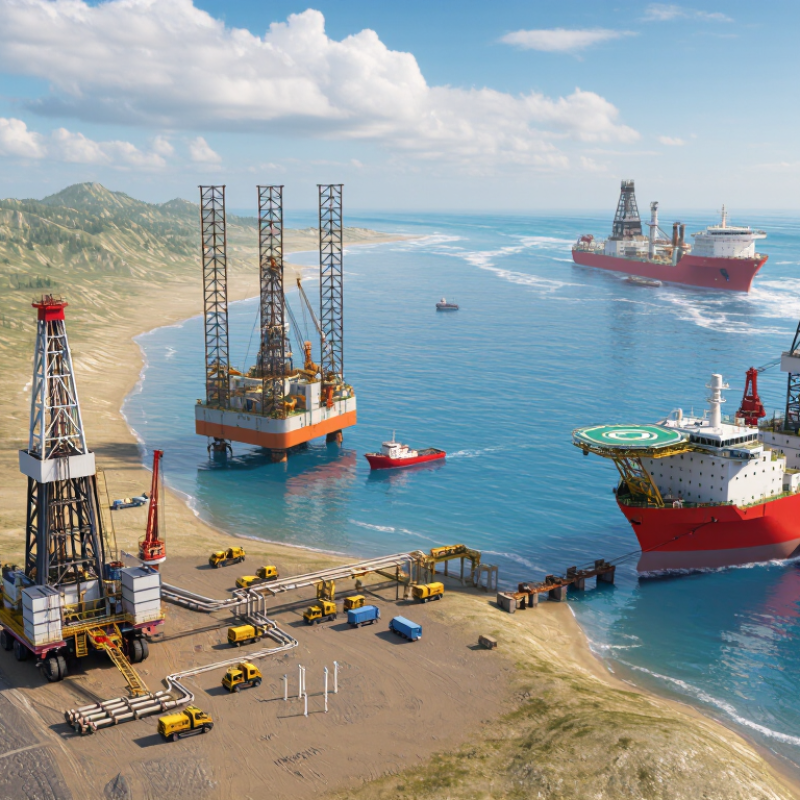
What counts as the best oil drilling rig in 2026 depends on the well, water depth, and distance from shore. A useful starting point is classification by design and location. Land rigs operate onshore, where roads, ground strength, and available space shape the setup. Some are compact and truck-mounted; others use larger structures for deeper or more demanding wells. Moving a rig between remote sites can be a major part of the job.
Offshore rigs are designed for work at sea, but they are not all built the same way. Jack-up rigs stand on extendable legs that rest on the seabed, making them suited to many shallow-water projects. Semisubmersible rigs float on submerged pontoons and are anchored or dynamically positioned in deeper water. Drillships use a ship-shaped hull and can travel between locations, an advantage where mobility matters. Conditions vary.
Location alone does not determine the right choice. Operators also consider wind, waves, seabed conditions, well depth, supply access, and how quickly a rig can be mobilized. A rig suitable for calm, shallow waters may be a poor fit for rougher seas. No category guarantees performance. These labels simplify real decisions; actual capabilities differ by rig configuration, maintenance, and operating conditions. A careful comparison should match the design to the site rather than treat “best” as one universal ranking.
Rig choice depends on water depth, location, and well requirements. This chart compares representative maximum water-depth capabilities for common offshore rig designs.
How to read it: Jack-up rigs are typically used in shallower offshore waters, while semi-submersibles and drillships can serve deepwater locations. These figures are representative capability ceilings, not universal limits; actual operating ranges vary by rig and configuration.
A strong drilling rig in 2026 is not simply the newest or most automated. It is the rig that fits the well, location, and crew. Operators should compare drilling depth, expected rock conditions, load capacity, and how easily the rig can move between sites. A compact unit may suit a remote pad with limited road access, while a larger rig may offer useful capacity for deeper wells. The right choice depends on the job.
Reliability shows up in ordinary details: clear maintenance access, readily available replacement parts, and controls that crews can use confidently. Look for monitoring systems that flag unusual vibration, pressure changes, or rising temperatures before small faults become expensive delays. Safety features matter, too, but they need practical training and consistent use. Downtime is costly. No checklist captures every site condition, and that is worth remembering when comparing equipment.
Tips: Ask for maintenance records and test how quickly key components can be inspected. Review fuel use and emissions alongside performance, rather than judging either in isolation. Talk with the crew who will operate the rig; their experience can reveal awkward controls or service issues that a specification sheet misses.
In 2026, the best land rig depends on the well plan, ground conditions, and available transport. A conventional land rig suits deeper wells and longer campaigns where heavy equipment can remain on site. Its larger mast, mud system, and crew support steady operations, but setup can take time. Good access matters.
Truck-mounted rigs fit shallower wells and locations with firm roads. Crews can move them between sites with less dismantling, though load limits may restrict drilling depth and equipment capacity. For remote terrain, modular or heli-portable rigs break into smaller sections. They can reach isolated pads, but every load adds planning, cost, and weather exposure.
Walking rigs work well on multi-well pads. Instead of fully demobilizing, the rig moves short distances between wellheads, reducing repeated setup work. They need a prepared, stable pad and enough clearance around equipment. Not every site qualifies. Electric-drive rigs may suit operations seeking precise control and fewer local engine emissions, especially where reliable power is available. Power supply and cable routing still need careful review. A practical choice compares measured transport access, soil bearing capacity, target depth, and the time needed to drill each well. Field estimates can miss small constraints, such as a narrow bridge or soft ground after rain.
There is no single best land rig for every well. The right choice depends on well design, required hoisting capacity, site access, drilling program, power availability, and the cost of moving and operating the rig. The categories below describe common rig configurations; some features, such as walking systems, can be combined with different drive systems.
| Land Rig Type | Best-Fit Applications | Key Strengths | Main Considerations | Selection Checks |
|---|---|---|---|---|
| AC electric-drive rig | Modern drilling programs that need precise speed and torque control, including directional and horizontal wells. | Variable-frequency drives allow fine control of major equipment; electric systems can support coordinated control and efficient handling of changing loads. | Requires suitable power-generation and electrical systems, trained personnel, and maintenance support. | Verify drawworks and top-drive ratings, electrical capacity, redundancy, and compatibility with the planned drilling equipment. |
| SCR electric-drive rig | Established land operations where a DC-powered rig is available and its capacity matches the well program. | Provides electrically driven equipment and a proven configuration that may fit existing field infrastructure and operating practices. | Silicon-controlled rectifier systems convert AC generator output to DC; equipment condition, component availability, and control capability vary by rig. | Assess system condition, spares availability, operating limits, and whether the control performance suits the well design. |
| Mechanical-drive rig | Conventional drilling in locations where a mechanically driven rig is available and the program does not require newer electric-drive features. | Uses mechanical power transmission and may be practical where crews, maintenance skills, and parts support are already established. | Mechanical systems can involve more complex power transmission and may offer less precise control than modern variable-speed electric systems. | Check drivetrain condition, maintenance history, available operating speeds, and the suitability of the rig for the planned loads. |
| Walking or skidding rig | Multiwell pads where the rig must move between nearby well slots without a full teardown and conventional transport between every location. | Can reduce rig-up and rig-down work between wells and limit the need for heavy transport during moves on a prepared pad. | Needs a suitable, engineered pad and a movement system designed for the rig’s weight, layout, and site conditions. It is a mobility feature, not a separate drive type. | Confirm pad design, slot spacing, route clearance, movement method, and whether the expected number of wells justifies the feature. |
| Mobile or compact land rig | Remote or space-constrained sites, shorter campaigns, and locations where road access, transport limits, or a small footprint are important. | Modular or compact layouts can simplify transport and reduce the space needed for rig components, depending on the design. | A smaller footprint does not by itself establish that a rig has adequate hoisting, circulation, or pressure-control capacity for a particular well. | Compare transport dimensions and weights with access limits; verify load ratings and compatibility with the drilling and well-control program. |
| Slim-hole rig configuration | Wells designed with smaller-than-conventional hole and tubular sizes, where the operator’s casing and completion plan supports a slim-hole approach. | Smaller hole sizes can reduce the volume of rock drilled and may lower some material and fluid requirements, depending on the well design. | Requires compatible drill pipe, bits, downhole tools, casing, and completion equipment; it is not a suitable substitute for a conventional design in every well. | Confirm the complete well architecture and tool availability before comparing expected cost or performance with a conventional well. |
| High-capacity deep-drilling rig | Deep or otherwise demanding wells whose planned loads, casing program, and drilling conditions require higher-capacity equipment. | Can be specified with higher-rated hoisting, rotary, circulation, and pressure-control equipment to meet demanding well requirements. | Higher capacity may bring greater mobilization, power, footprint, and operating requirements. “Deep-drilling” alone does not define a standardized capacity class. | Match rated hook load, drawworks, mast, mud pumps, pressure-control equipment, and total system limits to the well-specific engineering basis. |
Practical rule: Compare rigs using documented equipment ratings and the planned well loads—not rig labels alone. Confirm that the complete rig package, well-control equipment, site layout, and operating procedures are appropriate for the specific drilling program.
Choosing an offshore rig in 2026 starts with water depth, but depth alone does not decide capability. A jackup raises its hull on legs set on the seabed, making it practical for many shallow-water projects. Setup can be direct. Its operating range still depends on leg length, seabed conditions, and wave exposure. Some units work in several hundred feet of water, but specifications vary.
Semisubmersibles float on submerged pontoons and use mooring lines or dynamic positioning to hold location. Their stable hulls suit deeper water and rougher conditions. Not always. Drillships can reach very deep sites and relocate quickly, while thrusters and motion-compensated systems help maintain position. They are more exposed to wave motion.
Compare each rig’s water-depth rating with riser length, blowout-preventer capacity, heave compensation, and station-keeping limits. Those details matter. A maximum depth rating does not guarantee efficient work at every site; weather, seabed conditions, and maintenance can change the choice. That distinction is easy to miss.
The best oil drilling rig in 2026 is the one that fits the well, location, and operating plan—not necessarily the newest or largest. Start with water depth, target depth, expected formation pressure, and the drilling method. Offshore, a jack-up may suit suitable shallow-water sites, while a semisubmersible or drillship may be considered for deeper water and different sea conditions. On land, compare terrain, access roads, rig-up time, and the space needed for support equipment. Small details count. A rig that cannot reach the site efficiently can add costly delays before drilling begins.
Tips: Check hook-load capacity, pump performance, power demand, and compatibility with the planned casing program. Ask how the rig handles expected weather and what maintenance support is available nearby. Confirm that the crew has experience with similar wells. A specification sheet is useful, but it does not show every operational constraint.
Before selecting equipment, model the full project schedule and logistics. Include transport, fuel, water, waste handling, spare parts, and crew changes. A common planning mistake is comparing rigs by drilling capacity alone. That can overlook limited storage or difficult access. Be candid about uncertainty: geological forecasts and weather windows can change. Leave practical room in the plan for adjustments, rather than assuming every estimate will hold.
This is an example of a widget area that you can place text to describe a product or service. You can also use other WordPress widgets such as recent posts, recent comments, a tag cloud or more.
© 2025 International Fluid Power, Inc. All Right Reserved.