INTERNATIONAL FLUID POWER, INC.

The Experts for Hydraulic Power Units, Components, and Custom Hydraulic Systems
Slider

China Best Galvanized Corrugated Steel Suppliers?

Finding the right China-based supplier for Galvanized Corrugated Steel requires more than comparing prices. Buyers should check product specifications, production capacity, quality controls, and export experience. Sheet thickness, coating mass, corrugation profile, and base-metal grade can all affect performance. A mismatch may show up later as poor fit, premature corrosion, or extra installation work.

Request technical data sheets and recent inspection records before making a decision. Confirm whether quoted dimensions describe the steel before or after coating, and ask how tolerances are measured. Clear answers are a useful sign. So are consistent samples. Still, a polished catalog is not proof of dependable production; verify claims where practical, and compare documents with the material delivered. Small details count.

This guide introduces supplier-selection criteria, common product variations, and questions worth asking during a quotation review. It also considers lead times, packaging, communication, and after-sales support, since these shape the buying experience as much as the listed price. No single supplier is best for every project. A roofing order for a coastal site may need different coating requirements from a temporary warehouse build. That distinction is easy to overlook. Use the comparisons that follow as a starting point, then confirm project-specific requirements with a qualified engineer or procurement professional.
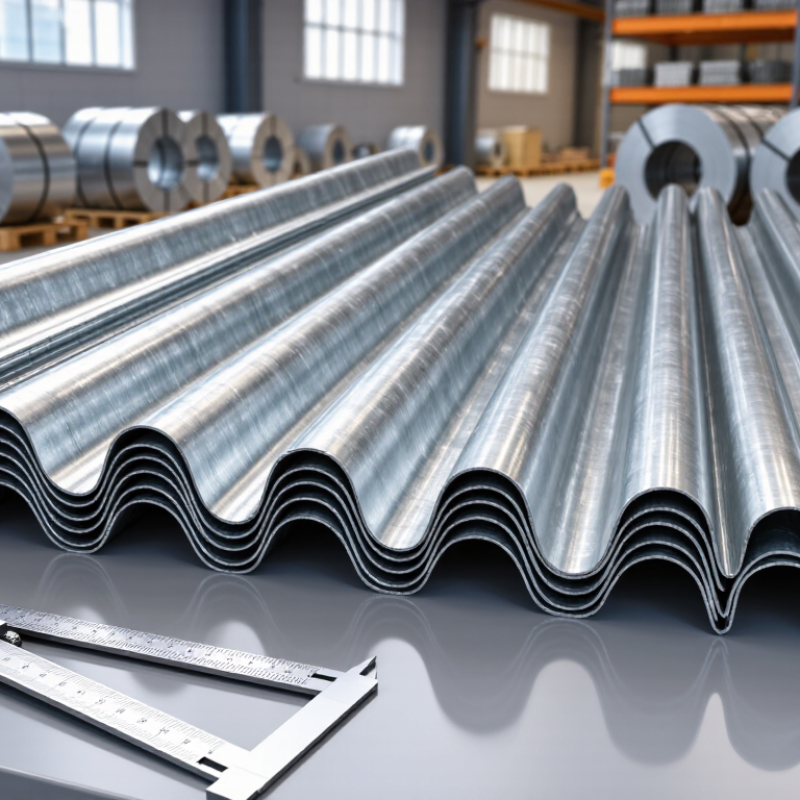
China Best Galvanized Corrugated Steel Suppliers?

What Is Galvanized Corrugated Steel and Where Is It Used?

Galvanized corrugated steel is sheet steel coated with zinc, then shaped into repeating ridges and grooves. The zinc layer slows corrosion, while the corrugations add stiffness without making the sheet solid or heavy. That combination makes it practical for large, exposed surfaces. It is not rust-proof, though. Cut edges, scratches, and standing water can still become weak points.

Common uses include roofs and wall cladding on warehouses, workshops, farm buildings, and storage sheds. It also appears in temporary structures and some drainage or fencing applications, depending on the product specification. The World Steel Association reports that construction accounts for about 50% of global steel demand. This helps explain why roofing and building materials are major steel applications, though it does not measure corrugated sheet use alone. A detail worth checking: coastal air and damp interiors can shorten service life if the coating or maintenance plan is unsuitable.

Tip: Compare zinc-coating mass, sheet thickness, and the stated corrosion environment—not just the price per sheet. Check how edges and fasteners will be protected. Even a good sheet can fail early when water collects beneath overlapping panels.

China Best Galvanized Corrugated Steel Suppliers? - What Is Galvanized Corrugated Steel and Where Is It Used?

Galvanized corrugated steel is zinc-coated steel formed into ridges and valleys for added stiffness. It is commonly used for roofing, wall cladding, fencing, agricultural buildings, and drainage products.

The chart compares ASTM A653 coating designations by nominal zinc coating mass across both sheet surfaces. Higher coating mass generally provides more zinc for corrosion protection; the appropriate specification depends on the environment and project requirements.

How Is Galvanized Corrugated Steel Made and Graded?

Galvanized corrugated steel begins as flat steel coil. The coil is cleaned, often pickled, then passed through a molten zinc bath. Zinc bonds to the surface and forms a protective coating as the strip cools. That layer matters. The coated sheet is usually roll-formed into repeating ridges and valleys, which add stiffness without making the panel solid or heavy. Roll pressure and tooling condition affect the profile, so small waves or edge differences deserve attention during inspection.

Grading involves more than choosing a sheet thickness. Buyers should check the base steel grade, coating designation or zinc mass, mechanical properties, and finished dimensions. Exact grade names and test methods vary by applicable standard, so the supplier’s test documents should identify what was measured. A micrometer can check thickness at several points; coating tests and visual checks can reveal thin spots, bare edges, or uneven coverage. Not every coil behaves alike. I would not assume a heavier-looking coating guarantees better service: forming quality, handling, installation, and exposure all matter. A practical specification states the required grade, coating level, profile, and tolerances before production begins. That detail prevents avoidable surprises.

Which Standards Define Quality for Chinese Suppliers?

For galvanized corrugated steel, quality starts with the standard named in the purchase specification. China’s GB/T 2518 covers continuously hot-dip galvanized steel sheet and strip, often used as the base material for corrugated sheets. ASTM A653/A653M and EN 10346 are other common references. They are not interchangeable in every detail, so confirm the required edition and grade with the supplier.

Ask for the coating mass on both sides, base-metal thickness, mechanical properties, and dimensional tolerances. Check that thickness means base steel thickness, not total thickness including the zinc coating. Request a mill test certificate tied to the coil number, then compare it with the order and shipment records. For a large order, consider independent sampling. A certificate helps, but it cannot show every sheet’s condition. Scratches, uneven corrugations, or damaged edges may still appear after handling. One detail is easy to miss: agree on inspection methods before production begins.

Tips: Measure sample sheets with suitable instruments, inspect several bundles, and photograph any defects before installation. Standards provide a useful baseline, not a substitute for clear specifications and careful checks.

How Can Buyers Evaluate Galvanized Steel Suppliers in China?

China produced 1,019.1 million tonnes of crude steel in 2023. That was about 54% of global output, according to the World Steel Association’s World Steel in Figures 2024. Scale is not quality. Buyers should assess each supplier’s actual corrugated-sheet production, testing, and batch controls.

Ask for the applicable product standard and mill test certificates before comparing prices. Check base-metal thickness separately from zinc coating mass, and confirm yield strength, sheet width, corrugation profile, and dimensional tolerances. Small details matter. Request recent test results tied to a production batch, not an unrelated sample. A certificate can look complete yet leave key measurements unclear. That deserves a follow-up.

For a practical check, compare a pre-shipment sample with the approved drawing, then arrange independent inspection when order value or risk justifies it. Ask how coils are identified, protected from moisture, and traced through forming and packing. The International Energy Agency’s Iron and Steel Technology Roadmap estimates that steelmaking accounts for roughly 7% of global energy-system emissions; buyers seeking lower-impact supply can request clear energy or emissions data and its reporting boundary. Such records help, but they do not replace physical product checks.

China Best Galvanized Corrugated Steel Suppliers? - How Can Buyers Evaluate Galvanized Steel Suppliers in China?

Use this supplier-evaluation checklist to compare documented capabilities. It does not rank or endorse individual suppliers. Confirm all specifications, test methods, and acceptance limits in the purchase contract.

Evaluation dimension Suggested weight What buyers should specify or verify Evidence to request Practical evaluation signal
Product standard and grade 20% Identify the applicable standard and edition, steel grade, intended application, and required mechanical properties. Common references for galvanized sheet include ASTM A653/A653M, EN 10346, and GB/T 2518; requirements differ by standard and grade. A product data sheet and a sample mill test certificate (MTC) showing the standard, grade, heat or coil identification, and test results. The quoted grade and test results match the purchase specification. Do not assume grades from different standards are interchangeable without confirming equivalence.
Zinc coating mass 15% State the required coating designation or mass in g/m² and clarify whether the value is the total for both sides or a per-side value. For example, Z275 denotes a 275 g/m² total coating mass across both sides under EN 10346; ASTM A653/A653M G90 is commonly specified at 0.90 oz/ft² total for both sides. Confirm the governing standard and test requirements in the contract. Coating test results linked to the supplied coil or batch, the test method, and the certificate showing the specified coating designation. The coating designation, units, test basis, and acceptance criteria are explicit and consistent across the quote, certificate, and order.
Base-metal thickness and tolerances 15% Specify base-metal thickness (excluding the zinc coating), width, sheet length, and applicable tolerances. Define whether thickness is measured before or after corrugation and identify the relevant product standard and measurement method. Dimensional inspection records for the ordered material, plus a sample report showing measurement locations and instruments. The supplier distinguishes base-metal thickness from coated thickness and provides tolerance limits tied to the agreed standard or contract.
Corrugation profile and fabrication 10% Define profile geometry, pitch, depth, effective cover width, sheet length, edge details, and any required holes or cut-outs using an approved drawing. Confirm how effective cover width is calculated when side laps are included. Dimensioned profile drawing, production sample or approved first article, and inspection checklist. The drawing and sample agree on profile dimensions, fit, and lapping details before bulk production.
Inspection, traceability, and quality system 15% Check how the supplier controls incoming coil material, production, final inspection, nonconforming products, and batch traceability. A quality-management certificate can support process evaluation but does not by itself prove that a particular shipment meets its specification. Valid quality-system certificate, inspection and test plan, sample inspection records, and a demonstration that finished sheets can be traced to coil or batch records. Records are current, verifiable, and traceable to the product being quoted; inspection responsibilities and release criteria are clearly stated.
Production capability and order consistency 10% Confirm the available thickness, coating options, profile tooling, maximum sheet length, minimum order quantity, and realistic production lead time for the requested specification. Written capability list, production schedule, sample order plan, and confirmation of which operations are performed in-house or subcontracted. The proposed schedule and capability are specific to the order rather than unsupported general claims; changes in material source or process require buyer approval.
Export packing and shipment 5% Agree on moisture protection, edge protection, bundle identification, loading method, shipping documents, delivery term, and responsibility for transport and insurance under the selected Incoterms® rule. Packing specification or photos from comparable shipments, draft shipping-document list, and a written delivery schedule. Packing is suitable for the transport route, documents match the order, and the quoted delivery term is stated with a named place.
Commercial terms and after-sales response 10% Compare specification completeness, payment milestones, quotation validity, claim procedure, replacement or credit terms, and the response time for quality complaints. Itemized quotation, draft purchase contract, written warranty or claims procedure, and named contact for order and quality matters. Commercial terms define measurable acceptance requirements and a documented process for handling shortages, damage, or nonconforming products.
Total suggested evaluation weight 100% Score each supplier against the same documents and agreed requirements. Treat missing or unverifiable evidence as a risk requiring clarification, not as proof of compliance.

Scoring suggestion: Rate each dimension from 0 to 5 (0 = no evidence, 3 = meets the documented requirement, 5 = strong, independently verifiable evidence). Multiply each rating by its weight when calculating a weighted comparison. Salt-spray results, if requested, should be interpreted only against an agreed method and acceptance criterion; they do not alone predict service life in a specific environment.

What Factors Affect Supplier Selection, Pricing, and Delivery?

Choosing a galvanized corrugated steel supplier starts with matching the product to the project. Confirm sheet thickness, profile dimensions, zinc coating weight, and permitted tolerances in writing. Ask for recent inspection records or test reports that identify the measured properties. Clear specifications make quotes easier to compare. They also reduce disputes when the shipment arrives.

Pricing reflects more than the steel market. Coating level, order size, cutting requirements, protective packaging, and freight can all change the final cost. Compare quotes with the same specifications and delivery terms. A very low price can look convincing. I would still check what has been excluded. Lead time depends on stock, production capacity, order confirmation, and transport arrangements. Ask for a realistic dispatch date, expected transit time, and updates if production slips.

Tips: Request a sample or profile drawing before placing a large order. Clarify how sheets will be bundled and protected from moisture during transit. Keep the agreed dimensions, coating details, payment milestones, and delivery schedule in one written document. One thing is easy to overlook: estimates can change when specifications are incomplete. Build in time for inspection and unloading, especially when site access is limited.