China Top 10 External Consumer Unit Suppliers
China’s electrical manufacturing sector offers a wide range of suppliers for the External Consumer Unit market. This guide introduces ten companies worth evaluating, with attention to product range, manufacturing capabilities, and export experience. A supplier’s catalogue is only a starting point. Details matter.
For each company, buyers should compare enclosure materials, ingress-protection ratings, busbar arrangements, module capacity, and options for custom configurations. Ask for current technical datasheets, quality-control information, sample availability, and clear details about production lead times. These checks help distinguish a polished product listing from a supplier that can support a real project. Still, published information may not tell the whole story.
No single manufacturer is right for every application. Installation conditions, target-market requirements, order volume, and after-sales support can all change the decision. Confirm that each unit’s specifications and documentation match the intended use, and request clarification whenever a rating or feature is unclear. A shortlist is not a verdict. It is a practical starting point for careful comparison.
The companies featured here should be assessed using consistent criteria rather than marketing claims alone. Where information is limited or difficult to verify, that limitation deserves attention. Buyers may also want to review production samples and discuss inspection procedures before placing a substantial order. A few careful questions can prevent costly misunderstandings later. There is no perfect checklist, either; specifications and service quality still need to be verified directly with each supplier.
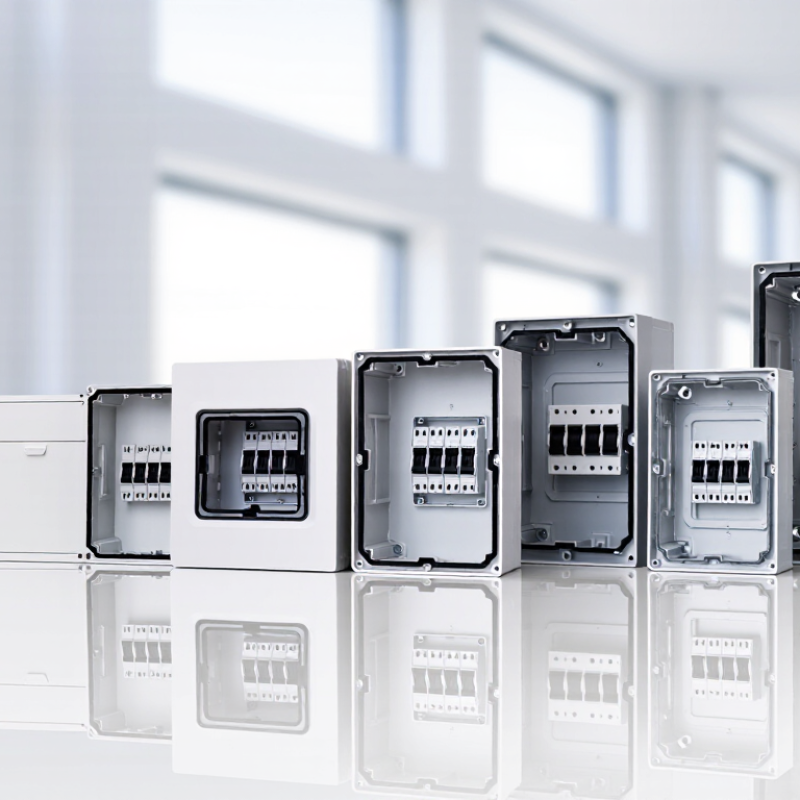
Defining External Consumer Units for 230/400 V, 50 Hz Installations
China Top 10 External Consumer Unit Suppliers
An external consumer unit is an enclosure that distributes and protects circuits outside a main indoor board, such as in a garage or garden outbuilding. For a 230/400 V, 50 Hz installation, 230 V is typically measured between phase and neutral, while 400 V is measured between phases. Check the supply arrangement before selecting protection devices. Rain is only one concern; condensation, dust, ultraviolet exposure, and cable entry points also affect enclosure performance. A high ingress-protection rating alone does not resolve every site condition.
IEC 61439-3 defines requirements for distribution boards operated by ordinary persons, with outgoing circuits rated up to 125 A and assembly current up to 250 A. Its scope includes assemblies with voltage to earth not exceeding 300 V AC. These figures help frame a specification, but they do not replace project-specific design checks.
The IEA’s Electricity 2024 report projected global electricity demand growth averaging about 3.4% annually through 2026, reinforcing the value of well-planned distribution capacity. A supplier’s documentation should clearly state ratings, enclosure tests, and installation limits.
Tips: Match the enclosure to the actual exposure. Check seals and cable glands. Verify ratings with a qualified electrical professional; a detail that looks minor can matter.
IEC 61439-3: 125 A Limits and Key Enclosure Protection Ratings
China Top 10 External Consumer Unit Suppliers
IEC 61439-3: 125 A Limits and Key Enclosure Protection Ratings
An external consumer unit must suit both its electrical load and its location. IEC 61439-3 covers distribution boards designed for operation by ordinary persons. Its 125 A limit applies to each outgoing circuit; the assembly’s rated current can be up to 250 A. These figures are not interchangeable. Check the applicable standard edition and project requirements before specifying a unit. Small details matter.
Tips: Read the enclosure’s IP rating carefully. The first digit indicates protection against solid objects; the second covers water ingress. Choose a rating suited to actual exposure, including wind-driven rain and dust. Check door seals, cable entries, and cover fit, too. An IP rating describes protection under specified test conditions, not every installation scenario.
A sound selection process checks the complete tested assembly, not just the empty enclosure. Confirm circuit ratings, temperature limits, and installation instructions with qualified personnel. In practice, a poorly sealed cable entry can undermine an otherwise suitable enclosure. I would also review drainage and mounting position on site; paperwork alone can miss a small but persistent water path.
China’s Top 10 External Consumer Unit Suppliers and Product Profiles
China’s top external consumer unit suppliers differ in enclosure material, circuit capacity, weather protection, and customization. Their product profiles commonly include compact plastic units for small installations, metal enclosures for demanding sites, and larger boards with room for additional circuits. Compare stated ingress-protection ratings, dimensions, busbar layout, and compatible protective devices—not just catalogue photos. The IEA’s Electricity 2024 report says global electricity demand grew 2.2% in 2023 and forecasts average annual growth of 3.4% for 2024–2026. That outlook supports attention to dependable distribution equipment, but it does not rank suppliers or verify individual product performance.
A useful top-ten comparison should show the rated current, number of ways, enclosure material, terminal arrangement, and test documentation for each profile. Ask whether the published IP rating applies to the assembled unit, including cable entries and the closed door. Check the installation instructions against IEC 61439-3 requirements for distribution boards operated by ordinary persons. Small details matter. Some product listings omit internal dimensions or accessory compatibility; request a drawing before specifying a unit for a tight cabinet or outdoor wall.
Tips: Compare like-for-like configurations, and request test reports, clear product photographs, and sample lead times. Treat vague weatherproof claims cautiously; a rating can change with installation details.
China’s Top 10 External Consumer Unit Suppliers and Product Profiles
Generic product profile: IEC 60529 water-protection classes for external enclosures
IPX4 denotes protection against splashing water, IPX5 against water jets, and IPX6 against powerful water jets under IEC 60529. The chart shows the classification digit only; the digits are category labels, not a linear measure of protection. Actual enclosure ratings vary by product and should be confirmed in its technical documentation.
Comparing Suppliers by Materials, Circuit Capacity, and Compliance
China Top 10 External Consumer Unit Suppliers
When comparing external consumer unit suppliers, look beyond price and enclosure appearance. For outdoor locations, check the stated ingress protection rating and whether the enclosure resists rain, dust, and UV exposure. Steel can offer sturdy protection, but coating quality matters in damp or coastal settings. UV-stabilised polymer avoids rust, though heat resistance and impact strength still need checking. Ask for material specifications, test records, and clear installation limits.
Circuit capacity means more than counting breaker spaces. Check the rated current, busbar capacity, compatible protective devices, and room for future circuits. A unit with spare ways may still be unsuitable if its electrical rating falls short of the planned load. Compare suppliers’ drawings and technical sheets carefully. Compliance documents should match the destination market and the exact unit supplied. Requirements differ by region, so verify applicable standards with a qualified electrical professional. A polished specification sheet can still leave questions.
Tips: Request written confirmation of enclosure ratings, circuit capacity, and compliance evidence. Check labels and instructions on the delivered unit, not just product photos. Keep a little capacity in reserve, but avoid paying for space you will never use. I find this balance easy to misjudge.
How to Evaluate Chinese Suppliers for Quality and Project Requirements
When comparing China’s external consumer unit suppliers, start with the conditions at the installation site. Check the required circuit capacity, enclosure material, cable entry points, and exposure to rain, dust, or direct sunlight. A supplier should explain the product’s stated ingress protection rating and provide test records tied to the exact model, not a similar-looking enclosure. Ask for drawings, terminal details, and a component list. Small differences matter.
Samples can reveal what a catalogue cannot. Inspect door seals, hinges, mounting points, and the clearance needed for wiring. Confirm that protective devices and busbars match your project specification, then request written confirmation of any custom changes. Compare lead times, packaging, inspection procedures, and how the supplier handles defects. One awkward detail: a polished sample may not reflect later production, so agree on inspection criteria before placing an order.
Tips: Share your operating environment and installation drawings early. Request dated photos of production units and verify key dimensions against the approved sample. Keep the checks practical; paperwork alone cannot show whether wiring access is cramped. If a specification remains unclear, pause and ask again. That extra step is easy to overlook.
