China Top 10 Gas Insulated Switchgear Manufacturers
China’s power network is entering a demanding upgrade cycle. The International Energy Agency’s Electricity 2024 report projects global electricity demand growth of about 3.4% annually from 2024 to 2026. More power requires dependable switching equipment, especially where substations face tight space, harsh weather, or high reliability requirements. Gas Insulated Switchgear (GIS) places key components inside sealed enclosures, offering a compact alternative to air-insulated equipment. The engineering is precise. So is the procurement.
The IEA’s 2023 report, Electricity Grids and Secure Energy Transitions, estimates that the world must add or refurbish more than 80 million kilometers of grids by 2040. That scale makes manufacturer selection consequential, but a “top 10” list should not imply a universal ranking. Project voltage, tested performance, delivery capacity, service coverage, and lifecycle support can matter more than brand visibility. For buyers comparing China’s GIS suppliers, these practical checks help distinguish established production capability from polished claims. Look for substantiated certifications, reference installations, clear technical documentation, and accessible after-sales support. A datasheet alone is not enough.
This guide introduces ten manufacturers serving China’s GIS market and outlines factors worth checking before shortlisting them. Company capabilities and product ranges change; verify current specifications directly with each supplier. Rankings also depend on the evidence and criteria used. A useful starting point, not a final verdict.
What Gas-Insulated Switchgear Is and How It Works
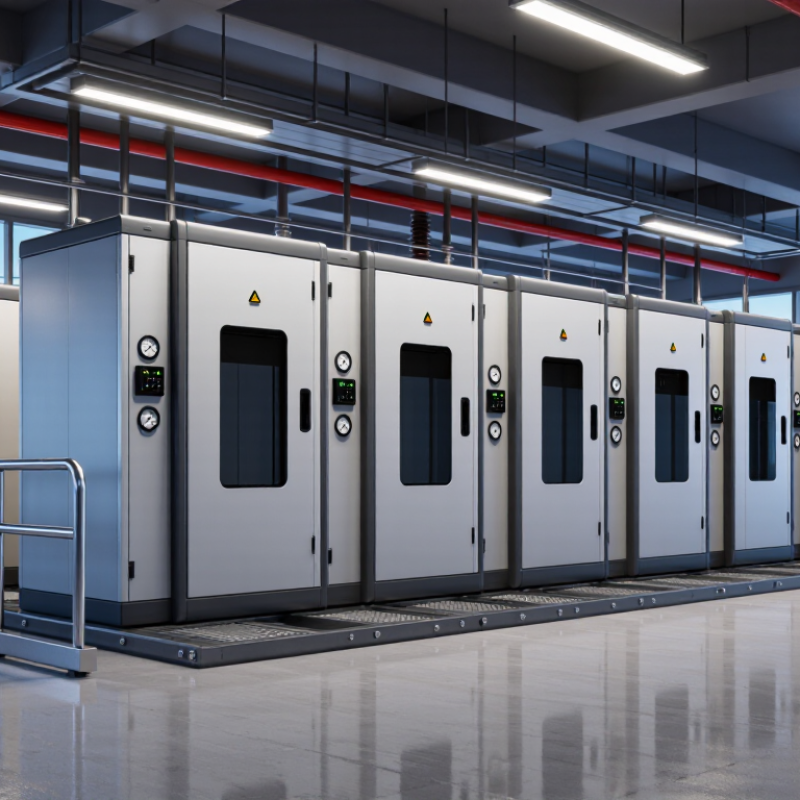
Gas-insulated switchgear, or GIS, places high-voltage components inside sealed, grounded metal enclosures. The enclosure contains an insulating gas or gas mixture, which allows conductors to sit closer together than in air-insulated equipment. That compact arrangement can help substations fit inside buildings or on crowded urban sites. Space is saved, but access for inspection still needs careful planning.
Inside the enclosure, busbars carry current between circuits. Circuit breakers open a circuit when protection systems detect a fault, while disconnectors and earthing switches support safe isolation. The insulating gas helps prevent electrical breakdown between live parts and the enclosure. In many designs, the breaker also uses gas to help extinguish the arc formed when contacts separate. Sensors monitor conditions such as gas pressure or density. Small changes matter.
GIS depends on sealed compartments, reliable controls, and trained maintenance staff. Technicians may check alarms, connections, and gas condition during scheduled inspections. If gas must be handled, recovery procedures help limit emissions; some newer designs also use alternative insulating mixtures. The details vary by equipment and voltage. A GIS can appear neat from the outside, yet a hidden leak or poorly understood alarm can complicate service. No system is maintenance-free.
How China’s GIS Industry Has Developed
China’s gas-insulated switchgear industry has developed alongside rapid grid expansion and increasingly dense urban construction. GIS places conductors and switching components inside sealed, gas-insulated enclosures, reducing substation footprints where land is scarce. The China Electricity Council reported that national power-grid investment reached RMB 608.3 billion in 2024, up 15.3% year on year. That is substantial. The National Energy Administration also reported 3.35 billion kW of installed generating capacity at year-end, including fast-growing renewable sources. These shifts call for equipment that can handle changing loads and connect new generation to transmission networks.
Over time, Chinese manufacturers have strengthened local design, production, testing, and project-integration capabilities. GIS is now used across urban substations and high-voltage transmission projects, where compact layouts and controlled operating environments matter. The International Energy Agency’s 2023 report, Electricity Grids and Secure Energy Transitions, says 80 million kilometres of grids worldwide must be added or refurbished by 2040. China’s expansion is part of that wider challenge.
Progress is not uniform: long service life depends on installation quality, gas-leak monitoring, and disciplined maintenance. These details are easy to underestimate.
The industry must also address the climate impact of commonly used insulating gases and develop lower-impact alternatives without compromising reliability.
Criteria for Comparing Chinese GIS Manufacturers
China Top 10 Gas Insulated Switchgear Manufacturers
Criteria for Comparing Chinese GIS Manufacturers
Comparing Chinese gas-insulated switchgear (GIS) manufacturers starts with the operating conditions, not a brochure ranking. Check rated voltage, continuous current, and short-time withstand current against the project’s actual load and fault levels. Ask how the equipment performs in the specified indoor or outdoor environment, especially where dust, humidity, or limited space matter. Numbers need context.
Review technical drawings, routine test records, and type-test evidence against applicable IEC requirements. Confirm that the documents cover the exact voltage class and configuration being offered; similar-looking product families may differ in important details. Examine enclosure design, gas-monitoring provisions, interlocks, and access for maintenance. A compact layout can save floor space, but cramped service access may slow inspection later.
Manufacturing consistency also deserves attention. Evaluate quality-control procedures, traceability of critical components, and the process for handling defects. Request references for comparable installations, then ask about commissioning support, spare parts, and expected response times. A polished datasheet is useful, but it cannot prove field reliability by itself. Even a careful scorecard has limits: site conditions can reveal gaps that a spreadsheet misses. I would treat an unclear answer as a reason to investigate further.
China Top 10 Gas Insulated Switchgear Manufacturers
Criteria for Comparing Chinese GIS Manufacturers: voltage-class coverage
Rated voltage-class coverage is one useful screening criterion when comparing GIS suppliers. The values shown are standardized equipment voltage classes, not company-specific product claims or a manufacturer ranking.
Profiles of 10 Leading Gas-Insulated Switchgear Manufacturers in China
Profiles of ten leading gas-insulated switchgear manufacturers in China are most useful when they reveal how each company approaches real projects. One profile may focus on utility substations, while another emphasizes compact equipment for dense city sites. Others can be assessed for high-voltage engineering, modular designs, export support, or custom configurations. These differences matter. A small equipment room leaves little space for installation mistakes.
The comparison can also examine digital monitoring, component integration, testing procedures, and long-term service. Look for practical evidence: published test methods, clear operating limits, documented maintenance intervals, and engineers who can explain commissioning requirements. Some manufacturers may offer broader project support; others may concentrate on equipment production. Neither approach is automatically better. The site conditions decide.
Not every detail is public. That matters. Buyers should verify technical claims against project documents and independently reviewed test records, rather than relying on promotional language alone. A profile should distinguish confirmed capabilities from unanswered questions, including spare-parts access and service response times. This makes the ten-company overview more useful, though imperfect: public information rarely shows how smoothly a supplier handles a difficult installation or an unexpected outage.
Key Applications and Factors in Choosing a GIS Manufacturer
Gas-insulated switchgear (GIS) is useful where space is limited or outdoor conditions are harsh. Compact substations in dense cities often need equipment that fits inside existing buildings. Offshore wind platforms and industrial facilities may also use GIS to protect circuits from salt, dust, and moisture. Space is expensive. But GIS still needs adequate access for inspection and maintenance.
Choosing a manufacturer starts with the actual site conditions, not a catalog headline. Confirm the required voltage rating, short-circuit duty, operating temperature, altitude, and seismic requirements. Ask how the equipment is tested and what documentation comes with it. Factory acceptance records, clear maintenance instructions, and a realistic spare-parts plan help reduce uncertainty after installation. Details matter. A low purchase price can hide longer lead times or limited local service.
Also assess the insulation medium and its handling requirements across the equipment’s service life. Request practical information about leak monitoring, end-of-life procedures, and technician training. Compare reference projects with similar climates and operating demands, rather than relying on broad claims. Even a careful specification can miss an awkward cable entry or cramped service aisle. Walk through the layout with installation and maintenance teams before ordering. No checklist catches everything.
