International Fluid Power Inc.
International Fluid Power - Innovative Partners For Global Sourcing Of Fluid Power Products. Your Complete Hydraulic Source in SE Minnesota.
A Hydraulic Final Drive converts hydraulic power into controlled wheel or track movement, making it a critical component in excavators, compact track loaders, and other mobile machinery. Its performance affects traction, turning, heat management, and uptime. A leak or worn seal can leave a machine stranded beside a muddy trench. Small details matter.
Industry context helps explain why manufacturer selection deserves careful review. Off-Highway Research’s global construction equipment forecasts track production and demand across major markets, while Interact Analysis publishes research on mobile hydraulics and off-highway machinery. These sources provide useful context for equipment trends, but they do not establish a universal ranking of final-drive suppliers. Market estimates also vary by product definition and region. Numbers need context.
This guide compares China-based manufacturers using practical criteria: product range, documented technical specifications, manufacturing capability, testing practices, and after-sales support. Buyers should verify torque, displacement, pressure limits, mounting dimensions, and parts availability against their machine’s requirements. Requesting test records and checking warranty terms can reveal gaps that a catalogue may hide. I would treat promotional claims cautiously unless the supplier can provide traceable evidence. No shortlist replaces a sample inspection or a clear service agreement. Chinese manufacturers differ widely, and this comparison cannot confirm every factory’s current capacity or quality controls.
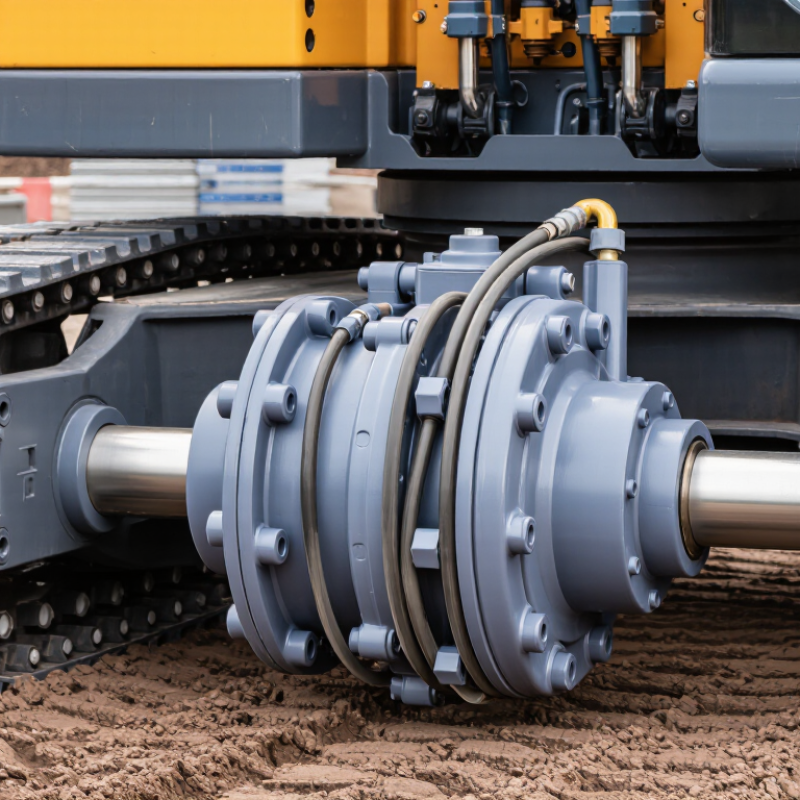
A hydraulic final drive combines a hydraulic motor with a reduction gearbox, and often a holding brake. It converts pressurized oil into controlled rotation, delivering high torque at low speed to a machine’s wheel or track sprocket. That distinction matters. The motor supplies motion; the gearing multiplies torque and reduces output speed. Final drives are common on excavators, tracked loaders, compact construction equipment, and some agricultural machines. On an excavator, for example, they propel the tracks across uneven ground while handling repeated starts, stops, and turns.
The wider market offers useful context, but not a direct measure of final-drive sales. MarketsandMarkets estimated the global hydraulic equipment market at USD 42.4 billion in 2023 and projected USD 51.5 billion by 2028. That category includes many components and applications, so it should not be read as a final-drive forecast. In practice, sizing a drive means checking machine weight, travel speed, required tractive force, oil flow, pressure, and duty cycle. Mud, slopes, and frequent turning can change the load considerably. A rating that looks adequate on paper may not match harsh field use. I’d also verify mounting dimensions and brake requirements before comparing units; these details are easy to overlook.
China’s hydraulic final-drive industry is a supply chain, not one production tier. Upstream suppliers produce gears, bearings, hydraulic motors, seals, and cast housings. Specialized manufacturers machine and assemble these parts into compact drive units. Testing typically checks leakage, torque, noise, and temperature. Final-drive makers then supply equipment manufacturers, distributors, and replacement-parts channels. Quality and customization can vary between suppliers.
Demand from excavators offers a useful industry indicator. The China Construction Machinery Association reported 195,018 excavators sold in 2023, including 105,038 exported. These figures show the scale of equipment production and overseas demand, but they are not final-drive shipment data. That distinction matters. A drive unit may be designed for one machine model, while aftermarket buyers often prioritize dimensions, fit, and parts availability. The supply chain is broad, but not always transparent.
Tips: Compare rated torque, reduction ratio, mounting dimensions, and test documentation. Ask how suppliers manage heat and contamination in real operating conditions. Sales figures are only a proxy; they cannot confirm a manufacturer’s quality. The map is useful, not complete.
A leading Chinese final drive manufacturer is defined by more than a large catalog. It should understand how hydraulic motors, gear stages, seals, and bearings work together under load. Ask for operating limits, not just a headline torque figure. Clear data on speed, pressure, temperature, and duty cycle helps buyers match a drive to the machine.
Production quality matters. Look for traceable materials, controlled machining, and repeatable assembly checks. A well-finished gear tooth and a clean sealing surface can affect noise, heat, and service life. Testing should reflect real use, including load variation and temperature changes. Ask how test results are recorded. Details matter.
Support is another marker. A reliable manufacturer can explain installation requirements, lubrication, and common failure symptoms in practical terms. Response time matters when a machine is down. So does access to replacement parts. Price still counts, of course, but the cheapest unit may cost more if fitment is uncertain. No factory is perfect. A supplier willing to discuss limits, investigate field problems, and improve documentation often inspires more confidence than one promising everything. Look for evidence, not polished claims.
Chinese hydraulic final-drive manufacturers vary in their strengths. Some focus on compact units for mini excavators, while others build higher-torque drives for larger machines. Common capabilities include planetary gear design, integrated motors, and customized mounting dimensions. Buyers should compare rated torque, displacement, operating pressure, and efficiency—not just advertised peak performance. A drive that fits the housing may still run hot under continuous load.
Grand View Research’s Global Construction Equipment Market report estimated the market at USD 161.5 billion in 2023, with projected annual growth of 6.3% from 2024 to 2030. This wider demand supports investment in production and testing, but it does not prove that every supplier offers equal quality. Ask for load-test records, material specifications, and documented inspection procedures. Check how the manufacturer manages heat and contamination; these details can matter more than a polished catalogue.
Tips: Confirm the duty cycle, machine weight, and travel speed before requesting a quotation. Ask for a sample test report and clarify warranty coverage. Small mismatch, big trouble. A complete evaluation takes time, and supplier claims should be verified against your machine’s actual operating conditions.
Choosing a hydraulic final drive starts with the machine, not a catalogue headline. Define the required torque, travel speed, operating pressure, duty cycle, and load variations. Include the mounting dimensions, shaft details, and available hydraulic flow. A drive that fits physically may still run hot or deliver poor travel performance.
Give each manufacturer the same application data. Ask for a written recommendation, performance curves, dimensional drawings, and evidence of production testing. Check how the unit handles shock loads, contamination, and prolonged low-speed operation. Small details matter. Confirm seal availability, service intervals, and technical support response times before ordering. A neat datasheet is useful, but it cannot replace clear answers about your actual working conditions.
Where possible, compare the proposed drive with a unit used in a similar machine and duty cycle. Ask what failure modes the manufacturer monitors and how components are traced during production. There is no perfectly tidy shortlist; price, delivery, and serviceability may point in different directions. I would pause if specifications remain vague, even when the quoted unit appears suitable. Request clarification before committing.
Use these illustrative starting weights to compare manufacturers against your application. Confirm torque, speed, pressure, duty cycle, mounting, and service requirements against published specifications. The percentages are a customizable scorecard, not market-survey data or a manufacturer ranking.
This is an example of a widget area that you can place text to describe a product or service. You can also use other WordPress widgets such as recent posts, recent comments, a tag cloud or more.
© 2025 International Fluid Power, Inc. All Right Reserved.