International Fluid Power Inc.
International Fluid Power - Innovative Partners For Global Sourcing Of Fluid Power Products. Your Complete Hydraulic Source in SE Minnesota.
Choosing an Electric Chair for home comfort is less about buttons and upholstery than about how well it fits your daily routine. A smooth recline can make reading easier. A raised footrest may help you settle in after a long day. But comfort is personal. The chair must suit your body, room, and habits.
Ergonomics researcher Dr. Alan Hedge offers a useful principle: “Ergonomics is the science of fitting the job to the worker, not the worker to the job.” Applied to home seating, that means checking the chair’s dimensions, controls, and support before choosing a style. Can you reach the remote without leaning? Does the seat feel stable when you sit down? Is there enough space behind the chair for it to recline? Small details matter. Measure the doorway, too.
Still, powered movement is not magic. A chair that feels supportive in a showroom may feel awkward beside your own coffee table. Fabric can feel warm under a reading lamp, while a bulky frame may crowd a narrow walkway. Take time to compare seat height, arm support, cleaning needs, and the return policy. Ask a qualified clinician for guidance if you have specific mobility or health concerns. No model fits everyone. This guide explores the practical features that can make an Electric Chair a comfortable part of home life—and the trade-offs worth considering before you buy.
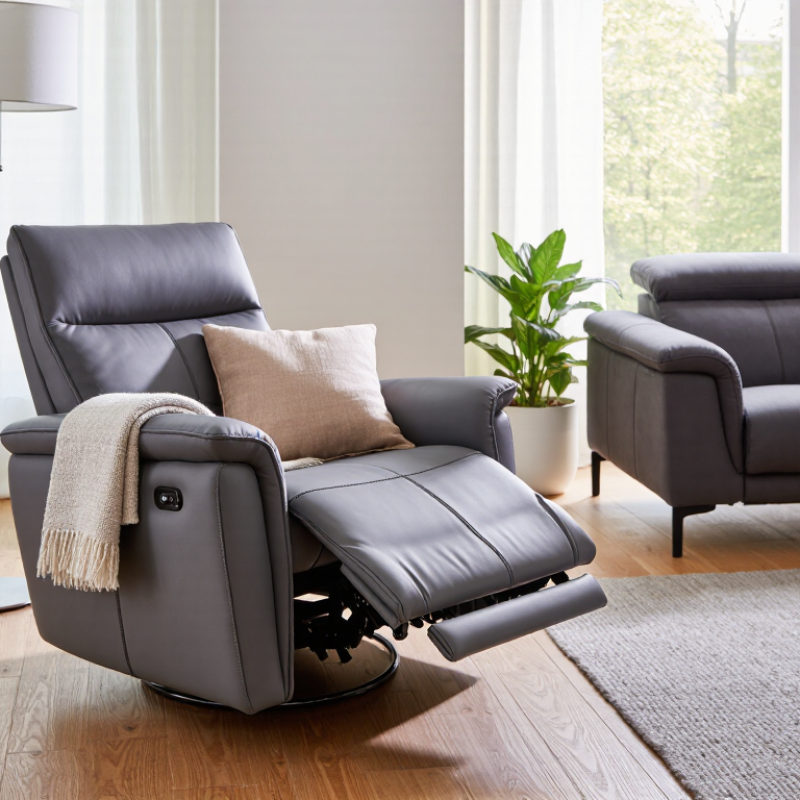
An electric lift chair uses a motor, or sometimes two, to move its backrest and footrest. Pressing a button on the hand control sends power to the mechanism beneath the seat. In a single-motor model, the backrest and footrest often move together. Dual-motor designs can let you adjust them separately. The difference is noticeable when you want your feet raised without leaning far back.
The lift function tilts the chair forward to help you move from sitting toward standing. It does not lift a person clear of the seat. The steel frame and linked arms guide the motion, while the motor provides steady movement. That matters. Keep the area around the chair clear, since a nearby table or rug can obstruct its movement. Follow the chair’s instructions, and ask a health professional whether this motion suits your needs.
Use the remote while seated, and try the controls slowly the first time. You may hear a low motor hum and feel the chair pause briefly as its angle changes. Small details count. Check that the power cord is not stretched or trapped beneath the frame. A lift chair can make daily transitions easier, but it is not a perfect fit for everyone; seat height, room layout, and personal mobility all affect comfort.
For a powered chair, comfort should come with clear electrical information. UL 962 is a useful benchmark for household furnishings, including certain electrically operated furniture. Still, a standard name alone does not prove that every chair, accessory, or configuration has been evaluated. Check the chair’s label and documentation for a verifiable certification covering the exact model. If the details are vague, ask the seller or manufacturer before buying. Small details matter.
Compare the manufacturer’s electrical ratings with your home setup. Look for the required voltage, current, and power supply, then use only the specified adapter and cord. Keep the plug accessible, and avoid pinching the cable beneath the chair’s frame or against a wall. A warm plug, damaged insulation, or intermittent movement deserves attention. Stop using the chair and seek qualified service rather than opening electrical parts yourself. I would not treat a polished label as proof of safe everyday use; clear instructions and careful setup matter too. Follow the manual’s limits, especially for cleaning and moving the chair.
Why Choose an Electric Chair for Home Comfort?
Fit and Capacity: Compare Seat Dimensions and Published Weight Limits
Choosing an electric chair for home comfort starts with fit, not upholstery. Compare the listed seat width, depth, and floor-to-seat height with a chair you already use comfortably. A narrow seat may press against your hips, while excess depth can leave a gap behind your knees. That gap matters. Check armrest spacing, too; your arms should rest without lifting your shoulders. Measurements help, but they cannot describe every body shape.
Tips: Measure your seated hip width and the distance from your back to your knees. Compare those figures with the chair’s usable seat dimensions, not just its outside width. If possible, try sitting in a similar-sized chair. Small differences can feel surprisingly large.
Treat the published weight limit as a firm upper boundary, not a suggested target. Check the exact model’s specifications, since capacities can vary between designs. If your weight is near the stated limit, ask the seller or a qualified seating professional for guidance rather than guessing. Also measure the chair’s footprint and reclining clearance at home. A chair may fit beside the sofa upright, then meet a table when fully reclined. I used to overlook that detail; it is easy to miss on a product page.
How to use this chart: Measure the user’s seated hip width and buttock-to-knee length, then compare those measurements with a chair’s seat dimensions. Allow room for comfortable movement without choosing a seat so wide that support is reduced.
Ranges are representative examples from non-branded product specifications, not standardized size classes. Published weight limits vary by model; check the exact chair’s specifications and allow a suitable safety margin.
Why Choose an Electric Chair for Home Comfort?
Medicare Context: CMS HCPCS Code E0627 and Seat-Lift Coverage Criteria
For some people, the hardest moment is the first few inches off a low sofa. A seat-lift mechanism can raise the seat and help someone move toward standing. Comfort matters, but Medicare coverage follows medical-necessity rules. The CDC’s 2018 report, Disability Impacts All of Us, estimated that 13.7% of U.S. adults had a mobility disability. That figure describes a broad population; it does not establish eligibility for a seat lift.
CMS lists E0627 as an electric seat-lift mechanism. Under Medicare’s national coverage policy, eligibility generally requires severe arthritis of the hip or knee, or a neuromuscular disease. The person must be unable to stand from a chair in the home without assistance from the lift, yet able to walk once standing. A physician must document that the mechanism is part of a treatment plan intended to improve the condition or prevent its worsening. That distinction matters.
Coverage is not automatic. Medicare generally evaluates the lift mechanism, not the entire recliner, and documentation must support the criteria. Ask the prescribing clinician and supplier to confirm what records are needed and whether the item meets current Medicare requirements. Keep the record specific. A note that says only “difficulty standing” may not explain the clinical need; paperwork can feel oddly rigid, but precision protects against avoidable delays.
| Topic | Details | Practical Medicare Context |
|---|---|---|
| What E0627 describes | HCPCS code E0627 describes a seat-lift mechanism that is electric, of any type. | The code refers to the lift mechanism, not automatically to the entire chair or other comfort features. Confirm the billed item and code with the supplier and Medicare documentation. |
| Home comfort benefit | An electric seat-lift mechanism raises and lowers the seat to help a user move between sitting and standing. | It may make routine transfers at home easier for someone who meets Medicare’s medical-necessity requirements. Comfort or convenience alone does not establish coverage. |
| Qualifying condition | Medicare’s national coverage policy identifies severe arthritis of the hip or knee, or a severe neuromuscular disease, as qualifying conditions. | A treating practitioner must document the relevant condition and the medical need for the lift mechanism. |
| Standing limitation | The beneficiary must be completely unable to stand up from any chair in the home. | The need must be more than difficulty rising from one particular chair. The treating practitioner’s documentation should support the stated limitation. |
| Ability after rising | Once standing, the beneficiary must have the ability to ambulate. | Medicare’s criteria concern assistance with the sit-to-stand movement; the mechanism is not a substitute for a device that provides mobility or transfers the person from place to place. |
| Coverage is limited | When coverage criteria are met, Medicare coverage applies to the seat-lift mechanism. The chair itself and optional comfort features are not automatically covered. | Do not assume that Medicare will pay for the full retail price of a lift chair. Ask the supplier for an itemized explanation of the mechanism, chair, and any noncovered features. |
| Prescription and records | Coverage depends on meeting Medicare’s applicable medical-necessity and documentation requirements, including an order from the treating practitioner. | Ask the practitioner and supplier to verify the documentation and billing requirements that apply before delivery. Requirements can depend on the applicable Medicare policy and supplier circumstances. |
| Potential beneficiary cost | For covered Part B durable medical equipment, the beneficiary generally pays 20% of the Medicare-approved amount after the Part B deductible, when the supplier accepts assignment. | The amount owed can vary. Confirm coverage, the approved amount, supplier participation, and any noncovered chair costs before purchase. |
| Verify current policy | CMS Medicare Coverage Database: Seat Lift Mechanisms LCD CMS Medicare Coverage Database Medicare: Durable Medical Equipment Coverage | Coverage policies and billing instructions may be updated. Check the current policy applicable to the beneficiary’s location and situation; this table is a general overview, not a coverage determination. |
It is a safety benchmark for some household furnishings. Check whether certification covers the exact chair model and configuration. A standard name alone is not proof.
Compare the chair’s voltage, current, and power requirements with your home setup. Use the specified adapter and cord. Keep the plug accessible.
Stop using the chair and seek qualified service. Do not open electrical parts yourself. Damaged insulation also needs attention.
Compare seat width, depth, and floor-to-seat height with a chair you use comfortably. Check armrest spacing, too. Measurements help, but bodies differ.
Too much depth can leave a gap behind your knees. A narrow seat may press against your hips. Small differences can feel large.
Treat it as a firm upper boundary. Check the specifications for the exact model. If you are near the limit, ask a qualified professional.
Check its footprint and reclining clearance. A chair may fit upright, then meet a table when fully reclined. Easy to overlook.
Medicare generally evaluates the lift mechanism, not the entire recliner. Coverage is not automatic, and documentation must support the criteria.
Eligibility generally involves severe hip or knee arthritis, or a neuromuscular disease. The person must need the lift to stand, yet be able to walk once standing. A physician must document the treatment plan. Confirm current requirements with the clinician and supplier.
This is an example of a widget area that you can place text to describe a product or service. You can also use other WordPress widgets such as recent posts, recent comments, a tag cloud or more.
© 2025 International Fluid Power, Inc. All Right Reserved.