INTERNATIONAL FLUID POWER, INC.

The Experts for Hydraulic Power Units, Components, and Custom Hydraulic Systems
Slider

How to Choose a Manual Ceramic Coffee Grinder?

Choosing a Manual Ceramic Coffee Grinder is less about chasing a perfect label and more about matching the tool to your daily coffee. A hand grinder should feel steady, turn without excessive wobble, and let you adjust the grind in clear steps. Ceramic burrs resist rust and can stay sharp through regular use, but they do not guarantee evenly ground coffee. Burr alignment, adjustment range, and build quality matter too. Small details count: Can you hold the body securely? Does the grounds cup twist off cleanly? Can you repeat yesterday’s setting without guesswork?

Coffee educator and author James Hoffmann is often quoted as saying, “The grinder is the most important piece of equipment in your coffee setup.” That idea is useful, though no grinder fixes stale beans or an inconsistent brew method. This guide looks at the features that affect real use, including grind consistency for pour-over, French press, and other common methods; adjustment control; capacity; portability; and cleaning. It also considers practical trade-offs, such as the time and effort required for hand grinding. Ceramic is not magic. A low-cost model may still feel awkward or produce too many fines, and a premium price is not proof of better coffee. Compare the grinder’s feel and performance with your routine, not just its materials. The right choice is the one you can use consistently, clean easily, and adjust with confidence.
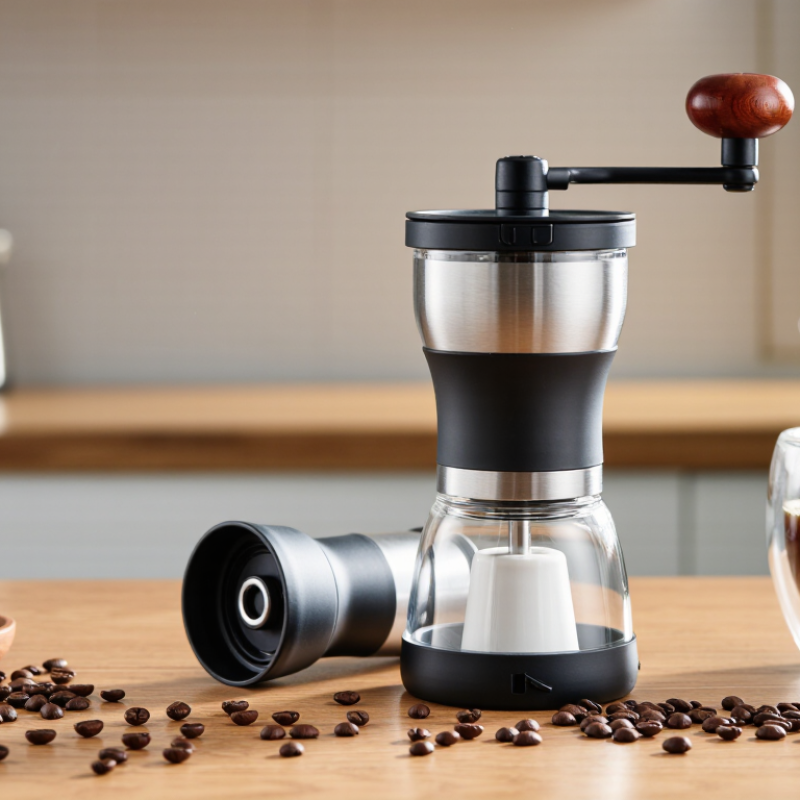
How to Choose a Manual Ceramic Coffee Grinder?

Identify Your Brew Method and Required Grind-Size Adjustments

Choose your grinder around the coffee you make most often. Pour-over usually needs a medium grind that lets water pass steadily; French press uses a coarser texture to limit fine sediment in the cup. Espresso requires much finer control, and some hand grinders cannot make small, consistent adjustments.

Check how the adjustment works before buying. A grinder with clear clicks makes settings easier to repeat, while a stepless dial allows tiny changes but can be harder to track. Keep notes. Record the setting, brew time, and taste. If a pour-over tastes sharp and finishes too quickly, try a slightly finer grind. If it tastes harsh or drains slowly, move coarser. Change one variable at a time, or the result becomes difficult to read.

Ceramic burrs can be durable, but burr material alone does not promise an even grind. Look for a stable handle and a shaft that does not wobble under pressure. Test the grinder with your usual dose; a setting that works for a small cup may not behave identically with a larger batch. Taste changes. Even careful adjustments can feel imperfect when beans age or humidity shifts, so leave room for small corrections rather than expecting one permanent setting.

Compare Ceramic Burr Design, Alignment, and Wear Resistance

When choosing a manual ceramic coffee grinder, inspect burr shape and alignment, not just the material. Even, sharp cutting edges tend to produce a more predictable grind than chipped or uneven ones. With the grinder empty, turn the handle slowly and feel for rubbing, wobble, or sudden tight spots. Small details matter. A burr that sits off-center can create mixed particle sizes, even when the adjustment clicks feel precise.

Ceramic is hard and resists abrasion, but it can chip if dropped or struck; hardness alone does not promise long service. Check that the burrs seat firmly and that the adjustment mechanism holds its setting during repeated turns. The Specialty Coffee Association’s Brewing Control Chart gives a familiar reference: brewed coffee commonly targets an extraction yield of 18–22% and a strength of 1.15–1.35% TDS. These figures do not measure grinder quality, but they show why repeatable particle size matters. A home comparison is imperfect: grind the same beans at the same setting, then look for excess dust and unusually large fragments. Recheck after weeks of use; burr wear and alignment problems can be hard to spot at first.

How to Choose a Manual Ceramic Coffee Grinder? - Compare Ceramic Burr Design, Alignment, and Wear Resistance

Evaluation Dimension Design or Feature What to Check Practical Implication
Burr material Alumina ceramic burrs Check whether the manufacturer identifies the burr material and provides care or replacement guidance. Alumina ceramic is hard and resistant to corrosion, but ceramic can chip or crack if dropped or struck by hard foreign objects.
Burr geometry Conical ceramic burrs Look for clearly described inner and outer burrs, plus an adjustment system suited to the intended brew methods. Conical burrs are common in hand grinders. Grind results depend on burr geometry, spacing, and alignment—not shape alone.
Burr geometry Flat ceramic burrs Check whether the burr set is designed to stay parallel and whether replacement parts are available. Flat burrs can produce consistent results when properly aligned. Their performance cannot be judged from burr shape alone.
Shaft support Supported central shaft Check for a rigid shaft, stable handle connection, and minimal side-to-side movement while turning. Reducing shaft movement helps keep the burr gap more consistent during grinding and can limit uneven contact.
Burr alignment Even burr spacing With the grinder empty and assembled as instructed, check for unusual wobble, scraping, or contact through a full rotation. Misalignment can create an uneven gap and affect grind consistency. Do not force the handle if the burrs scrape or bind.
Adjustment system Stepped or stepless adjustment Check that the setting can be changed repeatably and that the adjustment mechanism stays in place during use. Stepped settings are easier to return to; stepless adjustment offers finer positioning but may require more careful tracking.
Wear resistance Durable burr surfaces and stable mounting Review the care instructions and inspect whether the burrs and their supports can be cleaned without damaging them. Ceramic is hard, but wear and damage depend on use, particle contamination, impact, and construction. Avoid grinding stones or other foreign objects.
Maintenance Accessible burr chamber Check whether the grinder can be opened and cleaned according to its instructions, and whether parts can be reassembled correctly. Regular dry cleaning helps remove retained grounds. Water exposure should follow the maker’s guidance, since other grinder components may be vulnerable to moisture.
Best-fit selection Overall construction and intended use Compare alignment stability, adjustment range, cleanability, replacement-part availability, and the size of grounds the grinder can hold. Choose based on your brewing methods and maintenance preferences. Published specifications and hands-on checks are more useful than burr material alone.

Note: Grinder performance varies with burr geometry, manufacturing tolerances, alignment, adjustment, and use. The comparisons above describe general design considerations, not guaranteed results for every grinder.

Check Adjustment Precision and Repeatability Across Grind Settings

When choosing a manual ceramic coffee grinder, test how precisely its adjustment moves between settings—and whether it returns to the same result. Turn the dial one step at a time, noting clicks, markings, and any looseness. Grind the same dose three times at one setting. Compare the grounds on a simple sieve, or brew them and record the results. Small differences are normal. A wobbly dial makes them harder to interpret.

The Specialty Coffee Association’s Brewing Control Chart gives a useful brewing reference: an extraction yield of 18–22% and total dissolved solids of 1.15–1.35% for a broadly balanced cup. These are brewing targets, not grinder repeatability limits. Still, they help reveal whether a setting change has a practical effect. Keep dose, water, and brew time constant; taste alone can mislead. A kitchen scale and a short log are enough. Recheck after cleaning, since retained grounds can blur comparisons. One limitation: sieve size and hand pressure vary, so your test may not be perfectly repeatable either. That is worth admitting. Cite: SCA Brewing Control Chart; SCA Coffee Standards.

Choose Capacity Using SCA’s 55 g/L Coffee-to-Water Benchmark

How to Choose a Manual Ceramic Coffee Grinder?

Choose Capacity Using SCA’s 55 g/L Coffee-to-Water Benchmark

Grinder capacity is easier to judge in grams than in vague “cups.” The Specialty Coffee Association’s Golden Cup guidance uses 55 g of coffee per liter of water, with a tolerance of ±10%. At that benchmark, a 300 ml brew needs about 16.5 g; a 600 ml brew needs 33 g. Check the grinder’s usable chamber capacity against your usual dose, not just its advertised volume. A chamber that holds 20 g can suit one mug, but brewing for two may mean grinding twice. Cup sizes vary, so measure your usual water volume for a few mornings.

The SCA Brewing Control Chart identifies 18–22% as the target extraction-yield range and 1.15–1.35% as the target beverage-strength range. These figures do not dictate grinder capacity, but a repeatable dose makes brewing adjustments easier to assess.

Leave some room above your calculated dose, since a small amount of grounds can remain in the grinding path. The math is tidy. Real mornings are not. For a 500 ml brew, the benchmark is 27.5 g; a grinder holding only 20 g means working in batches. That is manageable, but the extra step can become annoying.

Evaluate Handle Effort, Cleaning Access, and Replacement-Part Support

Handle effort is easy to underestimate when a grinder is empty. Add beans, and the crank may feel heavier, especially with a fine setting or dense beans. Turn it for a minute if possible. Notice whether the handle clears your knuckles and whether the body stays steady on the counter. A longer handle can reduce effort, but it also needs more room to swing. A quick test can mislead; a few turns with beans reveal more. The motion should feel controlled, not gritty or abruptly stiff.

Cleaning access matters after the last cup. Check whether the catch cup, hopper, and burr area open without awkward tools. Grounds often cling around the burrs and beneath the adjustment ring. A small brush helps, but narrow gaps can still be frustrating. Ceramic burrs do not rust, yet they can chip if dropped, so look for clear care instructions. Ask whether replacement burrs, shafts, springs, and handles are available separately. A complete grinder may look durable, but one worn part can make repair difficult. Support details are worth checking before purchase. Availability can change, and vague answers are not very reassuring.