How to Choose the Right Connector Hose Pipe?
Choosing a Connector Hose Pipe is not a matter of matching two ends and hoping they fit. The right choice depends on the fluid, operating pressure, temperature range, connection type, and conditions around the installation. A hose used beside a vibrating pump faces different demands from one fitted to a stationary water line. Small details matter.
As an illustrative perspective, not a verified quotation, fictional connector-hose specialist Maya Chen puts it this way: “A reliable connection starts with the working conditions, not the catalog photo.” That is a useful reminder, though it cannot replace a manufacturer’s specifications or a qualified assessment. Check the hose’s stated pressure and temperature limits, then confirm material compatibility with the conveyed fluid. Measure the connection size carefully; a few millimeters can create leaks, strain, or a poor fit. Look at the fitting style, sealing method, and available clearance, too.
There is more to inspect. A sharp bend behind a cabinet door can shorten service life. So can persistent vibration, abrasion against a metal edge, or exposure to heat. The details are easy to miss. This guide’s outline will help readers compare common hose and connector types, read product specifications, and identify questions worth asking a supplier. It will also point out a practical limitation: product labels may not describe every real-world condition. When the application is unusual, pause and verify the selection with the manufacturer. A confident guess is still a guess.
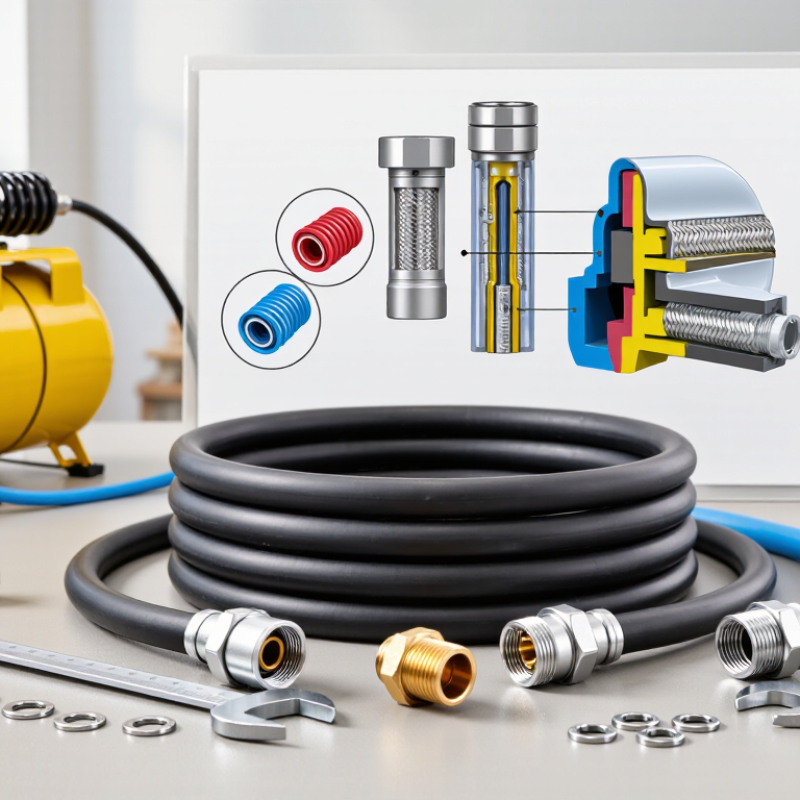
Identify the Application and Operating Conditions
A connector hose pipe should be selected for the job it will actually perform, not just its diameter. Identify the fluid, expected flow rate, and whether the line carries hot, cold, or abrasive material. A hose for warm cleaning water may not suit oil or a chemical solution. Check the fluid compatibility data rather than guessing from appearance.
Pressure is only part of the picture. Note the normal operating pressure, possible surges, and whether the line may experience vacuum. Temperature changes can soften or stiffen hose materials. Outdoor exposure, oil splashes, and repeated movement also matter. A hose routed beside a vibrating pump may need more flexibility and support than one installed in a fixed, protected run. Small details matter.
Look closely at the installation space. Measure the route, allow for the hose’s minimum bend radius, and check that connectors will not be pulled sideways. Tight corners can cause kinking. That is easy to overlook. In practice, a hose that fits on the bench may sit under strain once connected. Confirm fitting type, size, and sealing method against the equipment specifications. If conditions vary, record the worst expected temperature and pressure, then verify the selected hose’s published limits. I would leave room for uncertainty, especially when operating cycles change over time.
Choose Hose and Connector Materials for Fluid Compatibility
How to Choose the Right Connector Hose Pipe?
Choose Hose and Connector Materials for Fluid Compatibility
The hose, connector, and seals all contact the fluid, so check each material against the actual service conditions. Water, oils, cleaning solutions, and mild acids can affect materials differently. Compatibility may also change with temperature, fluid concentration, and exposure time. A hose that performs well at room temperature may soften or become brittle when the fluid runs hot. Check the manufacturer’s compatibility data, then confirm the rated temperature and pressure for the complete assembly. Small details matter.
Tips: Note the fluid, concentration, temperature range, and cleaning routine before choosing materials. Check seals as carefully as the hose wall. If the service conditions are uncertain, ask a qualified supplier or test a sample under realistic conditions. Test before scaling.
Material names alone do not guarantee a safe match. Two hoses made from similar polymers may have different liners, reinforcement, or seal compounds. Look for swelling, discoloration, softening, or cracks during routine inspections; these can signal trouble, though not every change is easy to spot. I’ve seen choices that looked obvious on paper need a second review once cleaning chemicals entered the picture. Recheck compatibility whenever the fluid or operating temperature changes, and replace components if their condition raises doubt.
How to Choose the Right Connector Hose Pipe?
Compare typical fluid compatibility by hose material. Ratings are general screening guidance: 1 = poor, 5 = very good.
Compatibility depends on the exact fluid formulation, concentration, temperature, pressure, and hose construction. Confirm against the hose manufacturer’s compatibility data before selecting a hose.
Determine the Required Hose Size, Length, and Pressure Rating
Choose hose size from the required flow rate and the equipment’s connection dimensions. The inside diameter affects flow speed and pressure loss. A hose that is too narrow can restrict delivery; an oversized hose may be bulky and harder to route. Check the equipment specifications, then compare them with a hose flow chart. Do not assume the connector size tells the whole story. Small details matter. For length, measure the actual route, including bends and movement between connected parts. Allow enough slack for motion, but avoid loops that can snag or kink. A tape measure along the intended path is more useful than estimating from a straight-line distance. It is easy to miss a bend. Recheck the route with nearby parts in place.
Match the pressure rating to the system’s highest expected operating pressure, including brief surges where relevant. The rating should also suit the fluid and temperature; heat can reduce a hose’s pressure capacity. Check the hose, fittings, and connectors together, since the lowest-rated part limits the assembly. Do not use burst pressure as the working-pressure target. That distinction is worth checking twice. If operating conditions are uncertain, consult the equipment documentation or a qualified hose supplier before fitting the line. After installation, inspect for leaks, rubbing, sharp bends, or tension. A neat fit can still be the wrong fit.
Match Connector Types, Thread Standards, and Installation Space
How to Choose the Right Connector Hose Pipe?
Match the connector to the equipment port before ordering a hose. ISO 7-1 covers tapered pipe threads designed to make pressure-tight joints on the threads. ISO 228-1 covers parallel threads, which generally need a separate sealing face or washer. ASME B1.20.1 specifies NPT pipe threads; NPT and ISO threads may look similar but are not automatically interchangeable. Check the port marking, thread diameter, pitch, and sealing method. A matching nominal size alone is not enough. Small details matter.
Then check the assembly’s working pressure, fluid, and temperature against the hose and fitting specifications. For installation space, measure from the port to the nearest panel, guard, or moving part. Leave room for the hose’s stated minimum bend radius, and avoid twisting it while tightening the connector. A tight bend can strain the fitting or restrict flow. Allow space for a wrench, too. This check is easy to underestimate: a technically correct connector can still be impossible to install in a crowded cabinet. Use a thread gauge where markings are unclear, and confirm the assembled line does not rub against sharp edges.
Check Safety, Durability, and Maintenance Requirements
Choosing a connector hose pipe starts with its working conditions, not its appearance. Record the fluid, operating pressure, temperature range, and whether the line flexes or vibrates. Confirm that hose and connector materials suit the fluid; a mismatch can damage the liner or corrode a fitting. Allow for pressure spikes, too. Don’t guess.
Check the rating of the complete assembly, since a fitting or clamp may set its limit. Choose a hose that tolerates the expected heat, movement, and exposure to oils or sunlight. Keep bends within the maker’s minimum radius, and avoid pulling the hose tight across sharp edges. A neat installation can still fail if it rubs against a bracket every time equipment starts.
Inspect connections for leaks, cracks, bulges, stiffness, or loose clamps. Feel for unusual heat only when the system is safely shut down and cool. Replace damaged parts rather than patching over uncertainty. Set inspection intervals based on operating conditions and the manufacturer’s guidance; dusty, hot, or frequently flexed lines may need closer checks. It’s easy to overlook a small abrasion. That’s worth reconsidering during routine maintenance.
