How to Choose the Right Titanium Metal Sheet?
Choosing the right Titanium Metal Sheet starts with the job it must perform, not with the lowest quoted price. A thin panel for a lightweight enclosure has different needs from a formed component exposed to saltwater, heat, or repeated stress. Small details matter. Grade, thickness, surface finish, sheet dimensions, and fabrication method can all affect performance and cost.
Grade selection should reflect the operating environment and required properties. Commercially pure titanium and titanium alloys differ in strength, formability, and typical applications; the exact grade should be confirmed against the design specification. Thickness needs equal care. A thicker sheet may provide added stiffness, but it can increase weight and complicate forming. Too thin, and the finished part may distort or fail to meet its requirements. There is no universal best option.
Look closely at finish and documentation, too. Scratches, contamination, or inconsistent surface condition can matter in applications with tight appearance or processing requirements. Ask suppliers for traceable material certificates, clear grade identification, and tolerances that match your drawings. If the sheet will be cut, welded, or bent, discuss those steps before ordering. A sample can reveal handling issues that a specification sheet will not. It is tempting to choose the most durable grade every time. That may be unnecessary, and it deserves a second look. Compare the real service conditions, fabrication limits, and budget before deciding. A careful choice is specific, verified, and fit for purpose.
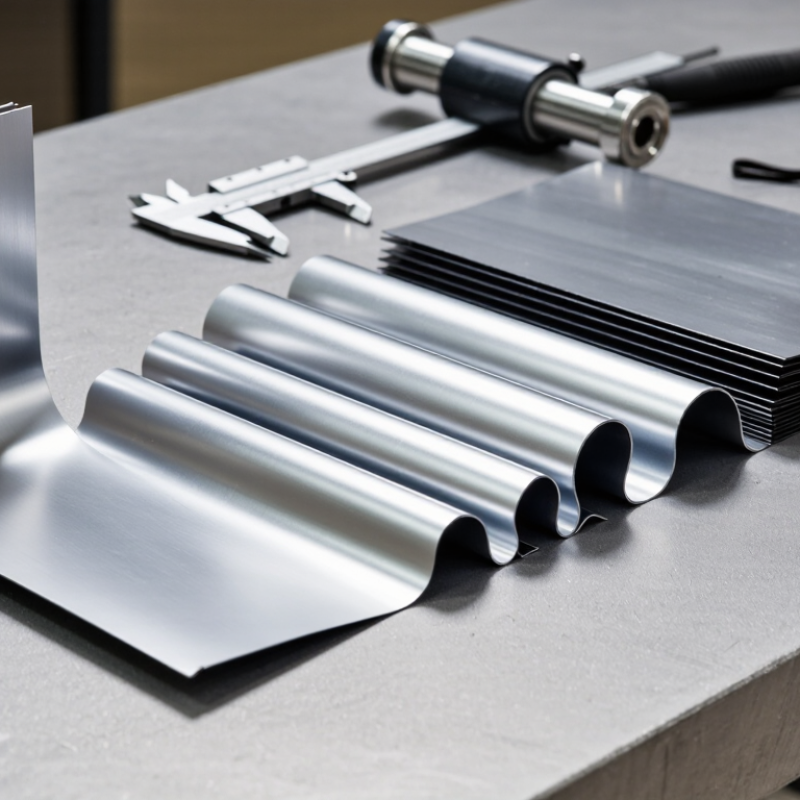
Identify the Service Environment: Titanium Density Is Approximately 4.51 g/cm³
Titanium has a density of approximately 4.51 g/cm³, so a sheet is much lighter than a same-sized steel sheet. For a quick estimate, multiply its volume by 4.51 to estimate the mass in grams. This helps when checking lifting limits, shipping weight, or the load on a thin support panel. One detail is easy to miss: density does not tell you how well the sheet resists corrosion or heat.
Identify the service environment before choosing a grade or thickness. A sheet near seawater, cleaning chemicals, or hot process equipment faces different demands. Check the actual chemical exposure, operating temperature, mechanical load, and forming method against reliable material data. Commercially pure titanium and common titanium alloys can have different properties, and density alone cannot identify the right option. A lightweight panel may still bend if its thickness or support spacing is inadequate. It is worth checking that assumption.
Tips: Estimate mass from the sheet’s dimensions, then verify it with the supplier’s listed density and thickness tolerance. Ask for grade documentation and confirm compatibility with the specific environment. Small differences matter.
Select a Grade by Strength: ASTM Grade 2 Has a 345 MPa Minimum Tensile Strength
ASTM Grade 2 is a practical choice when moderate strength and corrosion resistance matter more than maximum load capacity. ASTM B265 specifies a minimum tensile strength of 345 MPa for Grade 2 sheet and plate. That is a minimum, not a guaranteed value for every finished part. Actual results depend on product condition, thickness, and processing. Keep that distinction in mind.
For context, ASM International’s titanium property references place commercially pure titanium’s density near 4.51 g/cm³, making it relatively light compared with steel. In a workshop, that can matter when handling large panels or reducing component weight. But strength alone can mislead. A thin sheet may flex under a modest load, even when its tensile test value meets the specification. Check thickness, forming requirements, joining method, and service temperature before selecting a grade. ASTM B265 is the relevant product specification; request material test documentation to confirm the supplied sheet’s grade and mechanical results. Small detail, big consequence. Grade 2 can be a sensible baseline, though it may not suit every load case.
Compare Formability: Grade 2 Requires 20% Minimum Elongation; Grade 5, 10%
How to Choose the Right Titanium Metal Sheet?
Compare Formability: Grade 2 Requires 20% Minimum Elongation; Grade 5, 10%
Elongation offers a useful first comparison. Under common sheet specifications, Grade 2 has a 20% minimum elongation, while Grade 5 has a 10% minimum. These figures describe tensile-test performance, not a guaranteed bend radius. Check the applicable specification, sheet thickness, and material test certificate before planning a forming operation.
Grade 2 is commercially pure titanium and generally suits parts requiring tighter bends or more shaping. Grade 5, an alloy with higher strength, can be more resistant to forming and may spring back after bending. A test coupon helps reveal how the actual sheet behaves. Even so, one coupon may not capture every variation across a large sheet. Tool condition, bend direction, and forming method matter too.
Tips: Start with a small sample and the intended tooling. Inspect the bend for cracking, then measure springback after releasing the load. Use the supplier’s recommended minimum bend radius for the exact thickness and condition. Elongation is a useful clue, not the whole answer.
Specify Thickness, Width, and Tolerances Under ASTM B265
Choosing titanium sheet starts with a clear dimensional specification. State the grade, product form, and required thickness, then give the nominal width and length. ASTM B265 covers titanium and titanium alloy sheet, strip, and plate; applicable dimensions and tolerances depend on the product and standard edition. Check the relevant tables rather than assuming one tolerance fits every size. Small differences matter.
Thickness deserves particular attention because it affects weight, forming, and fit-up. Specify the nominal value and acceptable variation, and confirm how the order will be measured. Width should be stated with units and a defined tolerance, especially when sheets must fit a fixture or nesting pattern. In purchasing reviews, a recurring snag is a width listed without saying whether it is nominal or a finished cut dimension. Keep it clear.
Reference the ASTM B265 edition and grade in the purchase specification. If a tighter tolerance is needed than the standard allows, call it out explicitly and confirm feasibility with the supplier before ordering. Tighter limits can increase processing time or scrap, so avoid requesting precision that the part does not need. I would not assume every table applies unchanged to every condition; verify the details for the selected material. That step is easy to overlook.
How to Choose the Right Titanium Metal Sheet? - Specify Thickness, Width, and Tolerances Under ASTM B265
| Example Requirement | Titanium Grade | Nominal Thickness | Nominal Width | Typical Selection Consideration | Tolerance to Specify |
| Formable sheet for light-duty parts | Grade 1 | 0.50 mm | 600 mm | Commercially pure titanium with high formability and relatively low strength. | State the acceptable minimum and maximum thickness and width. Confirm the applicable ASTM B265 limits for the ordered product form and dimensions. |
| General-purpose corrosion-resistant sheet | Grade 2 | 1.00 mm | 1,000 mm | Commercially pure titanium commonly selected when a balance of strength, formability, and corrosion resistance is needed. | Use the applicable ASTM B265 dimensional tolerances; identify any tighter project-specific limits separately. |
| Higher-strength sheet component | Grade 5 (Ti-6Al-4V) | 1.50 mm | 600 mm | Alpha-beta titanium alloy selected for higher strength than commercially pure grades; forming and fabrication requirements should be reviewed. | Specify thickness and width acceptance ranges in the purchase order and verify them against the applicable ASTM B265 requirements. |
| Sheet for enhanced corrosion-resistance requirements | Grade 7 | 0.80 mm | 1,000 mm | Commercially pure titanium with a small palladium addition; consider where the service environment calls for its enhanced corrosion performance. | Confirm the applicable ASTM B265 limits for the ordered thickness, width, and product condition; add any tighter limits explicitly. |
| Custom-cut sheet blanks | Specify grade by application | 2.00 mm | 300 mm | Choose the grade based on required strength, corrosion performance, and fabrication method; separately define cut length and edge condition. | State whether dimensions apply before or after cutting. Define numeric acceptance limits for thickness, width, length, and edge condition as required. |
Ordering note: The dimensions shown are illustrative order examples, not ASTM B265 default sizes or tolerance values. ASTM B265 dimensional tolerances depend on the applicable product form, nominal dimensions, and specification requirements. Confirm the governing edition and applicable tolerance provisions, then record the required numeric acceptance limits in the purchase order.
Verify Surface Condition, Test Reports, and Material Traceability Before Purchase
How to Choose the Right Titanium Metal Sheet?
Inspect the sheet under bright, angled light before accepting it. Check for dents, deep scratches, edge cracks, embedded particles, and uneven pickling marks. Ask the supplier to state the acceptable surface finish and explain how sheets are protected during packing. A smooth appearance is useful, not proof. Surface condition alone cannot confirm the alloy grade or cleanliness.
Request a mill test report tied to the bundle’s heat number. Check that the report lists chemistry, tensile results, thickness, and the specified standard. ASTM International’s ASTM B265 specification covers titanium and titanium-alloy sheet, strip, and plate. Its Grade 2 requirements include minimum tensile strength of 345 MPa and yield strength of 275 MPa; Grade 5 minimums are 895 MPa and 828 MPa, respectively. These figures are grade-specific benchmarks, not universal limits. Confirm the applicable edition and product dimensions in your purchase specification. Match the heat number on the report to the bundle tag and shipping documents. If they differ, pause the shipment. Paperwork can be mismatched. For critical parts, consider independent testing and verify that the laboratory’s accreditation covers the required tests.
How to Choose the Right Titanium Metal Sheet?
Compare representative minimum tensile strength requirements for common titanium sheet grades, then verify the actual product documentation and condition before purchase.
Before you buy: Inspect the surface for damage or defects, confirm the mill test report matches the ordered grade and specification, and ensure heat or lot identification is traceable from the sheet to its documentation.
Values shown are representative minimum tensile strength requirements in MPa for common grades under ASTM B265. Requirements can depend on specification edition, product dimensions, and material condition; confirm the applicable requirements for your order. Strength alone does not determine suitability.
