How to Choose the Right Tractor Hydraulic Ram?
Choosing the right Tractor Hydraulic Ram starts with the job it must perform. A loader, log splitter, and three-point hitch place different demands on a cylinder. Measure the required stroke, mounting space, operating pressure, and load before comparing models. A ram that looks substantial on a workbench may still be too long when fully retracted.
For a practical guide, we use a clearly labeled composite field specialist, Elena Brooks, to express a useful rule of thumb: “Match the ram to the load, the stroke, and the tractor’s hydraulic capacity—not just the mounting pins.” This is an editorial summary, not a sourced quotation from a real person. The distinction matters. Good equipment advice should be checkable, not dressed up as authority.
Look closely at bore diameter, rod strength, port size, and end fittings. Confirm that the tractor can supply the required flow and pressure, and inspect hoses for rubbing near the frame. Small details count. A few millimeters can affect fit. A mismatched cylinder may move slowly, bind, or put avoidable stress on its mounts. Measure twice.
This guide explains how to compare specifications, assess compatibility, and spot common selection mistakes. It cannot replace the tractor manufacturer’s manual or a qualified technician’s inspection. Real machines vary, and field conditions are rarely neat. That deserves a second look. A careful choice improves control, reduces downtime, and helps the Tractor Hydraulic Ram serve reliably through demanding work.
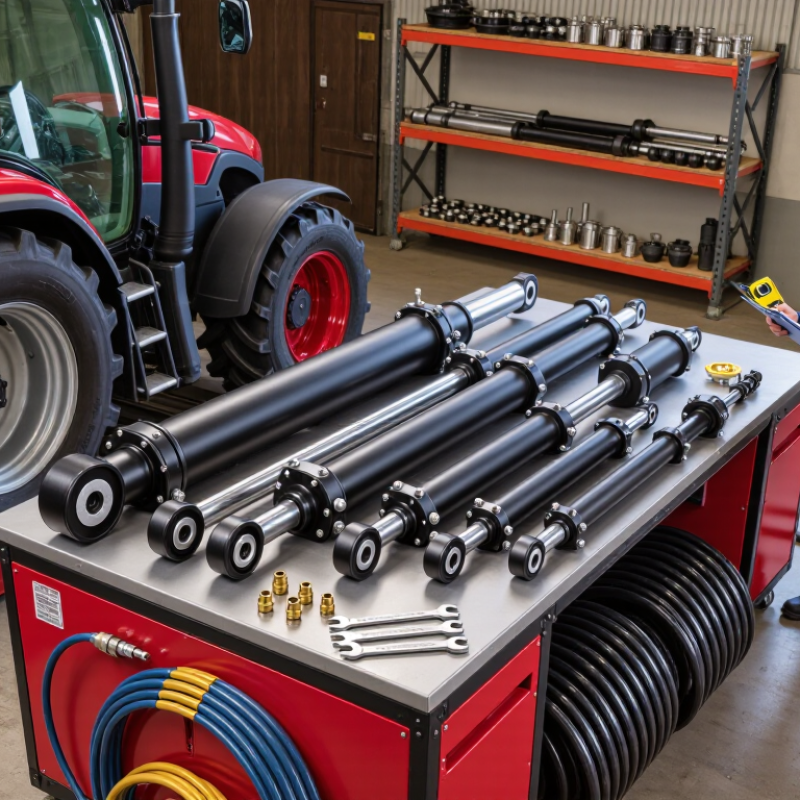
Understanding the Role of a Hydraulic Ram in a Tractor
How to Choose the Right Tractor Hydraulic Ram?
Understanding the Role of a Hydraulic Ram in a Tractor
A hydraulic ram turns pressurized oil into straight-line force. On a tractor, it may raise a loader, tilt an implement, or steer an axle. The pump supplies oil; the control valve directs it; the cylinder’s piston and rod create movement. Ram force depends on pressure and piston area, while speed depends on oil flow. A larger bore can lift more, but it may move more slowly if flow stays constant.
For a practical example, a 3-inch-bore cylinder at 2,500 psi produces about 17,700 pounds of theoretical extension force. That is a calculation, not a guaranteed lifting capacity: linkage geometry, friction, and pressure losses reduce usable force. Retraction force is lower because the rod takes up piston area. ASABE tractor-test reports publish model-specific hydraulic performance data, so compare your tractor’s pressure and flow rather than assuming every system is alike. ISO 4413 also addresses safe design of hydraulic systems, including pressure-related hazards.
Tips: Match the ram’s bore, stroke, mount, and rated pressure to the task. Measure pin-to-pin travel with the implement lowered and raised. Check hose fittings and available flow. A clean cylinder can still be the wrong choice. I would recheck the geometry before ordering; small measurement errors can cause binding or insufficient travel.
Identifying the Ram Type for Your Tractor’s Application
How to Choose the Right Tractor Hydraulic Ram?
Identifying the Ram Type for Your Tractor’s Application
Start with the job the ram must perform. A single-acting ram uses hydraulic pressure in one direction, then returns through gravity or an external load. It may suit a dump trailer or a simple lifting task. A double-acting ram uses pressure to extend and retract, making it useful for implements that need controlled movement both ways. For example, a loader linkage may need powered movement in both directions. Check how the tractor’s valve is configured before choosing.
Then match the ram’s movement and fit to the machine. Measure the required stroke, the closed length, and the pin diameter at each mounting point. Check clearance through the full range of motion; a ram that fits at rest may bind when the implement tilts. Confirm that the ram’s pressure rating is compatible with the tractor’s hydraulic system. It is easy to focus on bore size and overlook mounting geometry. That small oversight can matter. If the old ram’s specifications are unclear, consult the tractor or implement manual, or ask a qualified hydraulic technician.
Tips: Photograph the existing connections before removal. Measure twice, especially the stroke and pin spacing. Never rely on appearance alone; similar rams can have different port positions or pressure ratings. When uncertain, pause and verify.
Matching Bore, Stroke, and Mounting Dimensions
How to Choose the Right Tractor Hydraulic Ram?
Choosing a tractor hydraulic ram starts with the job’s load and available hydraulic pressure. Bore size affects the force the ram can produce, so compare the required lifting force with the tractor’s rated system pressure. A larger bore is not automatically better; it may move more slowly or place extra demand on the system. Check the equipment manual and existing ram specifications before ordering.
Stroke length must match the movement the implement needs. Measure the old ram fully retracted and extended, or measure the pin-to-pin distances on the machine. Then check the mounting points: pin diameter, clevis width, and distance between pin centers. Small differences matter. A ram that fits the holes but sits at the wrong angle can bind, hit nearby parts, or fail to reach the full working position. It is easy to focus on bore and overlook mounting geometry; that mistake can mean a second trip for parts.
Tips: Record each measurement twice, in millimeters or inches, without mixing units. Compare hose-port locations and clearance through the full range of movement. If the old ram is bent or its dimensions seem unusual, verify the machine’s service information rather than copying every measurement blindly. I would recheck the retracted length before placing an order. Tiny errors happen.
Checking Pressure Ratings and Hydraulic Compatibility
Before choosing a tractor hydraulic ram, compare its rated working pressure with the tractor’s hydraulic system pressure. Check the tractor manual or equipment specifications; do not estimate from engine size or the ram’s appearance. The ram’s rating should meet or exceed the system’s maximum operating pressure, while its relief valve setting must stay within the limits of every connected component. Working pressure is not burst pressure. That distinction matters.
Also verify the ram’s stroke, bore, mounting points, and port type. A ram may fit the bracket but still have the wrong stroke, causing the implement to stop short or bind. Check whether the tractor uses single-acting or double-acting hydraulics, and confirm the required hose connections and fluid are compatible. Threads that look similar may not seal correctly. Small mismatches can leak under load.
A pressure gauge can help confirm system pressure, but testing should follow the equipment manual and use suitable fittings. Never loosen a hose or fitting while the system is pressurized. I’ve seen people focus on bore size and overlook mounting alignment; it is an easy mistake. Measure twice. If the pressure rating or connection type is unclear, have a qualified hydraulic technician identify it before installation.
Comparing Materials, Seals, and Service Requirements
How to Choose the Right Tractor Hydraulic Ram?
A ram’s material affects weight, corrosion resistance, and service life. Steel barrels handle demanding loads, while protective coatings help resist moisture and field grime. Inspect the rod finish closely; scratches can damage seals and invite corrosion. Stainless components may suit wet conditions, but they are not automatically the best value. Fit matters. Check the ram’s stroke, mounting points, and rated pressure against the tractor’s specifications.
Tips: Compare seal materials with the hydraulic fluid and expected operating temperatures. Keep a record of leaks, slow movement, or visible rod damage. Small changes matter.
Service needs deserve equal attention. Choose a design with seals and wear parts that can be sourced and replaced locally. Ask how often inspection is recommended, and whether the ram can be serviced without specialized equipment. Dust, cold starts, and repeated heavy loads can shorten seal life. A clean-looking ram may still have internal wear, so appearance alone is not a reliable test. I would not assume the cheapest option saves money; downtime can cost more, though actual service life depends on use and maintenance.
