INTERNATIONAL FLUID POWER, INC.

The Experts for Hydraulic Power Units, Components, and Custom Hydraulic Systems
Slider

How to Choose Marble Countertops in 2026?

In 2026, choosing Marble Countertops is about more than finding a beautiful slab. The right surface must suit your kitchen, your routines, and the amount of care you are willing to give it. A dramatic gray vein may look striking under a showroom’s bright lights, then feel much busier beside your own cabinets. Small details matter.

This guide looks at the decisions that shape a successful choice: marble type, color, veining, finish, thickness, edge profile, and installation. It also considers practical concerns, including staining, etching from acidic foods, sealing, and everyday cleaning. Marble is a natural stone, so patterns and shades vary from slab to slab. Inspect the actual slab when possible, and ask the supplier about its care requirements. A small sample helps, but it cannot show every vein or predict exactly how the stone will look across a full counter.

There is no single marble that works for every home. A polished finish may reflect light beautifully, while a honed surface can make wear less conspicuous, though neither is maintenance-free. Discuss seams, support, and cutouts with a qualified fabricator before ordering. Those details are easy to overlook in a photo. Budget for installation and ongoing care, too. Marble can reward thoughtful planning, but it may also develop marks that some owners accept and others regret. The aim is not to find a flawless stone; it is to choose one whose real-life character fits your space and expectations.
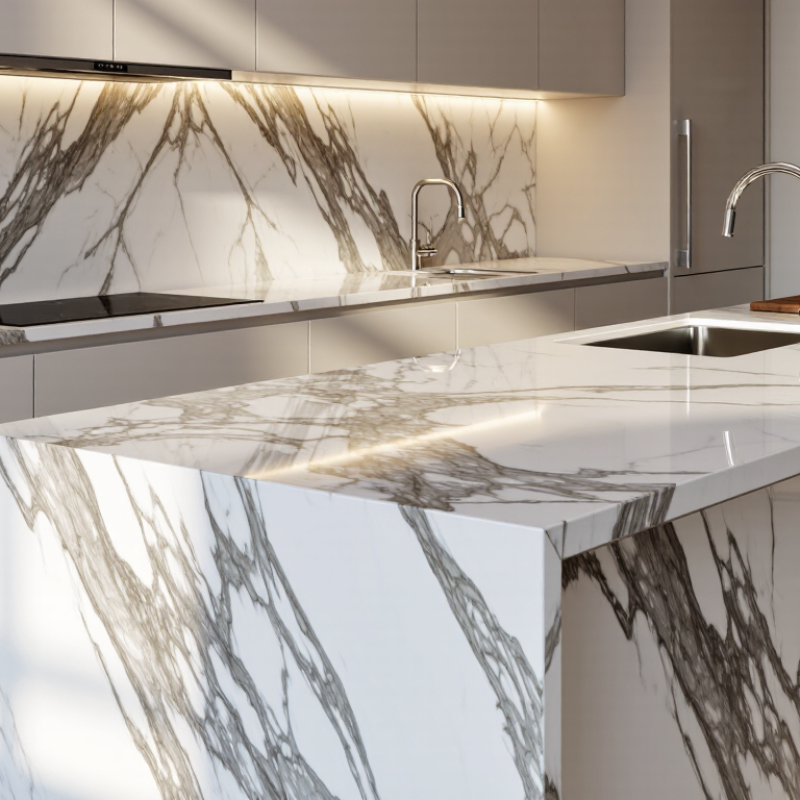
How to Choose Marble Countertops in 2026?

Identify Your Needs and Countertop Requirements

How to Choose Marble Countertops in 2026?

Identify Your Needs and Countertop Requirements

Start with how your kitchen actually works. Do you roll pastry, prepare acidic foods, or set down wet glasses every day? Marble contains calcite, so lemon juice and vinegar can etch its surface; sealers can reduce staining but cannot prevent etching. Measure the full counter run, including sink cutouts, backsplashes, overhangs, and seams. A small sample helps, but view a full slab too: veining and color can vary considerably.

Set practical priorities before choosing a finish. In the 2024 U.S. Kitchen Trends Study, Houzz reported that 5% of renovating homeowners chose marble countertops, compared with 42% choosing quartz. These figures describe surveyed homeowners, not every market, but they show marble is a more personal choice than a default one. Ask fabricators about slab thickness, edge profiles, seam placement, installation support, and care requirements. Polished marble reflects light; honed marble feels softer, yet may show marks differently. I still find this trade-off easy to underestimate.

Compare Marble Types, Colors, Veining, and Finishes

Marble varies from quiet, cool-gray surfaces to warmer stones with cream, beige, or gold tones. Carrara often has a soft gray background and fine, diffuse veining, while Calacatta commonly shows brighter white fields and stronger veins. These are general patterns, not guarantees; each slab has its own movement. View the actual slab, not just a small sample.

Veining affects how a countertop feels in a room. Fine, scattered lines can sit quietly beside detailed cabinetry, while broad veins become a focal point across an island. Ask how the fabricator plans to position the slabs and join seams. A vein that looks graceful in one piece may stop abruptly at an edge. I’d be cautious about choosing from a photo alone. Lighting changes the color.

Finish changes both appearance and daily upkeep. Polished marble reflects light and brings out contrast, but it can show etching from acidic foods, such as lemon juice. Honed finishes look softer and hide some small scratches, though spills may darken unsealed stone. Leathered surfaces add gentle texture, but crumbs can collect in deeper areas. No finish is maintenance-free. Check samples under your kitchen lighting, then consider how you actually cook and clean. I still find that the “perfect” stone can feel wrong once it meets the room.

How to Choose Marble Countertops in 2026? - Compare Marble Types, Colors, Veining, and Finishes

Commercial Marble Type Typical Color Typical Veining and Pattern Visual Effect Finish Considerations Practical Considerations
Carrara White to cool gray Usually fine, soft gray veining with a relatively consistent background Subtle, classic, and comparatively understated Polished emphasizes contrast and shine; honed gives a softer, matte appearance. A versatile choice when a quieter pattern is preferred. Inspect the actual slab for variation in tone and veining.
Calacatta Typically white or warm white Often broad, prominent veins in gray, sometimes with warm gold or brown tones Bold, high-contrast focal point A polished surface can heighten the color contrast; honed can soften the overall effect. Slabs can differ considerably. Review full slabs and plan seam placement to coordinate the veining.
Statuario White to bright white Distinct gray veins, ranging from sweeping lines to larger, more defined patterns Bright and dramatic, with strong natural movement Polished and honed are common options; assess the slab in the lighting planned for the room. Choose by the individual slab rather than the name alone, since pattern and background can vary.
Crema Marfil Cream, beige, or light tan Generally fine, low-contrast veining; some slabs show small mineral markings Warm and softly patterned Polished tends to enrich the warm color; honed offers a more muted look. Works well with warm-toned interiors. Check samples against cabinet and flooring colors under room lighting.
Emperador Dark Deep brown to dark chocolate Lighter beige or cream veins, often with a network-like pattern Rich, dark, and visually textured A polished finish can deepen the color; a honed finish gives a less reflective surface. View samples in the intended space, as darker stone can make a small or dim room feel heavier.
Danby White, light gray, or softly colored backgrounds Patterns vary by slab and may include gray or warm-toned veining Ranges from restrained to more expressive Compare polished and honed samples; the finish changes reflectivity and how the pattern reads. Select from the actual slab because appearance can vary noticeably between blocks and pieces.

Finish Comparison

Finish Appearance What to Consider
Polished Smooth, glossy, and reflective; often makes color and veining look more pronounced. Acid etching can dull the shine and leave visible marks, especially on darker or highly polished surfaces.
Honed Smooth, matte, or low-sheen appearance. Etching may be less conspicuous than on polished marble, but honed stone can show spills or staining more readily depending on its color and use.
Leathered or brushed Low-sheen surface with subtle texture; availability varies by stone and fabricator. Texture can make cleaning more involved. View a finished sample to check the feel, sheen, and appearance.

Selection and care note: Marble is a calcium-carbonate stone and can be etched by acidic substances such as lemon juice, vinegar, and many household cleaners. Sealing may help reduce staining, but it does not prevent acid etching or scratches. Use a stone-safe cleaner, wipe spills promptly, and confirm care guidance with the stone supplier. Natural color, veining, and performance vary; inspect the specific slab before fabrication.

Assess Slab Quality, Durability, and Potential Defects

Choose each marble slab under bright, angled light, not only showroom lighting. A moving lamp reveals hairline cracks, resin-filled fissures, dull patches, and uneven polish. Some veins are natural; a vein that opens at an edge may be a structural concern. Inspect the back, edges, and sink cutout area too. Ask the fabricator to mark proposed cuts on the actual slab. A beautiful surface can hide a weak spot where a faucet or narrow countertop section must go. Marble is relatively soft and acid-sensitive, so lemon juice or vinegar can etch its calcite-rich surface. Test a spare sample with water and a mild household acid only if you accept that visible change may remain.

Request a lot-specific laboratory report, not just a general stone brochure. ASTM C97/C97M test methods measure water absorption and bulk specific gravity; ASTM C880/C880M measures flexural strength. Compare the reported values across candidate slabs, and ask the supplier how the results relate to the stone’s intended use. Higher absorption can signal greater staining risk, but sealing does not make marble stain-proof. Check for filled fissures, mesh backing, and color-matched repairs, then confirm whether the quoted report covers your exact lot. I would not reject every filled vein, but I would want its location and repair method disclosed before fabrication. One detail is easy to miss: the sample may not represent the full slab.

Choose the Thickness, Edge Profile, and Fabrication Details

When choosing marble countertops, start with thickness, not appearance alone. Common slabs are about 2 or 3 centimeters thick, though local options vary. A thicker slab can feel substantial, but it adds weight and may need stronger cabinet support. Check the cabinet condition and planned overhang with your fabricator before ordering. Measure twice. A thin slab may need a built-up edge to create a thicker look, which can show a faint seam up close.

Edge profiles change both the room’s style and daily upkeep. A simple eased edge has a softly softened corner and is easy to wipe clean. Bullnose edges feel gentle, while more detailed profiles collect crumbs and need extra attention. Look at a full-size sample if possible; a profile that seems subtle on a small chip may appear bulky across a long island. I would not choose an edge from a drawing alone.

Fabrication details deserve equal care. Confirm sink and cooktop cutout locations, faucet-hole spacing, seam placement, and how the marble’s veins will meet at corners. Ask how exposed edges will be finished and whether the installer recommends sealing for your specific stone. Marble varies. A pale slab can have delicate veining in one area and a bold, unexpected band elsewhere. That variation is part of its appeal, but it can also make a planned layout look different once cut.

Plan Installation, Sealing, Cleaning, and Long-Term Care

Marble is beautiful, but it needs a realistic care plan. Houzz’s 2024 U.S. Kitchen Trends Study reports that 87% of renovating homeowners upgraded their countertops, underscoring how central this surface is to kitchen projects. Before ordering, ask the fabricator to inspect the slab under bright light and confirm cutout locations, edge details, and seam placement. Natural Stone Institute guidance notes that sealers can reduce staining but do not make stone stainproof. Marble can also etch when acidic foods touch its surface. That mark may remain. Decide whether you can live with a changing patina before choosing a polished finish.

Schedule installation after cabinets are level and firmly secured; even small gaps can complicate templating and support. Confirm who handles sink cutouts, faucet holes, and final seam checks. Ask the installer which sealer suits your stone, then follow its label for application and renewal. There is no dependable calendar for every slab. Clean spills promptly with a soft cloth and a pH-neutral stone cleaner. Avoid vinegar, lemon-based cleaners, and abrasive pads. One honest trade-off: daily care is simple, but keeping marble looking untouched may not be.

Tips: Test the sealer on an inconspicuous area first. Keep a cloth near the sink, and use boards for citrus and wine. Recheck high-use zones every few months; water darkening the surface can signal that it needs attention.