International Fluid Power Inc.
International Fluid Power - Innovative Partners For Global Sourcing Of Fluid Power Products. Your Complete Hydraulic Source in SE Minnesota.
Buying a Grain Semi Trailer is a major equipment decision, not just a choice between two price tags. The right trailer should suit the grain you haul, your routes, and the equipment already in your fleet. A trailer that works well on wide, smooth roads may feel less practical when yards are tight or loading areas are uneven. Small details matter.
Before comparing models, consider capacity, body construction, axle setup, suspension, tires, and unloading equipment. Check how the trailer’s weight affects the payload you can carry. Look closely at welds, hinges, doors, and seals; these parts face regular vibration, dust, and weather. Ask the seller for maintenance records and clear information about included features. If possible, inspect the trailer in person and operate its moving parts. A brochure cannot show everything.
These ten tips are designed to help buyers ask better questions and compare options with care. They are useful whether you are purchasing your first trailer or replacing an older unit. Still, no checklist catches every surprise. A buyer can overlook a small issue when focused on price or appearance. Take time to verify important details, and seek advice from a qualified mechanic when a condition is unclear. The best choice is not always the newest or least expensive. It is the trailer that fits your actual work, can be maintained reliably, and makes sense over years of use.
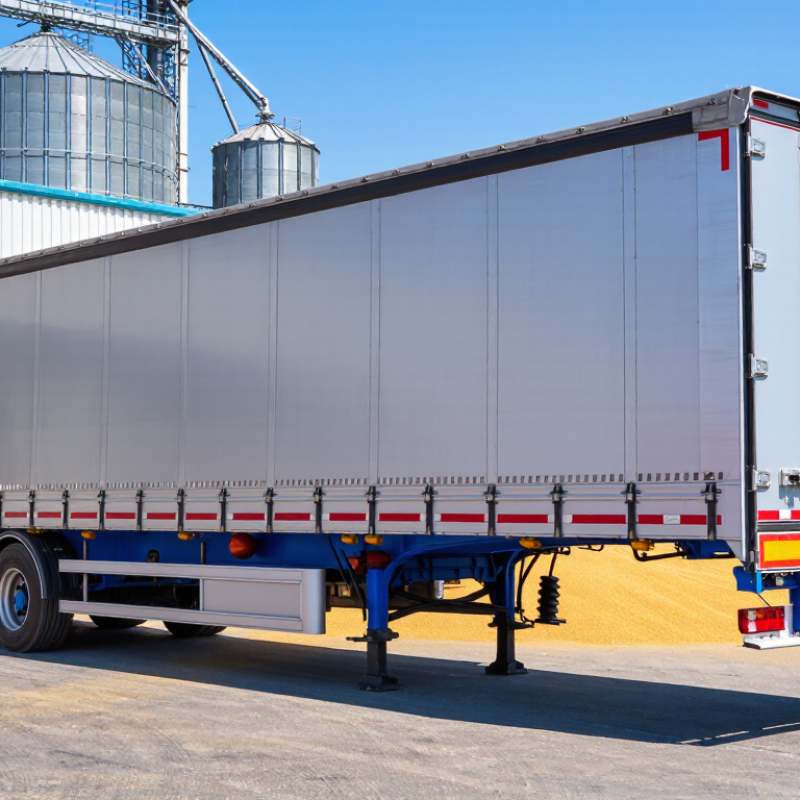
Before choosing a grain semi trailer, map the loads it will actually carry. Grain type, moisture, average trip distance, and unloading-site access all affect capacity and body design. USDA NASS’s January 2025 Crop Production report estimated 2024 U.S. corn production at about 14.9 billion bushels. That scale does not tell you what one farm needs, but it shows why harvest volume and timing matter. Estimate peak-week loads, not just annual tonnage.
Measure twice.
Then study the route and workday. A trailer that fits a wide elevator approach may struggle on a narrow farm lane or beneath low overhead lines. Check turning space, road surfaces, loading equipment, and whether unloading happens at a pit or through another system. The USDA’s Grain Transportation Report tracks grain freight rates and movement patterns; use its updates to understand changing transportation conditions, alongside your own local quotes.
Dust matters. So does wait time. A missed detail can turn a quick unload into an hour-long delay.
It is tempting to buy for the largest possible load, but added capacity is less useful if the trailer cannot maneuver or unload efficiently. Keep a simple record of actual payloads, route delays, and seasonal changes before settling on specifications.
Compare usable capacity, not just the advertised bushel figure. USDA grain standards use bushel weights of 56 pounds for corn and 60 pounds for wheat and soybeans. That means 1,000 bushels could weigh about 56,000 pounds of corn or 60,000 pounds of wheat. Actual payload depends on grain moisture, trailer tare weight, and applicable weight limits. A brochure figure alone can mislead.
Check trailer length, width, sidewall height, and hopper geometry against your loading site and unloading equipment. A taller body may add volume, but it can also create clearance problems under bins or in sheds. Measure the route and dump area. Small details matter. Compare axle count, spacing, and rated capacity, too. FHWA’s federal Interstate limits generally set 20,000 pounds for a single axle, 34,000 pounds for a tandem axle group, and 80,000 pounds gross; bridge-formula requirements and exceptions can also apply. An extra axle may distribute weight, but it does not automatically increase legal payload. Weigh the loaded combination, and check the rules for the routes you actually use. A little uncertainty is worth resolving before purchase.
A grain semi trailer earns its keep through tough seasons, not showroom shine. Compare steel and aluminum by payload, corrosion exposure, and repair needs. Steel can tolerate rough handling, but chipped coatings invite rust around seams and crossmembers. Aluminum reduces tare weight, yet dents and fatigue cracks deserve careful inspection. Look beneath the floor, especially near supports and welds. Small details matter.
Unloading equipment can turn a short delivery into a frustrating wait. Open and close every hopper gate; check for gritty movement, bent linkages, worn seals, and leaks. Ask how the trailer behaves on uneven ground, and whether its discharge layout suits your receiving pit. A steep hopper may help grain flow, but residue can still cling after unloading. Not always obvious. I would ask for a loaded demonstration, though I would not treat one test as proof of long-term reliability.
Safety features deserve the same scrutiny as capacity. Check brake condition, tire wear, lighting, reflective markings, handholds, and access points for cleaning or inspection. NHTSA’s 2022 Traffic Safety Facts recorded 5,837 fatal crashes involving large trucks; that figure is not trailer-specific, but it underlines the stakes of dependable equipment. Test the brakes and lights yourself when possible. Paperwork helps, but it can miss a cracked bracket or sticky gate.
Before buying a grain semi-trailer, match its kingpin position, fifth-wheel height, and axle ratings to the tractor. Check the tractor’s gross combination rating, wheelbase, tire capacity, and brake connections against the trailer specifications. A mismatch can shift weight onto the steering axle or reduce clearance at uneven farm entrances. Small details matter.
For U.S. interstate travel, the Federal Highway Administration’s Federal Size Regulations for Commercial Motor Vehicles lists general limits of 80,000 pounds gross, 20,000 pounds on a single axle, and 34,000 pounds on a tandem axle; bridge-formula limits also apply. These figures are not universal allowances: states may set different rules for other roads, seasonal routes, and permits. Have a certified scale check each axle group, not just the total load. Confirm route-specific height, length, and weight limits, especially near low bridges and older rural roads. The Federal Motor Carrier Safety Administration requires covered commercial vehicles to pass inspections at least every 12 months under 49 CFR 396.17. Review the inspection records, brakes, tires, ABS wiring, and air lines in person. Do not guess.
| No. | What to Check | Practical Buying Tip | Why It Matters |
|---|---|---|---|
| 1 | Truck and fifth-wheel compatibility | Confirm the tractor’s fifth-wheel type, coupling height, kingpin position, and permitted vertical and drawbar loads against the trailer manufacturer’s specifications. | A trailer that does not couple correctly or exceeds the tractor’s permitted loads may be unsafe or unusable. |
| 2 | Gross and axle weight ratings | Compare the trailer’s gross vehicle weight rating and axle ratings with the tractor ratings and the applicable road limits. Plan to weigh the loaded combination on certified scales. | Legal payload depends on the complete vehicle combination, axle spacing, axle loads, and local limits—not just the trailer’s volume. |
| 3 | Trailer dimensions and route access | Check overall length, width, height, turning clearance, and unloading-site access. Verify the figures for the exact trailer configuration and loaded condition. | Dimensional limits and permit requirements vary by jurisdiction and route; low structures, narrow roads, or tight yards can also restrict operation. |
| 4 | Capacity and expected grain density | Estimate required volume using the grain types you carry, their expected bulk density, and the trailer’s usable capacity. Check both volume and weight limits. | A trailer can reach its legal weight limit before it is full, or run out of volume before reaching that limit. |
| 5 | Brakes, air lines, and electrical connections | Verify that the trailer’s braking system, air connections, electrical plug, and lighting are compatible with the tractor and meet local inspection requirements. | Correctly functioning brakes, lamps, and connections are essential for safe operation and roadworthiness. |
| 6 | Axles, suspension, and tires | Review axle and suspension ratings, tire load ratings, wheel condition, and tire size. Check that the configuration suits expected loads and road conditions. | These components affect load distribution, handling, durability, and compliance with weight and equipment rules. |
| 7 | Unloading system and site requirements | Confirm the discharge method, outlet dimensions, door operation, and required ground clearance. Make sure the receiving pit or equipment can accept the discharge rate and configuration. | Unloading compatibility affects cycle time and helps prevent delays or unsafe workarounds at the delivery site. |
| 8 | Weather protection and grain sealing | Inspect the cover, seams, access points, doors, and seals. Ask how the design limits rain entry and grain loss during transport. | Keeping moisture out and cargo contained helps protect grain quality and reduces spillage risks. |
| 9 | Applicable transport regulations | Before purchase, check the rules where the trailer will be registered and operated, including vehicle dimensions, axle and gross weights, brakes, lighting, inspections, permits, and cargo securement. | Requirements differ between countries and regions, and may also vary by road or route. Confirm current requirements with the relevant transport authority. |
| 10 | Documentation, inspection, and total cost | Review the title or registration documents, identification details, maintenance and inspection records, and any required conformity documents. Budget for tires, brakes, maintenance, insurance, and permits. | Documentation and condition checks can reveal compliance issues and help estimate the real cost of ownership. |
A grain semi trailer can look clean and still hide costly wear. Inspect it in daylight, with the trailer empty if possible. Look for bowed floor panels, soft spots, cracked welds, and rust around crossmembers. Run a hand along accessible seams, but wear gloves. Open each gate and check that it moves evenly and seals tightly. A little grain residue can reveal leaks; fresh paint can conceal them. Check tires for uneven wear, then inspect brake components, lights, air lines, and tarp hardware. Small details matter.
Ask for maintenance records and compare them with the trailer’s visible condition. A missing service note is not proof of neglect, but it leaves questions. Read the warranty carefully: confirm its duration, covered parts, exclusions, and whether labor is included. Ask how claims are handled and whether coverage transfers to a new owner. I still think buyers can overvalue a long warranty; unclear exclusions may make it less useful than it sounds.
Estimate ownership costs beyond the purchase price. Include tires, brake repairs, tarp replacement, routine inspections, registration, and likely downtime. Ask a qualified mechanic to inspect areas you cannot safely assess yourself. A written estimate helps. It will not predict every repair, and that part is frustrating. Compare the trailer’s expected yearly costs with the work it needs, not just its sale price.
This is an example of a widget area that you can place text to describe a product or service. You can also use other WordPress widgets such as recent posts, recent comments, a tag cloud or more.
© 2025 International Fluid Power, Inc. All Right Reserved.