International Fluid Power Inc.
International Fluid Power - Innovative Partners For Global Sourcing Of Fluid Power Products. Your Complete Hydraulic Source in SE Minnesota.
Choosing a Nickel Alloy Round Bar is not just a matter of picking a grade from a catalog. The bar must suit its environment, loading, machining plan, and final inspection requirements. A shaft exposed to chloride splash, for example, faces different risks from a furnace fixture exposed to heat and oxidation. Small specification choices matter.
The U.S. Geological Survey’s Mineral Commodity Summaries 2025 estimated global nickel mine production at about 3.7 million metric tons in 2024. That figure reflects nickel’s broad industrial importance, but it does not mean every nickel alloy performs alike. Composition, heat treatment, bar condition, and traceability can change service behavior. Joseph R. Davis, editor of ASM Specialty Handbook: Nickel, Cobalt, and Their Alloys, provides a useful materials-selection perspective: alloy choice should follow the intended service conditions, not a generic label. This is a paraphrase of the handbook’s technical approach, not a direct quotation.
The seven tips ahead focus on practical checks: corrosion exposure, temperature, strength, dimensional tolerances, manufacturing route, certification, and supplier quality. Ask for the material test report. Check the heat number against the bar. Confirm the required condition before machining. These steps are simple, but easy to miss when a deadline is tight. One limitation deserves attention: published property values cannot predict every field condition. Validate critical choices with qualified materials specialists and relevant test data.
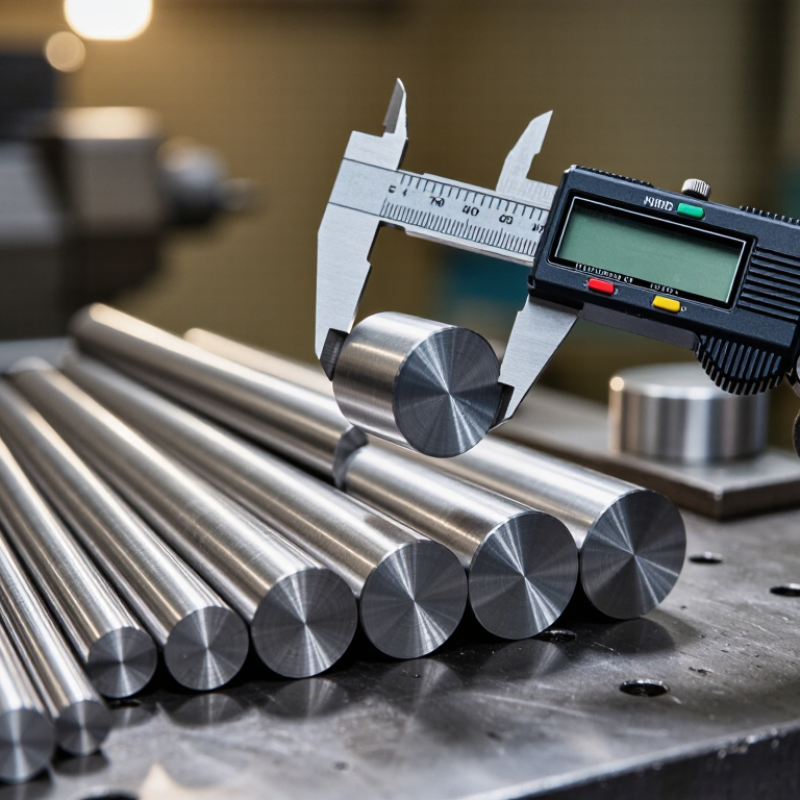
Choosing a nickel alloy round bar starts with its actual job, not just its alloy designation. Will it sit in hot gas, seawater, a chemical process stream, or a humid outdoor enclosure? These environments place different demands on corrosion resistance. Record the operating temperature, pressure, exposure time, and likely contaminants. A brief temperature spike can matter as much as steady heat. Small details matter.
Tip: Describe the service conditions in plain terms before comparing grades. Note whether the bar will be machined, welded, or left exposed, and identify the component’s load and dimensions. For example, a pump shaft facing chloride-bearing water needs different checks from a fixture used indoors. “Corrosion-resistant” is not a complete specification.
Then compare candidate alloys against reliable technical data for the exact environment and temperature range. Check mechanical properties in the required product form and condition; values can vary with processing. Confirm tolerances and certification needs with the supplier, and ask how the material will be verified. It is easy to focus on corrosion and overlook fabrication. I would not assume a familiar grade is automatically suitable: real service conditions can be messy, and test data may not match every detail of an installation.
Nickel alloy round bar selection starts with the service environment, not the catalog description. Alloy 200 and 201 offer high nickel content and useful resistance in many caustic environments. Alloy 201’s lower carbon content can be preferable at elevated temperatures. For reducing conditions, Alloy 400 is often considered, though it is not a universal choice for oxidizing chemicals.
For hotter equipment, compare Alloy 600’s oxidation resistance with Alloy 625’s strength and resistance to localized corrosion. Alloy 718 can provide high strength after suitable heat treatment, but its properties depend on the supplied condition. These differences matter when a bar becomes a machined shaft or a pressure-bearing component. Check the actual temperature, fluid chemistry, and expected loads. Small changes can alter the best grade.
Ask for the material test certificate, dimensions, and heat-treatment details. Then compare the specified mechanical and corrosion properties with the application requirements. A grade name alone is not enough. I would also verify machining allowance and bar straightness before ordering; these details are easy to overlook. Corrosion tables help, but they cannot reproduce every process condition. When exposure is uncertain, testing a representative sample may be wiser than relying on a neat chart.
Round bar selection starts with the finished part, not the stock rack. Specify the alloy grade, diameter, length, tolerance, and straightness requirement. Then allow enough machining stock for facing and turning. ASM International property data list UNS N06625 at about 8.44 g/cm³, useful when estimating bar weight and lifting needs. ASTM B446 covers rod and bar requirements for this alloy. A standard reference helps, but it does not replace a clear purchase specification.
Tip: Match shape to the job. Round bar suits shafts and turned parts; hexagonal stock may reduce machining for wrench flats. Check whether the supplier can provide the needed shape and size without excessive material removal.
Manufacturing condition matters, too. Ask whether the bar is hot-worked, cold-worked, or solution-annealed, and request the condition on the inspection documents. These states affect strength, machinability, and forming behavior. A harder condition may hold dimensions well, yet increase tool wear. Annealed stock can be easier to machine, but the finished part may need further heat treatment. Confirm the required mechanical properties against the applicable specification and operating temperature. A perfect drawing still misses handling realities: long bars can arrive bowed, and that allowance is easy to underestimate.
Compare nominal diameters using their calculated cross-sectional areas. These values are geometric calculations (area = π × diameter² ÷ 4), not load ratings. When selecting nickel alloy round bar, also confirm the required alloy and material condition, manufacturing route, dimensional tolerances, and applicable specification with your supplier.
Choosing a nickel alloy round bar starts with a precise specification. ASTM B446, for example, covers UNS N06625 rod and bar. State the grade, product form, dimensions, and required condition on the purchase order. The worldstainless report Stainless Steel in Figures 2024 records 58.4 million tonnes of stainless steel production in 2023. That scale makes clear why exact grade identification and traceable records matter across complex metal supply chains.
Tip: Request the material test report before shipment. Check that its heat number matches the bar’s marking, then compare the reported chemistry and mechanical properties with the ordered specification. Confirm the test method, results, and unit system; do not treat a portable positive material identification reading as a substitute for a full laboratory certificate. Ask the supplier to clarify missing fields. Small mismatches matter.
Review any inspection or heat-treatment records required by the purchase order, and retain them with the receiving inspection notes. A certificate can look complete and still refer to the wrong heat. Verify it against the physical bar and your specification. One extra check helps.
7 Tips for Choosing Nickel Alloy Round Bar
Balance Availability, Cost, and Long-Term Performance
Tip 1: Define the service conditions before comparing prices. Note operating temperature, exposure to chemicals, pressure, and expected service life. A bar suited to a warm, dry assembly may not perform well in a corrosive process. Tip 2: Match the alloy grade to those conditions, then verify its specification and condition with the supplier. Details matter.
Tip 3: Check stock dimensions and lead times early. A commonly stocked diameter may arrive sooner than a custom size, reducing storage and schedule costs. Tip 4: Compare total cost, not just price per kilogram. Include machining allowance, testing documents, delivery, and likely replacement downtime. Tip 5: Ask what documentation accompanies the material, such as a test certificate showing chemistry and mechanical properties. Keep the records with the job file. They help later.
Tip 6: Consider machinability alongside strength and corrosion resistance. A harder bar can increase tool wear and processing time, so discuss cutting needs before ordering. Tip 7: Balance a small upfront saving against the risks of an unsuitable grade or delayed supply. I would not assume the longest-life option is always best; actual exposure and maintenance can differ from estimates. Review the choice with an experienced materials or engineering professional, especially when service conditions remain uncertain.
| Tip | What to Check | Useful Data or Example | Why It Matters |
|---|---|---|---|
| 1. Define the service environment | Record the operating temperature, chemicals, concentration, pressure, and exposure duration before selecting a grade. | For example, UNS N04400 (Alloy 400) is a nickel-copper alloy commonly selected for certain marine and chemical environments; suitability still depends on the specific medium and conditions. | A grade that performs well in one environment may corrode or lose strength in another. Confirm selection against application-specific corrosion data. |
| 2. Match the alloy to the main failure risk | Identify whether corrosion resistance, elevated-temperature strength, or another property is the primary requirement. | UNS N06625 (Alloy 625) contains 8–10% molybdenum and 3.15–4.15% niobium plus tantalum by weight; these additions contribute to its strength and corrosion resistance. | Choosing for the actual limiting condition can avoid paying for properties the design does not need—or selecting a grade that underperforms. |
| 3. Confirm the exact size and product condition | Specify diameter, length, tolerances, finish, straightness, and required heat-treatment condition. Confirm that the quote is for round bar, not a different product form. | Mechanical properties can differ with alloy, product specification, heat treatment, and test orientation. State the governing specification and condition on the purchase order. | A nominally correct grade may still be unsuitable if its size, tolerance, or supplied condition does not meet the drawing or design requirements. |
| 4. Check stock availability before finalizing the design | Ask suppliers to confirm the required grade, diameter, length, condition, and quantity—not just general availability of the alloy. | Special diameters, long lengths, and less commonly stocked grades may require production or longer lead times. Availability varies by region and supplier. | Early stock checks can reveal lead-time risks and help assess whether an approved alternative grade or size is practical. |
| 5. Compare total material cost, not price per unit alone | Compare quoted price alongside minimum order quantity, cutting charges, shipping, lead time, machining allowance, and expected scrap. | As a mass-planning reference, Alloy 625 has a density of approximately 8.44 g/cm³, while Alloy 718 is approximately 8.19 g/cm³. Actual bar mass depends on dimensions and tolerances. | A lower quoted price may not mean a lower finished-part cost. Use the required material quantity and full procurement costs for comparison. |
| 6. Review machinability and manufacturing needs | Discuss cutting method, tool wear, machining allowance, and any forming, welding, or finishing steps with the manufacturing team. | Nickel alloys can require more demanding machining practices than many common steels. Machining behavior depends on the alloy, supplied condition, tooling, and process parameters. | Manufacturing time, tooling, and yield can materially affect the cost and delivery schedule of the finished part. |
| 7. Require traceable inspection documents | Specify a material test report and verify grade, heat or lot identification, chemistry, mechanical tests, dimensions, and applicable specification. | Common examples include UNS N06600 (Alloy 600), N06625 (Alloy 625), N07718 (Alloy 718), and N10276 (Alloy C-276). Confirm the required UNS designation and product specification on the documentation. | Traceability helps confirm that the delivered bar matches the purchase requirements and supports quality records and future investigation. |
Note: Composition and density figures are typical reference values, not acceptance limits. Verify the applicable material specification, product condition, and certified test results for the actual order.
This is an example of a widget area that you can place text to describe a product or service. You can also use other WordPress widgets such as recent posts, recent comments, a tag cloud or more.
© 2025 International Fluid Power, Inc. All Right Reserved.