International Fluid Power Inc.
International Fluid Power - Innovative Partners For Global Sourcing Of Fluid Power Products. Your Complete Hydraulic Source in SE Minnesota.
Choosing a Welded Tantalum Tube supplier calls for more than comparing prices. Tantalum’s resistance to corrosion and performance in demanding environments make it useful in chemical processing, heat exchangers, and specialized equipment. But material reputation alone cannot confirm that a tube suits a particular design.
This guide introduces ten suppliers for global buyers and offers practical points for comparing them. Check available diameters, wall thicknesses, tolerances, surface condition, and welding capabilities against your project requirements. Ask for material certificates, inspection records, and clear information about how products are tested. Details matter. A polished catalog is helpful, but it does not replace technical evidence or a direct discussion with the supplier.
Lead times, export packaging, communication, and after-sales support can matter as much as the specification sheet. Buyers may also want to clarify whether a supplier can provide custom dimensions and consistent documentation for repeat orders. The best choice depends on the application, not just a ranking. That sounds obvious, yet it is easy to overlook when deadlines are tight. This overview is a starting point, not a substitute for reviewing current product data and confirming requirements with qualified engineers. Compare claims carefully, ask specific questions, and leave room for uncertainty where information is incomplete.
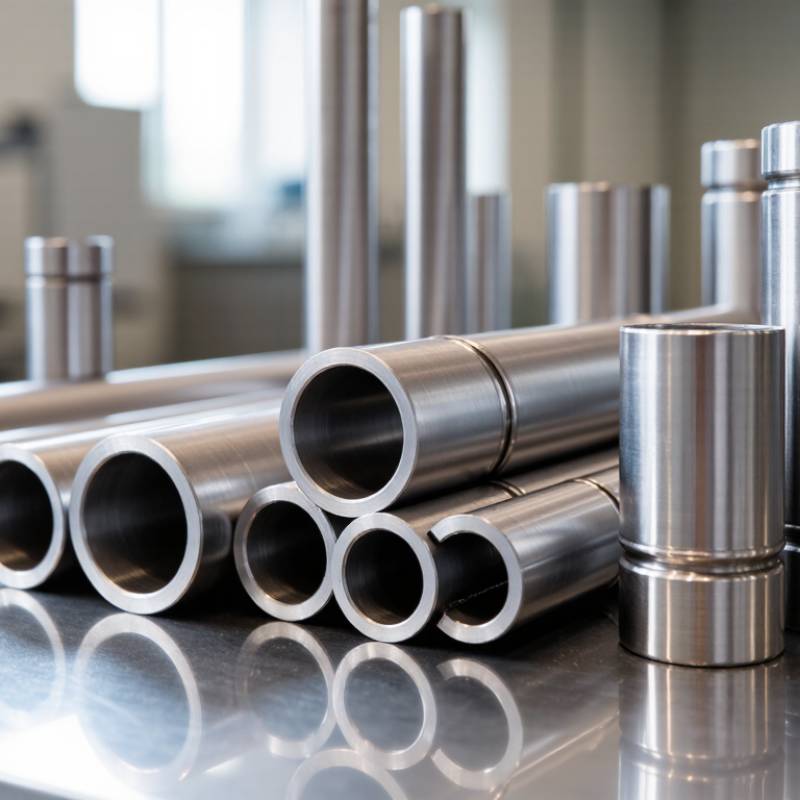
Welded tantalum tubes are formed by rolling tantalum sheet into a cylinder and joining the seam. Their thin walls can support compact equipment designs, while tantalum resists corrosion in many demanding chemical environments. Common applications include heat exchangers, acid-handling systems, and selected semiconductor process equipment. Performance depends on the chemical, its concentration, temperature, and impurities; hydrofluoric acid can attack tantalum. A weld is still a weakness to question. Buyers should check material traceability, seam examination, dimensions, and pressure requirements rather than relying on the metal name alone.
Supply context matters too. The USGS Mineral Commodity Summaries 2024 estimated global tantalum mine production at about 2,100 metric tons in 2023. That figure is not tube output, but it highlights the value of qualified sourcing and consistent lot records. Request chemistry and mechanical test documentation, weld inspection details, and information on forming or annealing. ASTM B521 covers seamless and welded tantalum and tantalum-alloy tubes; confirm the applicable edition and grade with the engineering team. Small details count. A pinhole, rough internal seam, or poorly matched fitting can become a maintenance problem. Thermal cycling also deserves attention because repeated stress can affect welded joints.
When evaluating global welded tantalum tube suppliers, look beyond catalog dimensions. Ask how they control tantalum grade, wall thickness, and weld consistency across production batches. A tube intended for corrosive service may fail early if contamination or an uneven seam goes unnoticed. Request material test reports that link each batch to its heat or lot number.
Inspect the evidence. Useful records may include weld inspection results, dimensional checks, and non-destructive testing details, where appropriate to the application. Ask about acceptable ovality, straightness, and surface finish, then compare those limits with your actual drawings. A clear sample report is more useful than a broad quality promise. Check whether the supplier can explain its testing method in plain language.
Delivery matters, too. Confirm production lead times, packaging that protects thin walls, and how changes to specifications are handled. A small trial order can reveal communication gaps before a larger commitment. Not every supplier will offer the same inspection scope, so define critical checks before comparing quotations. Paperwork can look convincing; it still needs to match the tube received. Expect some uncertainty, especially when requirements are unusual, and document decisions carefully.
A precision mill may suit buyers needing repeatable dimensions and documented chemistry. Ask for wall-thickness tolerance data. Small deviations matter.
A vacuum-welding specialist often focuses on clean seams and controlled atmospheres. Request cross-section images or sample inspection records. A custom fabrication shop can handle unusual diameters, short runs, and cut-to-length orders, though lead times may vary. An established refractory-metals producer may offer stronger traceability, including batch numbers linked to inspection reports.
A narrow-focus tube maker may provide close process control for thin-wall products. Check seam consistency along the full length. A research-oriented supplier can support trial quantities and prototype adjustments, but its production capacity may be limited. A distributor with in-house inspection may shorten sourcing time; confirm what testing happens on site. A supplier serving high-temperature equipment markets should explain how it controls contamination and surface condition. Details matter.
An export-focused manufacturer may coordinate packing and shipping documents for overseas orders. Clarify packaging protection against scratches and moisture. A machining-and-tube supplier can deliver finished components, reducing extra handling, but confirm that machining does not compromise the tube wall. Finally, a technically responsive supplier is valuable when specifications are incomplete. Compare written answers, not just price. Some profiles overlap, and that is worth questioning. Ask each candidate for current capability evidence before treating a catalogue claim as proof.
Compare welded tantalum tube suppliers on evidence, not brochure claims. Ask for production ranges, wall-thickness tolerances, weld inspection methods, and documented lead times. Request lot-level chemical analysis and traceability from raw material through finished tube. ASTM B521 covers tantalum and tantalum-alloy seamless and welded tubes; specify the applicable edition and purchase requirements. ISO 9001 certification supports process control, but confirm its scope covers the actual manufacturing site. A certificate alone proves little about a specific weld. Review sample inspection records for weld continuity, surface condition, dimensions, and non-destructive testing.
USGS Mineral Commodity Summaries 2024 estimated global tantalum mine output at about 2,100 metric tons in 2023. That figure describes mined material, not tube capacity, but it underscores the value of confirmed feedstock plans and realistic allocation commitments. Still, a polished audit file cannot replace a trial lot; paper review has limits.
Tips: Compare certificates, inspection reports, and sample tubes against the same specification. Ask whether test records are traceable to each shipment, not merely to a general production batch.
Global sourcing starts with the service conditions, not the lowest quotation. Specify tantalum grade, tube diameter, wall thickness, length, weld configuration, and dimensional tolerances. Share expected temperature, pressure, and chemical exposure so suppliers can assess whether their product suits the application. Ask for material certificates tied to the production lot, plus weld inspection methods and acceptance criteria. Traceability matters. A first-article sample can reveal ovality, rough edges, or uneven seams before a larger order is placed.
Compare more than unit price. Confirm lead time, minimum order quantity, payment currency, delivery terms, and who arranges freight and insurance. Ask how tubes will be protected during transport; capped ends and rigid supports can help prevent damage. Small details count. Check that labels match the paperwork and that inspection records are available before shipment. A polished datasheet is useful, but it cannot replace clear answers about quality controls and production changes.
For cross-border purchases, estimate the total landed cost, including freight, duties, and possible inspection expenses. Build time into the schedule for sample review and transit delays. Keep specifications and acceptance requirements in writing, since vague wording can create avoidable disputes. No checklist is perfect. Buyers may still need to revisit assumptions after testing a sample under real operating conditions.
This is an anonymized sourcing guide, not a verified supplier ranking or directory. The entries describe supplier types and common buyer checks; confirm actual product availability, qualifications, lead times, and documentation directly with each supplier.
| No. | Supplier Type | Potential Fit | Key Capability to Verify | Documentation to Request | Global Sourcing Consideration |
|---|---|---|---|---|---|
| 1 | Specialist refractory-metal producer | Buyers seeking direct access to tantalum material and traceable production routes. | Whether welded tube is produced in-house or supplied through a qualified fabricator; available grades, dimensions, and tolerances. | Material test report, heat or lot traceability, and any applicable inspection records. | Confirm which production steps are controlled by the supplier and which are subcontracted. |
| 2 | Precision welded-tube fabricator | Projects requiring custom tube dimensions or controlled weld and finishing operations. | Welding process, seam inspection method, dimensional controls, and capability for the requested wall thickness. | Weld procedure information, inspection results, dimensional report, and material certificates. | Ask for sample approval and agreed acceptance criteria before placing a production order. |
| 3 | Custom non-ferrous tube manufacturer | Buyers comparing tantalum with other corrosion-resistant or high-temperature materials. | Demonstrated experience with tantalum specifically, including contamination controls and handling procedures. | Material identification records, process controls, and evidence supporting the stated grade. | Check that equipment and handling practices are suitable for tantalum rather than inferred from other alloys. |
| 4 | Engineered component fabricator | Assemblies that need tube, bends, end features, or other fabrication in one purchase order. | Available forming, cutting, joining, and finishing operations, plus control of distortion during fabrication. | Approved drawings, inspection plan, process records, and final dimensional report. | Clarify responsibility for design changes, rework, and inspection of subcontracted operations. |
| 5 | Small-batch and prototype supplier | Development programs, qualification builds, and low-volume requirements. | Minimum order quantity, prototype lead time, repeatability, and transition plan to production quantities. | Sample inspection report, material traceability, and a written quotation with stated assumptions. | Confirm whether prototype pricing and lead times differ materially from repeat-order terms. |
| 6 | High-volume industrial supplier | Buyers with recurring demand and stable, repeatable specifications. | Production capacity, scheduling controls, lot consistency, and contingency plans for supply interruptions. | Quality-system documentation, lot records, inspection data, and change-notification terms. | Assess capacity allocation, forecast requirements, and the effect of order-volume commitments. |
| 7 | Regional stockholding distributor | Urgent or smaller orders where local availability is more important than direct mill sourcing. | Whether stock is welded tantalum tube of the required specification and whether original lot traceability is maintained. | Original material certificates, stock identification, and distributor inspection or repackaging records. | Check country of origin, export status, local inventory condition, and any added handling or certification fees. |
| 8 | Export-oriented metal-products supplier | International buyers seeking consolidated export documentation and shipment coordination. | Experience shipping tantalum products, export packing methods, and ability to meet destination-country requirements. | Commercial invoice, packing list, origin information where applicable, and product-specific quality records. | Agree on Incoterms, importer responsibilities, insurance, and customs classification with qualified trade personnel. |
| 9 | Application-focused engineering supplier | Projects where operating conditions or tube design need technical review before purchase. | Technical support scope, design-review process, and ability to document assumptions and limitations. | Technical datasheet, approved drawing, material specification, and written confirmation of the agreed scope. | Keep engineering approval separate from commercial claims; validate suitability for the actual service conditions. |
| 10 | Qualified contract manufacturer | Buyers requiring production to a controlled drawing, quality plan, or customer-specific specification. | Document control, nonconformance handling, inspection equipment, and approval of any process changes. | Quality plan, inspection records, traceability documents, and applicable third-party or customer audit evidence. | Define audit access, record-retention period, change control, and corrective-action expectations in the contract. |
Buyer checklist: specify grade, outside diameter, wall thickness, length, tolerances, weld and inspection requirements, surface condition, quantity, destination, and required certificates. Where relevant, ask suppliers to identify the applicable edition and scope of ASTM B521, which covers tantalum and tantalum-alloy seamless and welded tubes; verify that the ordered product and acceptance criteria match the specification.
This is an example of a widget area that you can place text to describe a product or service. You can also use other WordPress widgets such as recent posts, recent comments, a tag cloud or more.
© 2025 International Fluid Power, Inc. All Right Reserved.