International Fluid Power Inc.
International Fluid Power - Innovative Partners For Global Sourcing Of Fluid Power Products. Your Complete Hydraulic Source in SE Minnesota.
The 2026 car market is becoming more demanding, especially for charging systems in hybrid, commercial, and passenger vehicles. This guide examines the top Car Alternator suppliers by product quality, application coverage, testing standards, and after-sales reliability. A strong supplier should offer stable voltage output, accurate OE cross-referencing, and clear technical documentation. Warranty support matters too.
Real-world performance often depends on details that product pages overlook. Consider a cold morning start, a noisy belt system, or a delivery van running lights for ten hours. These conditions reveal whether an alternator is genuinely dependable. Our review considers new and remanufactured units, pulley design, regulator quality, bench-testing procedures, and regional inventory. It also compares supplier experience across major vehicle platforms and replacement channels.
No supplier is perfect.
Some claims remain difficult to verify without long-term field data. Therefore, this overview avoids relying on marketing language alone. It gives greater weight to documented specifications, independent testing, consistent customer feedback, and technical support from established manufacturers. Pricing is included, but it is not the only measure of value. A cheaper unit may create repeat labor costs if its regulator fails early or its bearings become noisy.
The leading suppliers for 2026 are assessed with practical purchasing decisions in mind. Fleet managers, repair shops, distributors, and vehicle owners need different strengths. Availability may outweigh brand recognition in one market, while warranty handling may matter more in another. This guide provides a balanced starting point, while acknowledging that final selection should match the vehicle, electrical load, climate, and installation conditions.
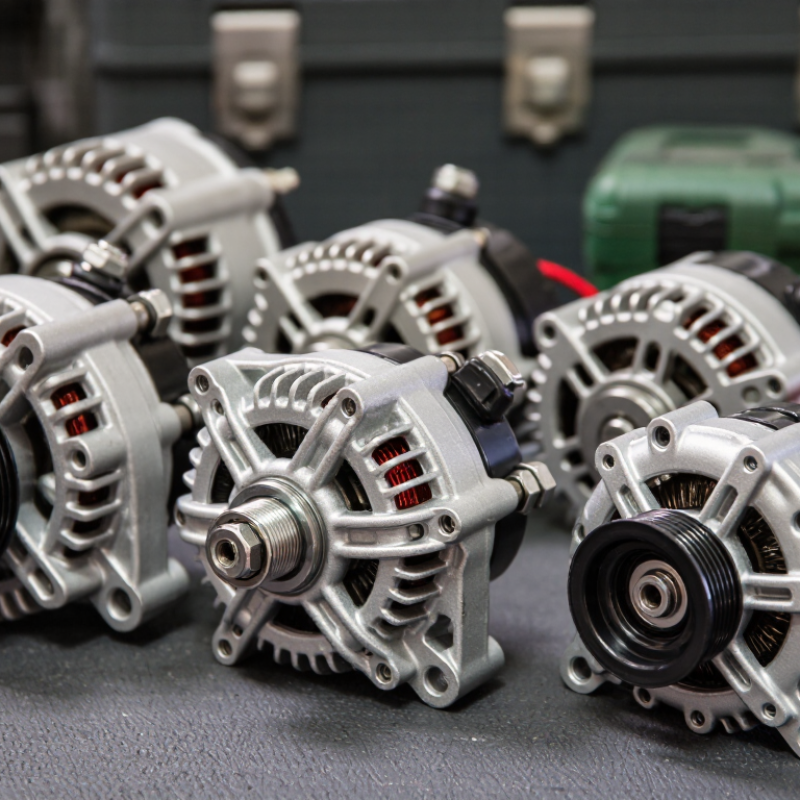
A top car alternator supplier in 2026 is defined by proven performance, not attractive catalog pages. Field experience shows that modern vehicles demand stable voltage under heavy electrical loads. Heated seats, driver-assistance systems, and frequent stop-start cycles can expose weak designs quickly. Reliable suppliers publish tested output data, temperature limits, pulley specifications, and compatibility records. They also explain how testing was performed.
Clear evidence matters. A serious supplier should provide traceable production batches, inspection reports, and a practical warranty process. Technical support should help technicians confirm belt alignment, charging voltage, connector design, and installation torque. Small details prevent expensive comebacks. Fast answers matter too.
Not every supplier gets every fitment right. That is worth admitting. Vehicle revisions can create confusing compatibility gaps, even within one model year. A trustworthy supplier updates its database when errors appear and accepts technical feedback from workshops. It should also inspect returned units instead of blaming installation immediately. I would question any supplier promising universal performance without conditions. Real reliability depends on heat, vibration, driving patterns, and electrical demand. Responsible manufacturers measure these variables and communicate their limits plainly. Sustainability also matters, including repairable components, controlled material sourcing, and core recovery programs. Claims should be supported by records, not vague green language. A top supplier earns confidence through consistent evidence, honest limitations, and support that remains useful after purchase.
What Are the 2026 Top Car Alternator Suppliers?
Key Criteria for Comparing Car Alternator Suppliers
A strong alternator supplier begins with verified vehicle coverage, not a large online catalog. S&P Global Mobility reported that the average U.S. vehicle age reached 12.6 years in 2024. This increases demand for reliable replacement units across older passenger cars and light trucks. Suppliers should provide exact fitment data, amperage ratings, pulley specifications, and voltage compatibility. A wrong connector can turn a simple installation into a costly return.
Manufacturing evidence matters more than marketing language. Look for IATF 16949 certification, ISO 9001 systems, documented end-of-line testing, and traceable production batches. The supplier should test voltage stability, bearing noise, diode performance, and thermal resistance. Automotive aftermarket research also shows that parts availability strongly influences repair decisions. Therefore, regional warehouses, realistic lead times, and stable stock deserve careful comparison. Cheap pricing alone is not enough.
Warranty terms reveal practical confidence. Compare coverage length, claim procedures, and technical support response times. Ask for field-return data when available. A supplier reporting failure rates transparently may be more dependable than one showing only impressive sales figures. Still, public data can be incomplete. Catalog size does not prove durability, and laboratory results may not reflect winter roads, dust, or repeated short trips. I would inspect sample units personally before approving large-volume purchasing. Five minutes of checking can prevent weeks of avoidable returns.
In 2026, the strongest car alternator suppliers will likely be tier-one manufacturers with deep original-equipment relationships. Their advantage comes from validated designs, stable factory output, and regional service networks. These suppliers usually support passenger cars, commercial vehicles, and hybrid platforms. Their market position depends less on catalog size and more on testing consistency.
Mordor Intelligence projects steady growth for the automotive alternator market through 2030, supported by vehicle production and replacement demand. OICA reported global motor-vehicle production above 75 million units in 2024. That installed base keeps remanufactured and aftermarket alternators commercially important. Independent aftermarket suppliers compete through broader fitment coverage, faster delivery, and lower ownership costs. Some also offer high-output units for fleets, taxis, and vehicles with added electrical equipment.
The IEA reported that global electric-car sales exceeded 17 million units in 2024. This shift may reduce long-term demand for conventional alternators, although hybrids still require carefully integrated charging systems. Supplier comparisons should therefore examine efficiency, thermal testing, warranty records, and local inventory. Certification evidence matters more than promotional claims. Market rankings remain imperfect because private companies disclose limited revenue data. A supplier with modest global visibility may still dominate a regional repair channel. That point deserves more attention in 2026.
In 2026, reliable alternator suppliers will prove compatibility beyond a basic vehicle model search. Check the exact engine, production year, output rating, mounting points, pulley design, and electrical connector. A matching voltage alone is not enough. The original equipment number and vehicle identification number provide stronger confirmation. Fitment databases can contain errors, so experienced technicians should compare photos and dimensions before ordering.
Quality depends on documented controls, not attractive packaging. Look for suppliers that use traceable components, balanced rotors, tested regulators, and corrosion-resistant housings. Certifications such as ISO 9001 or IATF 16949 can support credibility, but certificates do not guarantee every unit performs well. Ask for inspection records, load-test results, and clear remanufacturing procedures. Small details matter.
Warranty coverage often separates dependable suppliers from risky ones. Review the warranty period, claim process, replacement terms, and exclusions for installation errors or modified electrical systems. Confirm whether labor, shipping, and diagnostic costs are covered. A 24-month warranty sounds useful, yet difficult claims reduce its real value. I have seen suppliers list broad coverage while providing vague conditions. That deserves careful questioning. Keep the invoice and installation record. They may become essential.
Choosing the right car alternator supplier requires more than comparing online prices. Start with exact vehicle fitment, including engine size, model year, mounting points, pulley type, and connector design. A reliable supplier should provide clear specifications, tested output ratings, and compatibility data for each application.
Ask how the alternators are tested. Load testing at operating temperature matters because some units perform well on a cold workbench but fail after prolonged driving. Check voltage stability, bearing noise, diode performance, and ripple levels. Quality suppliers can explain their inspection process and provide traceable production details. They should also offer practical warranty terms, responsive technical support, and a fair core-return policy for remanufactured units.
Small details matter.
I once trusted a matching part number without checking the pulley alignment. The installation looked correct, yet the belt ran unevenly and wore quickly. That mistake changed my buying checklist. Request photos, connector diagrams, and dimensional drawings when listings seem vague. For commercial vehicles or cars with high electrical loads, confirm continuous output instead of relying on peak amperage. Ask whether testing covers stop-start systems, heated accessories, and frequent short trips.
A lower price can hide weak bearings, recycled components, or limited after-sales support. Still, a higher price is not automatic proof of quality. Compare documented testing, warranty coverage, delivery consistency, and technical communication. The best supplier is the one that makes verification easy, not the one that makes the strongest promise.
Supplier evaluation matrix based on product coverage, technical capability, quality controls, delivery performance, and after-sales support
| Supplier Category | Typical Product Coverage | Common Electrical Ratings | Vehicle Application Focus | Quality and Certification Evidence | Standard Testing Capability | Typical Warranty Range | Typical Delivery Profile | Core and Remanufacturing Policy | Best Fit for Buyers |
|---|---|---|---|---|---|---|---|---|---|
| Original-Equipment Manufacturing Supplier | New alternators engineered for production vehicles and replacement channels. New units OE specifications | Mainly 12-volt passenger-vehicle systems, commonly 70–150 A; selected commercial applications may use 24-volt systems. | Passenger cars, light commercial vehicles, and platform-specific replacement programs. | IATF 16949 quality-management certification, ISO 9001, documented process controls, traceability, and production-part approval records. | Output-load testing, voltage-regulation testing, thermal cycling, vibration testing, endurance testing, and noise evaluation. | Usually 12–36 months, subject to contract terms and market requirements. | Stock replacement units may ship in approximately 1–7 business days; engineered or program-specific orders generally require longer planning. | Normally supplied as new units; core return requirements may apply to selected replacement programs. | Buyers requiring high consistency, documented fitment, long-term supply planning, and strong technical support. |
| Certified Automotive Aftermarket Supplier | Broad catalog of new replacement alternators covering multiple vehicle platforms. Wide catalog Replacement market | Most passenger-vehicle products fall within 70–180 A, with higher-output options available for selected applications. | Independent repair shops, distributors, fleet maintenance, and general replacement demand. | ISO 9001 is common; stronger suppliers also provide application databases, batch traceability, production audits, and documented inspection procedures. | Electrical bench testing, full-load output testing, diode and rectifier checks, regulator checks, and visual inspection. | Commonly 12–24 months, depending on product line and sales channel. | High-volume catalog items may be available from regional stock within 1–5 business days. | Usually sold as new units; core exchange may be optional or required for certain product families. | Buyers seeking a balance between catalog breadth, availability, price, and standard warranty coverage. |
| Professional Remanufacturing Supplier | Rebuilt alternators using inspected cores, replacement wear parts, and tested electrical components. Remanufactured Core-based | Commonly 60–180 A for passenger vehicles; ratings depend on the original housing and application design. | Older passenger vehicles, cost-sensitive repairs, fleet vehicles, and applications with limited new-unit availability. | ISO 9001 or equivalent process control, core inspection criteria, component replacement standards, and documented remanufacturing procedures. | Disassembly inspection, rotor and stator checks, bearing inspection, rectifier testing, regulator testing, and final load testing. | Typically 12–36 months when the core and remanufacturing process are properly controlled. | Popular part numbers may be available in 1–7 business days; unusual applications may require core sourcing. | Core return is normally required; core condition, return timing, and credit value should be stated clearly. | Buyers prioritizing lower cost, resource efficiency, and availability for older or discontinued vehicle applications. |
| High-Output Performance Supplier | Upgraded alternators for vehicles with additional electrical loads such as audio systems, lighting, winches, or auxiliary equipment. High output Modified vehicles | Often 160–300 A for 12-volt systems, although actual continuous output varies with engine speed and operating temperature. | Modified passenger vehicles, off-road vehicles, emergency equipment, work vehicles, and specialty installations. | Clear continuous-output specifications, thermal design data, application engineering records, and documented compatibility information. | Cold and hot output testing, voltage-regulation checks, thermal-load testing, pulley-speed evaluation, and extended bench testing. | Commonly 12–24 months; performance claims should be reviewed against defined test conditions. | Standard configurations may ship in 1–3 weeks; custom brackets, pulleys, or electrical configurations may require several weeks. | Core policies vary; some suppliers accept original housings while others require a specific compatible core. | Buyers who need additional charging capacity and can verify wiring, battery, belt, and mounting compatibility. |
| Commercial Vehicle and Fleet Supplier | Alternators designed for vans, buses, trucks, agricultural equipment, and other commercial applications. Fleet support Heavy duty | Commonly 12-volt and 24-volt systems; commercial ratings often range from approximately 80–200 A depending on vehicle class. | Light commercial vehicles, heavy trucks, buses, agricultural machinery, construction equipment, and fleet operations. | IATF 16949 or ISO 9001, durability records, environmental testing, application validation, and service-part traceability. | Continuous-load testing, vibration and shock testing, water and dust exposure checks, temperature testing, and endurance testing. | Usually 12–36 months, with fleet agreements potentially offering different terms. | Frequently supported through regional distribution stock; scheduled fleet orders may use planned replenishment cycles. | Core return is common, especially for heavy-duty units; return packaging and inspection rules should be confirmed. | Fleet operators that value uptime, predictable replenishment, service support, and durable operating performance. |
| Electric and Hybrid Vehicle Charging-System Supplier | Conventional low-voltage charging components for vehicles with advanced electrical systems; compatibility must be verified by vehicle design. Advanced electronics Application-specific | Conventional 12-volt auxiliary systems are common; some commercial and specialized vehicles use 24 volts or higher-voltage charging architectures. | Vehicles with start-stop systems, energy-management systems, hybrid auxiliary networks, and complex electronic controls. | Vehicle-specific validation, communication-interface compatibility, thermal management data, and documented software or control requirements. | Voltage stability, communication compatibility, thermal cycling, load response, start-stop simulation, and fault-condition testing. | Commonly 12–36 months, depending on system complexity and supplier policy. | Application-specific units may require longer verification and are often supplied through specialist distribution channels. | Core handling depends on the unit design; electronic modules may have separate return and diagnostic requirements. | Buyers who need verified compatibility with smart charging controls, start-stop functions, or hybrid auxiliary systems. |
| Private-Label and Contract Manufacturing Supplier | Alternators produced to a buyer’s specifications, packaging, catalog structure, and quality requirements. Private label Custom sourcing | Ratings can cover standard 12-volt applications, 24-volt commercial applications, and approved high-output configurations. | Importers, distributors, regional wholesalers, repair networks, and automotive parts retailers. | Supplier audits, ISO or IATF certification where available, incoming inspection plans, production samples, traceability, and agreed acceptance criteria. | Pre-shipment inspection, sample approval, load testing, packaging verification, dimensional checks, and batch-level quality reporting. | Often 12–24 months, but terms are negotiable in the supply agreement. | Stock products may ship in 1–7 business days; private-label production commonly requires several weeks plus packaging approval. | Core arrangements can be structured as new-unit supply, exchange supply, or buyer-provided core programs. | Buyers seeking control over packaging, pricing, market positioning, minimum order quantities, and regional product strategy. |
Note: Electrical ratings, warranty periods, delivery times, certifications, and core policies are typical industry ranges rather than guarantees. Confirm the exact part number, vehicle fitment, output test conditions, certification scope, warranty exclusions, and return policy before purchase.
This is an example of a widget area that you can place text to describe a product or service. You can also use other WordPress widgets such as recent posts, recent comments, a tag cloud or more.
© 2025 International Fluid Power, Inc. All Right Reserved.