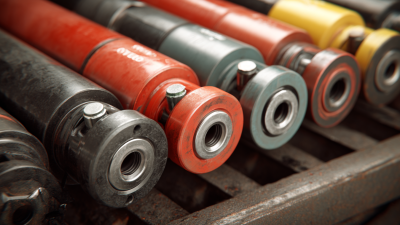
China Top Suppliers for Replacement Hydraulic Cylinders
Choosing China Top Suppliers for Replacement Hydraulic Cylinders requires more than comparing prices. A cylinder must match the machine’s mounting points, stroke length, bore, rod diameter, pressure rating, and operating environment. Small mismatches can lead to leaks, premature wear, or costly downtime. Fit comes first.
This guide explores how buyers can assess suppliers through product specifications, manufacturing capabilities, quality checks, customization options, and communication. Request drawings, material details, pressure-test records, and clear warranty terms before placing an order. For equipment exposed to dust, impact, or frequent cycling, discuss seals, coatings, and expected service conditions with the supplier. Details matter.
Replacement Hydraulic Cylinders may look similar in a catalog, yet internal design and production consistency can differ. Ask how the supplier checks dimensions, weld quality, and performance, and whether sample inspection is available. Compare lead times and packaging as carefully as quoted prices. A low quote is not always the best value. Supplier claims should be verified against documents, samples, and your own application requirements. Some specifications may still be unclear at the start; that is a reason to ask more questions, not to guess. With careful evaluation, buyers can narrow the field and choose a supplier suited to reliable operation and long-term maintenance.
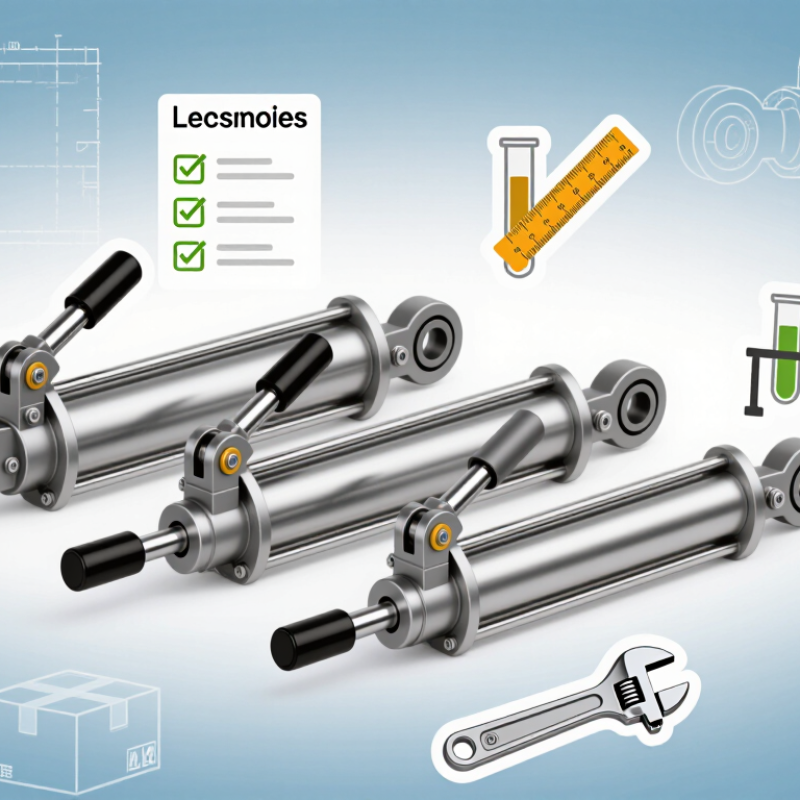
Overview of China’s Replacement Hydraulic Cylinder Supplier Market
China’s replacement hydraulic cylinder supplier market ranges from small machining workshops to large exporters with in-house testing. Suppliers often specialize by application, such as agricultural equipment, construction machinery, or industrial presses. That focus matters. A cylinder designed for a slow-moving lift may not suit a machine exposed to impact and frequent pressure changes.
Buyers commonly compare bore diameter, stroke, mounting points, operating pressure, and seal materials. A drawing with clear measurements helps prevent costly fitment errors. Ask whether the supplier checks rod straightness, weld quality, and leakage before shipment. Test records are useful, but they should identify the actual inspection method and acceptance criteria. Some suppliers can build to samples; others need detailed drawings and may charge for tooling. Lead times also vary with custom machining and component availability. Do not assume a lower quotation means equivalent materials or inspection. It may not. Request sample documentation and clarify how defects are handled. Even then, paperwork cannot replace a careful review of the cylinder’s dimensions and finish. Suppliers can make mistakes, and buyers sometimes provide incomplete specifications. That part deserves attention.
Types of Replacement Hydraulic Cylinders and Their Applications
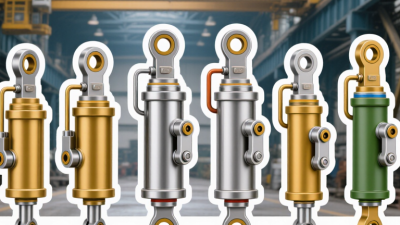
Replacement hydraulic cylinders should match both the machine’s work cycle and its mounting geometry. Single-acting cylinders use hydraulic pressure in one direction, with gravity or a spring providing return force. They suit lifting gates and simple jacks. Double-acting cylinders power extension and retraction, making them common in excavators, presses, and steering systems. More control, but more plumbing.
Telescopic cylinders use nested stages to create long extension from a short closed length. They are often used in dump trailers and truck bodies. Welded-body cylinders are compact and suited to mobile equipment; tie-rod designs are easier to service in many stationary industrial systems. These categories can overlap, so the name alone does not confirm fit. Measure stroke, bore, rod diameter, pin spacing, port position, and operating pressure before ordering. Small differences can cause binding or seal failure.
Grand View Research estimated the global hydraulic cylinder market at USD 15.66 billion in 2023 and forecast a 4.8% compound annual growth rate from 2024 to 2030. That market estimate signals broad demand, not a guarantee that a particular replacement will suit a machine. Check the equipment maker’s service specifications and inspect the old cylinder for scoring, bent rods, or worn mounts. The match is not always obvious. A careful measurement can prevent a costly mismatch.
How Chinese Suppliers Manufacture and Customize Hydraulic Cylinders
Chinese suppliers manufacture replacement hydraulic cylinders around the machine’s working conditions, not just its overall length. Grand View Research estimated the global hydraulic equipment market at about US$39.8 billion in 2023, with growth projected through 2030. That demand favors suppliers able to adapt bore size, stroke, mounting points, and port location. Fit matters.
Production typically begins with a drawing review and material selection. The barrel is honed to create a smooth internal surface, while the rod is machined and finished to resist wear and corrosion. Welded end caps and mounts need controlled alignment; small errors can cause seal wear or uneven loading. Suppliers may tailor seals, cushions, and ports for temperature, fluid, duty cycle, or limited installation space.
Good customization includes more than matching dimensions. Buyers should provide operating pressure, load, stroke, retracted length, and machine details. Suppliers can then confirm clearances, seal compatibility, and test requirements before production. Pressure testing matters. A test report and dimensional inspection record help verify the delivered unit. Still, a drawing alone may miss real-world side loads or contamination; field measurements and operating history are useful, though often overlooked.
Key Standards for Evaluating Supplier Quality and Reliability
When sourcing replacement hydraulic cylinders from China, judge suppliers by verifiable controls, not polished catalogs.
Ask how they identify steel grades, rod plating thickness, tube straightness, and seal materials. Request inspection records linked to a sample serial or batch number. Check the records. Compare drawings with the original cylinder’s mounting points, stroke, bore, and port locations. Small mismatches can stall installation.
A quality system such as ISO 9001 can indicate controlled processes, but certification alone does not prove cylinder performance. Request current certificates and check that their scope covers the actual production facility. For each model, review pressure-test results, leakage limits, and, where service demands it, fatigue-cycle data. Ask about the test setup and acceptance criteria. A pressure reading without those details tells little.
Reliability also shows in technical responses and corrective action. Share operating pressure, fluid type, temperature, and duty cycle, then compare the reply with the proposed seals, surface finish, and test plan. Ask how defects are contained and replacement parts are traced. A factory visit or independent pre-shipment inspection may reveal practical gaps, though inspections capture only one moment. I would not treat one failed sample as a complete verdict, but I would expect a documented investigation.
How to Select and Verify a Chinese Hydraulic Cylinder Supplier
China Top Suppliers for Replacement Hydraulic Cylinders
How to Select and Verify a Chinese Hydraulic Cylinder Supplier
Choosing a supplier starts with the machine, not a catalogue. Record bore, rod diameter, stroke, mounting dimensions, operating pressure, fluid, and temperature. A cylinder that looks identical may still fail because its seals or ports differ. Ask for a dimensioned drawing and a written tolerance list. Check whether the proposed design follows the relevant ISO 6020 or ISO 6022 dimensions, where applicable. Small details matter.
MarketsandMarkets estimated the global hydraulic-cylinder market at about US$14.3 billion in 2023 and projected growth through 2028. This signals broad demand, not supplier quality. Verify capability directly: review production records, material traceability, and pressure-test logs tied to the specific cylinder. Request a sample, then measure its critical dimensions and check for leakage under a defined test procedure. An independent inspection can help confirm results before shipment. Keep the acceptance criteria in writing. Ask how defects are handled, too. I would not rely on polished factory photos; they show little about process control. One awkward point: even a strong audit cannot guarantee every future batch, so retain inspection records and monitor repeat orders.
China Top Suppliers for Replacement Hydraulic Cylinders: How to Select and Verify a Supplier
Suggested buyer-defined evaluation weights—not market statistics. Verify pressure-test records, material traceability, dimensional inspection results, valid ISO 9001 certification, alignment with ISO 4413 safety principles, and warranty and spare-parts terms before placing an order.