International Fluid Power Inc.
International Fluid Power - Innovative Partners For Global Sourcing Of Fluid Power Products. Your Complete Hydraulic Source in SE Minnesota.

China Best Diesel Hydraulic Power Pack Manufacturer?
Choosing the China best Diesel Hydraulic Power Pack manufacturer requires more than comparing prices, catalogues, or polished factory photographs. A reliable decision begins with field experience, verified engineering data, and clear after-sales support.
A Diesel Hydraulic Power Pack must deliver stable hydraulic flow under demanding conditions. Its diesel engine, pump, reservoir, valves, cooler, and control system must work as one unit. Small details matter. For example, an undersized cooler may cause overheating during continuous operation. Poor hose routing can create vibration, leakage, and difficult maintenance. The best manufacturers explain these risks before signing a contract.
Fluid-power author Anthony Esposito describes fluid power as “the technology that deals with the generation, control, and transmission of power using pressurized fluids.” His statement highlights the central issue: power generation alone is not enough. Control, transmission, and safety determine practical performance.
This guide examines Chinese manufacturers through measurable criteria. These include engine brand, pump efficiency, pressure stability, fuel consumption, noise control, testing procedures, customization ability, and spare-parts availability. Factory audits, load testing, and customer references can reveal more than marketing claims. Ask for test records.
No supplier is perfect. Some manufacturers offer excellent customization but limited international service. Others provide strong documentation yet charge more for engineering changes. That trade-off deserves careful thought. A suitable Diesel Hydraulic Power Pack should match the machine’s duty cycle, environment, maintenance skills, and operating budget. The lowest quotation may become expensive after repeated downtime. Reliable selection is not about finding a flawless company. It is about finding a transparent partner with proven technical discipline.
What Is a Diesel Hydraulic Power Pack?
China Best Diesel Hydraulic Power Pack Manufacturer?
What Is a Diesel Hydraulic Power Pack?
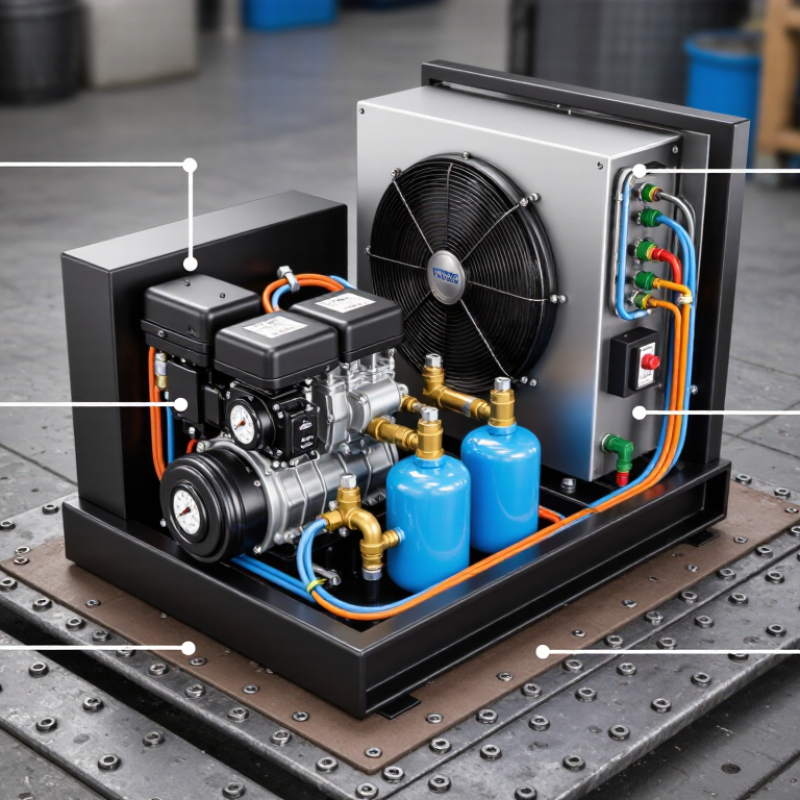
A diesel hydraulic power pack is a self-contained unit that creates hydraulic power without relying on grid electricity. It combines a diesel engine, hydraulic pump, oil reservoir, valves, filters, and control components. The engine turns the pump, while pressurized oil moves cylinders or hydraulic motors. This design supports equipment used in construction, agriculture, lifting, and remote industrial work.
A typical unit may deliver steady power where electrical access is limited. Its steel frame protects the system during transport, while a cooler helps control oil temperature. Experienced engineers match engine output with flow rate, working pressure, duty cycle, and altitude. A common mistake is choosing a larger engine without checking pump efficiency. More power can mean higher fuel use, heat, and maintenance costs. Sizing is not always perfect on the first attempt.
Tips: Check oil cleanliness, hose condition, and filter pressure regularly. Allow the engine to warm before heavy loading. Keep the reservoir sealed and use the specified hydraulic oil. Record pressure readings during inspections. Small changes can reveal larger faults. Operators should also confirm emergency controls and protective guards before operation. Reliable manufacturers provide test data, service guidance, and clear component specifications. Independent inspection is still worthwhile, especially for mobile units facing dust, vibration, and long working hours.
China Best Diesel Hydraulic Power Pack Manufacturer? - What Is a Diesel Hydraulic Power Pack?
| Data Dimension | Typical Information | Technical Meaning | Selection Considerations |
|---|---|---|---|
| Definition | Engine-driven hydraulic power unit | A diesel engine drives a hydraulic pump to convert fuel energy into pressurized hydraulic flow. | Confirm that the unit can provide the required pressure, flow, duty cycle, and control functions. |
| Primary Application | Mobile and remote hydraulic equipment | Suitable for equipment that operates away from an electrical grid or requires independent power. | Common uses include construction equipment, agricultural machinery, emergency systems, lifting equipment, and industrial service units. |
| Diesel Engine Output | Approximately 5–100 kW for many compact and medium-duty systems | The engine supplies mechanical power to the hydraulic pump. | Select adequate engine power with allowance for pump efficiency, peak loads, altitude, temperature, and continuous operation. |
| Hydraulic Pressure | Common working range: 100–250 bar | Pressure determines the force or torque available from hydraulic actuators. | The maximum rated pressure must exceed the application’s normal working pressure without exceeding the rating of any connected component. |
| Hydraulic Flow Rate | Approximately 10–200 L/min, depending on system size | Flow rate primarily affects actuator speed and the time required to complete a hydraulic cycle. | Match the pump displacement and engine speed to the required actuator speed and available engine power. |
| Hydraulic Pump Types | Gear, vane, piston, or combined pump designs | Pump construction affects pressure capability, efficiency, noise, cost, and service life. | Gear pumps are generally simple and economical; piston pumps are commonly selected for higher pressure and efficiency requirements. |
| Reservoir Capacity | Often sized at about 1–3 times the pump flow per minute | The reservoir stores hydraulic fluid and supports cooling, deaeration, and contaminant settling. | Final sizing depends on duty cycle, heat generation, available space, fluid volume, and manufacturer recommendations. |
| Control Valves | Directional, pressure-control, flow-control, and relief valves | Valves regulate actuator direction, system pressure, flow, and overload protection. | Choose manual, hydraulic, pneumatic, or electrically actuated controls according to the operating environment. |
| Filtration | Suction strainers and return-line or pressure-line filters | Filtration limits particulate contamination that can damage pumps, valves, and actuators. | Filter ratings should suit the hydraulic components, fluid type, contamination level, and required cleanliness code. |
| Cooling Method | Air-cooled or liquid-cooled engine; air or oil hydraulic cooling | Cooling removes heat generated by the diesel engine and hydraulic system. | Consider ambient temperature, operating duration, ventilation, noise limits, and installation space. |
| Operating Advantages | High mobility, independent operation, and strong power density | The system can deliver hydraulic power where electrical infrastructure is unavailable or unsuitable. | Evaluate fuel consumption, noise, emissions, vibration, transport requirements, and maintenance access. |
| Manufacturer Evaluation Criteria | System engineering, component quality, testing, customization, and after-sales support | A capable manufacturer should match the power pack to the complete hydraulic circuit rather than supply an isolated engine-pump assembly. | Request verified pressure and flow data, safety documentation, dimensional drawings, test records, spare-parts support, and clear maintenance instructions. |
Note: The stated ranges are typical engineering reference values. Actual specifications depend on the engine, pump, hydraulic circuit, operating conditions, and applicable safety requirements.
Related Posts
-
What Is a Diesel Hydraulic Power Pack?
-
Top Tips for Choosing a Diesel Hydraulic Power Pack?
-
How to Choose the Right Hydraulic Cylinder Parts for Your Needs?
-

Solutions for Optimizing Performance with Stainless Steel Hydraulic Cylinders
-
Ultimate Guide to Choosing the Best Telescopic Cylinder for Your Needs
-
How to Choose the Best Portable Hydraulic Power Pack for Your Needs?