China Top 10 Stainless Steel Hydraulic Cylinder Suppliers
Choosing a Stainless Steel Hydraulic Cylinder supplier requires more than comparing prices. Buyers must examine material traceability, pressure ratings, seal compatibility, weld quality, and documented testing. In washdown plants, coastal equipment, and food-processing lines, corrosion resistance can protect uptime. It cannot compensate for poor design.
The broader market offers useful context. MarketsandMarkets’ Hydraulic Cylinder Market report estimated the global market at USD 14.1 billion in 2023 and projected USD 18.3 billion by 2028. That figure covers hydraulic cylinders generally, not stainless-steel models alone. Public data rarely isolates this narrower category, so supplier claims deserve careful checking. A polished brochure is not a test report.
John Watton, author of Fundamentals of Fluid Power Control, provides a relevant engineering perspective. A practical summary of his work is: “Cylinder performance depends on matching the design to the system’s operating conditions.” This is a paraphrase, not a verbatim quotation. It points buyers toward real questions: What pressure cycles will the cylinder face? Which stainless grade is specified? Are seals suitable for the fluid and temperature? Small details matter. This guide compares ten suppliers through those practical criteria, while recognizing that rankings cannot replace application-specific engineering review. Some specifications may remain unclear until buyers request drawings, inspection records, and test data.
What Stainless Steel Hydraulic Cylinders Are and How They Work
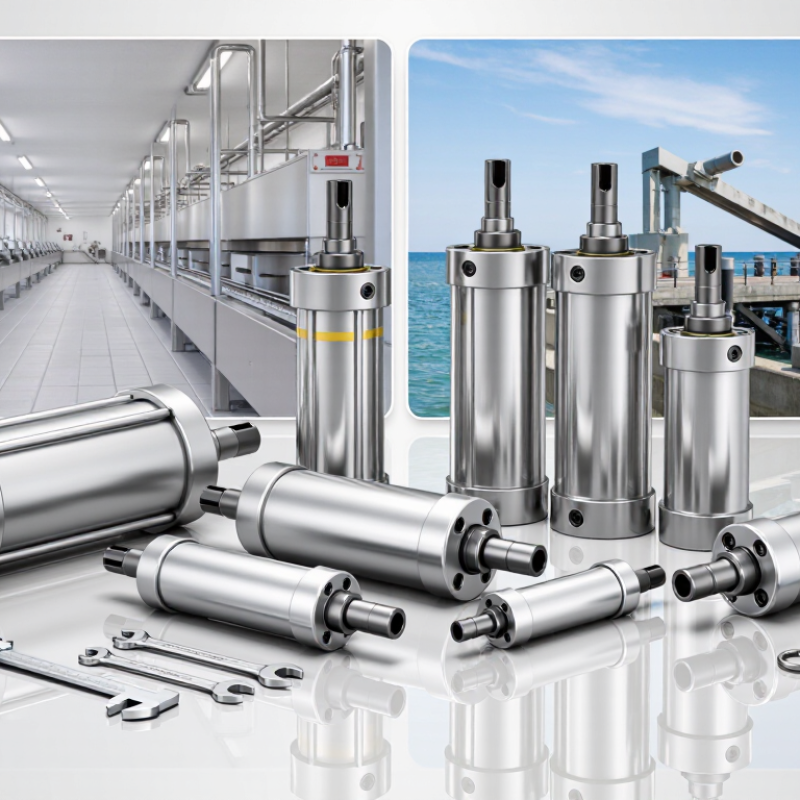
A stainless steel hydraulic cylinder converts fluid pressure into straight-line force. Its main parts are a barrel, piston, rod, seals, and end caps. When pressurized oil enters one chamber, it pushes the piston through the barrel. The attached rod extends or retracts as fluid enters the opposite side. Simple, but powerful. A directional valve controls the flow, while hoses connect the cylinder to a pump and reservoir. The cylinder does not create pressure; it converts pressure into controlled movement.
Stainless steel may be chosen for equipment exposed to washdown water, humid air, or salt spray. Its corrosion resistance depends on the alloy, surface finish, and operating conditions; stainless steel is not rust-proof. In food-processing or marine settings, fluid compatibility and cleaning practices matter too. Under load, correct alignment helps reduce uneven wear on the rod and seals. During inspection, look for oil around the rod, surface pitting, scoring, and loose mounts. Small leaks matter. Seal material, pressure, temperature, and fluid type should be specified together. I would not assume a stainless cylinder needs little maintenance; a damaged seal can still affect motion and contaminate nearby surfaces.
Key Criteria for Evaluating Chinese Suppliers
A supplier’s product sheet is only a starting point. Ask how each cylinder is tested, and request a sample inspection record. Look for clear details on bore diameter, rod finish, seal material, operating pressure, and stroke length. A polished brochure cannot replace measurable tolerances. Small details matter.
Check whether the supplier can explain material traceability and how it controls welding, machining, and assembly. Ask to see relevant process records, not just a general quality certificate. For a practical check, compare the drawing with the delivered cylinder: measure the rod, inspect weld edges, and look for consistent surface finishing. Also confirm how the supplier handles custom dimensions, production changes, and replacement seals. Response time matters, but technical answers matter more. A fast reply that avoids specifics is a warning sign. Still, one factory visit or sample cannot reveal every production weakness; I would treat them as useful evidence, not a guarantee. Before placing a larger order, agree on inspection points, packaging requirements, and acceptance criteria in writing.
Profiles of China’s Top 10 Stainless Steel Hydraulic Cylinder Suppliers
China’s stainless steel hydraulic cylinder suppliers differ in engineering focus, production scale, and testing capability. These profiles describe common strengths among ten leading candidates, not a verified ranking. Some manufacturers specialize in custom, low-volume cylinders, where drawings, port positions, and stroke lengths can be adjusted. Others focus on repeat orders and standardized dimensions. A few target wet or corrosive environments, using stainless steel for exposed tubes, rods, or fittings. Confirm which components are actually stainless; the label alone tells little.
Other supplier profiles may emphasize in-house machining, welded assemblies, compact cylinders, or application-specific sealing. Look closely at the details. Ask for material certificates, surface-finish data, pressure-test records, and seal compatibility for the intended fluid and temperature. A practical supplier should explain how it controls rod straightness and leakage, not just quote a delivery date.
That matters. Request a sample drawing and inspect the threads, welds, and port locations. Still, paperwork can look better than production; verify that sample testing reflects the ordered specification. Cost is useful, but only beside service life, traceability, and realistic lead times.
Comparing Supplier Products, Certifications, and Capabilities
When comparing China’s stainless steel hydraulic cylinder suppliers, look beyond catalog dimensions. A cylinder rated for a stated pressure may still differ in rod finish, seal material, corrosion resistance, and service life. Ask for drawings showing bore, stroke, mounting points, and port locations. Details matter. For wet or washdown environments, request the stainless steel grade and surface-finish specifications, not just the word “stainless.”
Certifications are useful only when their scope matches the product and facility being assessed. Review current documents, inspection records, and pressure-test reports, then confirm how each batch is traced. Ask suppliers about machining tolerances, welding procedures, sealing options, and support for custom designs. A clear answer should connect a capability to evidence, such as a sample inspection report or test record. Lead time also deserves scrutiny: confirm whether quoted timing includes materials, testing, and packaging. A comparison can still miss real operating conditions; I would treat a neat specification table as a starting point, not proof of suitability. Shortlisted suppliers should explain how their cylinder design handles the actual load, fluid, temperature, and maintenance schedule.
How to Choose the Right Supplier for Your Application
Choosing among China’s stainless steel hydraulic cylinder suppliers starts with the working conditions, not the catalogue.
Record operating pressure, stroke, mounting points, fluid type, temperature, and washdown frequency. For coastal or food-processing environments, ask which stainless grade is used for the barrel, rod, and fittings; “stainless steel” alone is not a specification. Request material certificates, weld details, seal compatibility data, and documented pressure-test results.
Small details matter.
Compare suppliers against your actual duty cycle. A cylinder that passes a static pressure test may still wear quickly under frequent cycling, side loads, or abrasive contamination. Ask for fatigue-test conditions and clarify whether they match your application. Grand View Research estimated the global hydraulic cylinder market at USD 14.47 billion in 2023, with projected growth through 2030. This market context signals broad demand, but it does not verify any individual factory’s quality. Verify production capacity, inspection records, spare-seal availability, and realistic lead times. A polished sample can hide inconsistent batch control. I would also check dimensional drawings carefully; this step is easy to rush, and mistakes can surface only after installation.