How to Choose Hydraulic Fittings in 2026?
Choosing Hydraulic Fittings in 2026 requires more than matching thread sizes. A fitting may look correct on a workbench, yet fail under vibration, heat, pressure, or contamination. The right decision protects people, equipment, and production time.
Hydraulic educator Brendan Casey has warned, “Hydraulic systems are not self-cleaning.” That reminder matters when selecting fittings. Small particles can damage seals, restrict flow, and create sudden leakage. A reliable selection process begins with operating pressure, temperature, fluid type, flow rate, and installation space. Then, verify thread standards such as SAE, JIC, BSP, or metric types. Never judge compatibility by appearance alone.
The material also matters. Zinc-plated steel may suit many industrial systems. Stainless steel can perform better in corrosive or washdown environments. Sealing surfaces deserve equal attention. O-rings, bonded seals, and tapered threads behave differently under pressure. Poor alignment can stress a fitting before the machine even starts.
Installation is where good choices sometimes become bad results. Over-tightening can damage threads. Under-tightening can cause leaks. Torque specifications, tube preparation, and cleanliness should be recorded, not guessed. I have seen fitting failures blamed on product quality when the real problem was unsupported tubing or repeated side loading.
This guide explains how to compare Hydraulic Fittings in 2026, including materials, standards, sealing methods, pressure ratings, sourcing, and maintenance. Technology changes, but careful verification remains essential. Some applications still require an engineer’s review. That is not weakness. It is responsible practice.
Define the Hydraulic System’s Pressure, Flow, and Connection Requirements
Choosing hydraulic fittings in 2026 starts with defining the system, not browsing a catalog. Record the maximum working pressure, normal pressure, and possible pressure spikes. Temperature changes can reduce a fitting’s pressure capability. Check the fluid temperature at startup, during operation, and during cleaning. Do not guess. Measure it.
Flow requirements matter just as much. Calculate the expected flow rate for each line, including short-term peaks. A small fitting may create unnecessary pressure loss and heat. Excessive flow velocity can also increase noise, vibration, and seal wear. In field work, I compare calculated values with gauge readings. My early selections relied too heavily on nominal pipe size. That was a costly assumption.
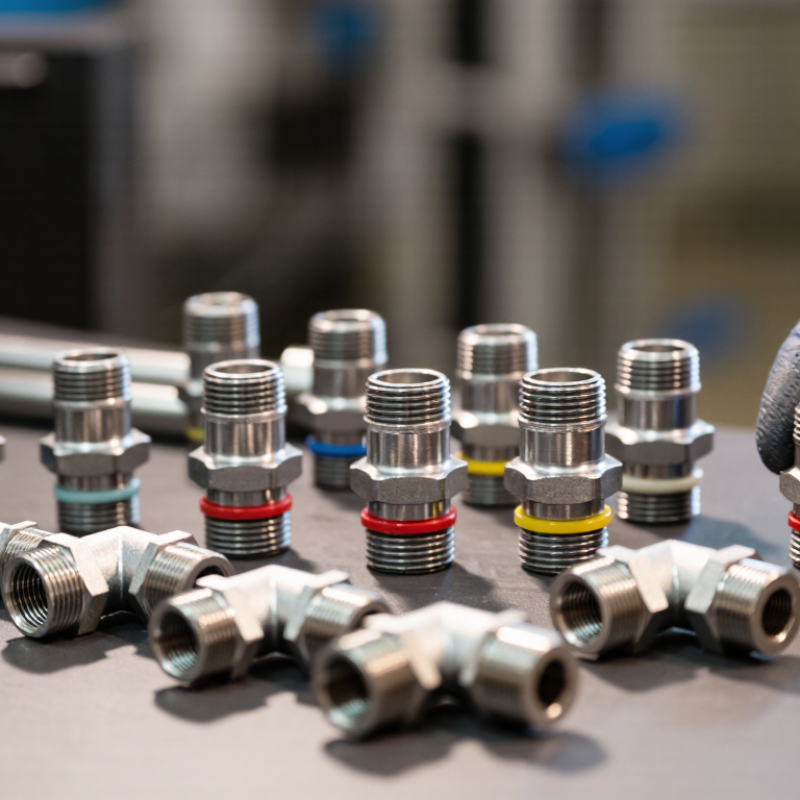
Connection details must be equally precise. Identify the port type, thread form, sealing method, tube outside diameter, and required orientation. Similar-looking threads may not connect safely. Confirm whether the joint uses an O-ring, bonded seal, tapered thread, or mechanical face seal. Match the fitting material to the fluid and surrounding environment. Salt, moisture, and chemical exposure can change the decision. Leave enough room for assembly tools and bend radius. A technically correct fitting can still fail when installation access is poor. Record every measurement before ordering, then verify the assembly under controlled pressure.
How to Choose Hydraulic Fittings in 2026?
Define the Hydraulic System’s Pressure, Flow, and Connection Requirements
1. Define Pressure
Select a fitting whose rated working pressure exceeds the system’s maximum operating pressure, including pressure spikes and temperature effects.
2. Define Flow
The chart shows calculated flow capacity at 3 m/s and 5 m/s using Q = v × A. Higher flow velocity can increase pressure loss, heat generation, and noise.
3. Define Connection
Confirm tube or hose size, thread standard, sealing method, orientation, material compatibility, and whether the connection must meet the applicable ISO or SAE requirement.
Flow values are engineering calculations based on the stated clear-bore diameters and are intended for preliminary sizing. Final fitting selection must use the actual fitting bore, pressure rating, temperature range, and applicable system standard.
Match Fitting Materials to Fluid Type, Temperature, and Operating Conditions
How to Choose Hydraulic Fittings in 2026?
Material selection starts with the fluid, not the catalog photo.
Mineral oil commonly suits carbon steel fittings with protective plating. Water-glycol fluids may demand stainless steel and carefully verified seals. Phosphate-ester fluids can attack unsuitable coatings and elastomers. Check compatibility charts and safety data sheets before installation.
ISO 11158 classifies common hydraulic fluids, but it does not replace supplier compatibility testing.
Temperature changes the decision quickly.
A fitting rated for 100°C may weaken sooner near exhaust heat, pressure spikes, or continuous vibration. The U.S. Department of Energy reports that poorly optimized hydraulic systems can operate at only
20–30% overall efficiency.
Lost energy becomes heat. Hot oil reduces viscosity and may increase leakage around seals. Cold oil creates the opposite problem. It thickens sharply during startup.
Short sentences matter here. Test both extremes.
Pressure, corrosion, and cleanliness also shape the choice.
ISO 4406 cleanliness codes show why a small particle can damage a valve and contaminate a fitting interface. Stainless steel helps in humid or corrosive areas, yet it is not automatically the best answer. I have seen expensive stainless assemblies paired with incompatible seals. The result was still leakage. That mistake is easy to repeat.
Confirm working pressure, temperature range, fluid chemistry, thread standard, and required cleanliness level together.
A neat material chart is never enough.
Select the Correct Fitting Style, Size, Thread, and Connection Standard
How to Choose Hydraulic Fittings in 2026?
Select the Correct Fitting Style, Size, Thread, and Connection Standard
When selecting hydraulic fittings, start with the connection style, not appearance. Tube fittings, O-ring face seals, flared fittings, and hydraulic flanges serve different pressure and vibration conditions. Start with the fitting style. A compact machine may need an O-ring face seal, while a rigid high-flow line may require a flange connection.
Confirm the size using the tube outside diameter, hose inside diameter, or port specification. Never estimate from a photograph. Measure the tube with calipers, then compare it with the fitting data sheet. A fitting that looks close can still restrict flow or fail under pressure. Check rated working pressure, temperature, fluid compatibility, and available installation space. Leave room for wrench access.
Thread selection requires equal care. Match thread form, pitch, gender, and sealing method. Common systems include metric threads, NPT, BSPP, and BSPT, but they are not interchangeable. NPT relies on thread sealing, while BSPP commonly needs a bonded washer or O-ring. Check the applicable standard, such as ISO, ASME, or SAE, and verify the manufacturer’s dimensions. A thread gauge is useful here. So is patience.
In field inspections, many leaks came from mixing standards rather than poor tightening. I once trusted a visual match and missed a small pitch difference. That mistake changed my process: measure, identify, and document every connection before ordering replacements. Avoid excessive sealant, protect sealing surfaces, and pressure-test the completed assembly under controlled conditions.
Verify Quality, Certifications, Maintenance Needs, and Total Operating Cost
How to Choose Hydraulic Fittings in 2026?
When I inspect hydraulic systems, I begin with quality evidence, not polished packaging. A fitting may look perfect and still fail under vibration. I check thread accuracy, surface finish, sealing surfaces, and material grade. I also compare pressure ratings with real operating pressure, including temporary spikes. Small details matter. In 2026, traceable batch records and digital inspection reports provide useful proof. They are not a substitute for engineering judgment.
Certifications should match the fitting’s application and region. I look for documented compliance with relevant standards, such as ISO 8434 or SAE J514, when applicable. Test reports should identify dimensions, materials, pressure limits, and inspection methods. Vague certificates create doubt. I once trusted a supplier’s general certificate and overlooked the exact fitting series. That mistake could have caused costly rework.
Maintenance needs deserve equal attention. Choose fittings that allow visual inspection, controlled replacement, and easy access for torque checks. Sealing systems should resist the fluid, temperature, and contamination found on site. Keep spare fittings, protective caps, and torque records nearby. A low purchase price can become expensive after leaks, downtime, cleanup, and emergency labor. My own cost estimates have sometimes missed disposal and troubleshooting time. A realistic total operating cost includes installation, inspections, replacement frequency, energy loss, and failure consequences. Cheap is not always economical.