International Fluid Power Inc.
International Fluid Power - Innovative Partners For Global Sourcing Of Fluid Power Products. Your Complete Hydraulic Source in SE Minnesota.

Top 10 Hydraulic Hand Pump Manufacturers for Global Buyers
Choosing a Hydraulic Hand Pump is not just a matter of comparing pressure ratings. Buyers also need to consider the equipment it will operate, the working environment, and the support available after purchase. A pump used for occasional maintenance may face very different demands from one used repeatedly on a production floor.
Look closely at practical details. Check the rated pressure, oil capacity, connection type, handle design, and compatibility with the cylinder or tool. A clear pressure gauge can make readings easier to monitor. A stable base and smooth handle action matter when space is tight or repeated strokes are required. Small details matter.
For international buyers, communication and logistics deserve equal attention. Ask manufacturers about available technical documentation, customization options, spare parts, lead times, and warranty terms. Confirm specifications in writing, especially when connecting a new pump to existing equipment. A polished catalog can still leave important questions unanswered.
This guide introduces ten Hydraulic Hand Pump manufacturers for global buyers to evaluate. It is intended as a starting point, not a substitute for checking current product data and supplier credentials. Compare each company against your application, service needs, and purchasing requirements. No shortlist can fit every workshop. A supplier that suits one buyer may not suit another, and that is worth remembering.
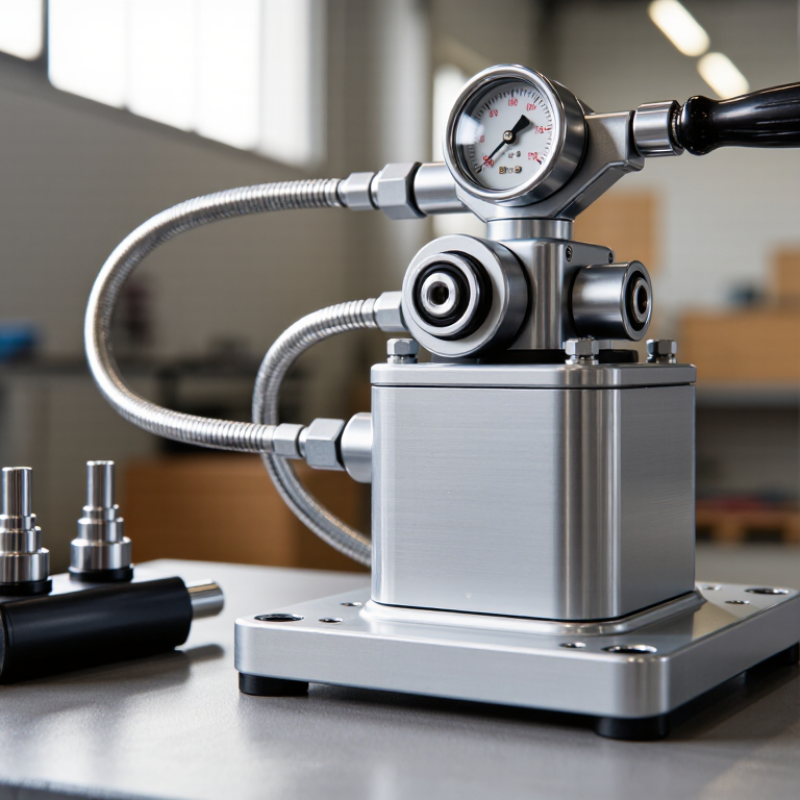
Hydraulic Hand Pump Basics: Pressure, Flow, and Displacement
A hydraulic hand pump converts repeated handle strokes into fluid flow. Its three key specifications are pressure, flow, and displacement. They are connected, but they are not interchangeable. Pressure is the force available per unit area; the load and circuit resistance determine how much pressure the system develops. A pump’s maximum pressure is a limit, not a promise that every application will reach it.
Flow describes how quickly fluid moves. Displacement is the fluid volume delivered by each stroke, often listed in cubic centimeters per stroke. Multiply displacement by stroke rate to estimate flow, though actual output can fall with leakage, fluid viscosity, or incomplete handle movement. Small details matter. A longer handle may reduce operator effort, but it does not automatically increase the pump’s rated pressure.
For a cylinder, pressure and piston area help estimate lifting force, while flow and piston area help estimate extension speed. Check the pump’s pressure rating, reservoir capacity, valve arrangement, and compatible fluid before choosing a unit. Compare those figures with the cylinder and hose requirements, not just the headline pressure. Calculations can look tidy on paper; seal friction, hose expansion, and operator pace make real performance less predictable. I would leave some margin rather than assume every stroke delivers the catalog displacement.
Top 10 Hydraulic Hand Pump Manufacturers for Global Buyers - Hydraulic Hand Pump Basics: Pressure, Flow, and Displacement
| No. | Buyer Evaluation Dimension | What to Check with a Manufacturer | Hydraulic Hand Pump Basics |
|---|---|---|---|
| 1 | Maximum working pressure | Confirm the rated working pressure, pressure-relief setting, and whether the rating applies to the complete pump assembly. | Pressure is force per unit area. In a hydraulic system, pressure acting on a cylinder piston produces force: Force = Pressure × Piston Area. Do not exceed the lowest pressure rating among connected components. |
| 2 | Displacement per stroke | Compare the stated oil displacement per handle cycle and check whether the figure is specified for the low-pressure stage, high-pressure stage, or both. | Displacement describes the volume of oil delivered per pump stroke. A larger displacement generally moves a load faster, but the handle effort and achievable pressure depend on the pump design and operating conditions. |
| 3 | Flow rate and operating speed | Ask how the flow rate is measured, at what pressure it is available, and whether a published value is theoretical or measured. | Approximate flow is calculated as Flow = Displacement per Stroke × Strokes per Unit Time. Actual flow can be lower because of internal leakage, fluid properties, and operating pressure. |
| 4 | Single- or double-acting operation | Verify the pump’s intended circuit and compatibility with the cylinder or tool, including the number of ports and the required valve arrangement. | A single-acting cylinder is typically pressurized in one direction and returns by an external load or spring. A double-acting cylinder requires controlled oil flow to both sides of its piston. |
| 5 | Valve and load-holding features | Check for the required release, check, and relief-valve functions, and confirm how the load is safely lowered or pressure is released. | Check valves help prevent reverse flow, while a relief valve limits pressure when correctly set. A load-holding application must use a circuit and components designed for that purpose. |
| 6 | Oil capacity and reservoir design | Match usable reservoir capacity to the cylinder’s oil requirement and confirm whether the pump can operate in the intended orientation. | The reservoir must contain enough usable oil to fill the connected actuator while maintaining the required operating level. Usable capacity may differ from the reservoir’s total volume. |
| 7 | Hydraulic fluid and temperature range | Confirm approved fluid types, recommended viscosity, seal compatibility, and the operating temperature range stated in the product documentation. | Fluid viscosity changes with temperature and affects flow, lubrication, and pump performance. Use fluid that meets the pump manufacturer’s specifications; incompatible fluid can damage seals and components. |
| 8 | Connections and system compatibility | Check port thread type and size, hose pressure rating, coupler compatibility, and whether adapters are required for the existing system. | Connections must be compatible and rated for the system’s pressure. Thread appearance alone is not enough to identify a fitting; verify the thread standard and sealing method. |
| 9 | Construction and intended environment | Review materials, corrosion protection, sealing, handle design, mounting options, and suitability for indoor, outdoor, or mobile use. | Environmental exposure, contamination, and mounting stability affect service life and safe operation. Product suitability should be confirmed against the actual working conditions. |
| 10 | Documentation, testing, and support | Request operating and maintenance instructions, dimensional drawings, applicable conformity documents, spare-parts information, and details of pressure testing. | Product ratings and compliance claims should be supported by documentation for the specific model and configuration. Follow the supplied instructions for installation, operation, inspection, and maintenance. |
Buyer note: This table presents technical comparison criteria rather than a ranked list of named manufacturers. Pressure, flow, displacement, and compatibility are model-specific; verify all figures against the manufacturer’s current documentation before purchase.
Related Posts
-
Exploring the Advantages of the Best Electric Hydraulic Power Unit
-
How to Choose a Compact Hydraulic Cylinder?
-

Innovative Strategies for Sourcing Hyd Cylinders Worldwide
-

What Is a Diesel Hydraulic Power Pack?
-

Top Benefits of Using Telescopic Cylinders for Manufacturing?
-

How to Successfully Repair a Hydraulic Piston?