International Fluid Power Inc.
International Fluid Power - Innovative Partners For Global Sourcing Of Fluid Power Products. Your Complete Hydraulic Source in SE Minnesota.

What Are the Best Hydraulic Fittings for Industrial Use?
Hydraulic systems rarely fail at a convenient moment. A small fitting can influence uptime, leakage risk, and maintenance costs across an entire production line. That matters. Choosing the best Hydraulic Fittings for industrial use is therefore not a catalog-only decision. Operating pressure, fluid type, temperature, vibration, and installation space all shape the right choice. Details matter.
A steel fitting may suit a high-pressure circuit, while stainless steel can be preferable where corrosion is a concern. Brass may fit lower-pressure applications, but its suitability must be checked against the fluid and equipment. Threads and sealing designs matter just as much. NPT, BSP, and metric connections are not interchangeable simply because they appear close in size. Never force a fit. Good selection starts with equipment documentation and verified pressure ratings. Then check temperature limits, seal materials, hose compatibility, and the manufacturer’s installation guidance. Torque is not guesswork. Overtightening can damage threads or seals; undertightening can invite leaks.
Real-world conditions complicate things. Vibration, pressure spikes, cramped access, and inconsistent maintenance can change performance after installation. No fitting solves every problem. Even a technically sound choice can disappoint if the system is assembled poorly. This guide compares common fitting types and materials, explains key selection criteria, and highlights practical checks that help reduce avoidable failures. Use it as a starting point, not a substitute for engineering review or manufacturer specifications.
How Hydraulic Fittings Function in Industrial Systems
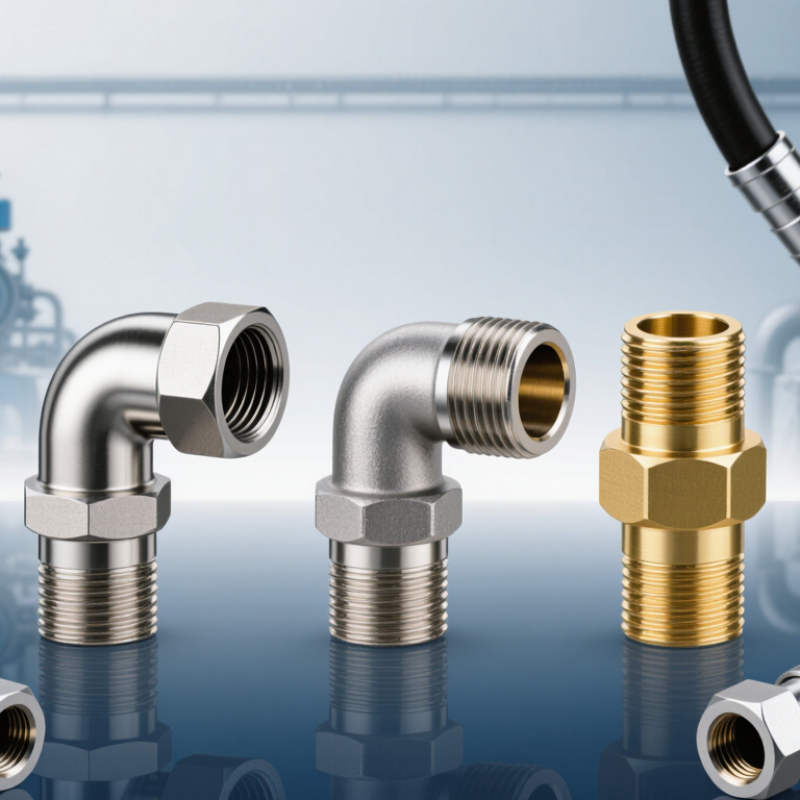
Hydraulic fittings join pumps, valves, cylinders, and hose lines into a sealed path for pressurized oil. They do more than hold parts together. A fitting’s bore, bend, and internal shape affect flow resistance, while its sealing surfaces prevent fluid escaping under pressure. In operation, oil transfers force through the circuit; the fitting must withstand working pressure, pressure spikes, vibration, and temperature changes. Small details matter.
The U.S. Department of Energy’s 2014 sourcebook, Improving Pumping System Performance, reports that pumping systems use nearly 20% of global electricity. That figure covers pumping systems broadly, not hydraulic fittings alone, but it shows why avoiding unnecessary pressure loss matters. A narrow passage or sharp turn can add resistance, making the pump work harder and warming the oil. Heat can shorten fluid life. Not ideal.
Selection depends on the port, hose, operating pressure, fluid, and environment. Common designs use tapered threads, metal-to-metal seats, or elastomeric O-rings; each seals differently and needs the correct assembly method. ISO 4413 provides safety requirements for hydraulic systems, including protection against leakage and pressure hazards. In practice, check the fitting’s pressure rating and match its sealing geometry to the mating component. A connection may look tight and still leak if its seal is damaged, contaminated, or misaligned. Even careful specifications need field verification: vibration and repeated pressure cycles can expose weaknesses that a static inspection misses.
What Are the Best Hydraulic Fittings for Industrial Use? - How Hydraulic Fittings Function in Industrial Systems
| Fitting Type | How It Seals and Functions | Common Industrial Uses | Key Advantages | Selection Considerations |
|---|---|---|---|---|
| JIC 37° flare | A flared tube end mates with a 37-degree fitting seat. The metal-to-metal seating surfaces create the seal when the connection is tightened. | Mobile equipment, machine tools, and general hydraulic lines where connections may need to be assembled or serviced. | Widely used, straightforward to inspect, and suitable for many reusable tube and hose connections. | Correct flare angle, tube preparation, and alignment are essential. Repeated assembly or vibration can damage sealing surfaces. |
| O-ring face seal (ORFS) | An O-ring is compressed between flat mating faces to form the seal; the threads provide clamping force rather than the primary seal. | High-pressure hydraulic circuits, industrial machinery, and systems subject to vibration or frequent pressure cycling. | The elastomer face seal can provide reliable leak control when the correct O-ring and mating surfaces are used. | Choose an O-ring material compatible with the fluid and operating temperature. Protect the sealing face from scratches and contamination. |
| NPT tapered pipe thread | Tapered threads tighten together to create a pressure-tight joint, typically with an appropriate thread sealant. | Manifolds, ports, and auxiliary connections in compatible hydraulic or fluid-handling installations. | Compact connection that is commonly available in a broad range of sizes. | Avoid over-tightening, which can damage ports or fittings. Confirm thread type and sealant compatibility; NPT is not interchangeable with straight-thread systems. |
| BSPP straight thread with bonded seal | Parallel threads provide the mechanical connection while a bonded washer or designated O-ring seals against a port face or shoulder. | Industrial equipment and hydraulic systems designed around parallel British Standard Pipe ports. | The seal is made at a defined face rather than by wedging the threads. | Verify the thread standard, pitch, and sealing arrangement. BSPP and NPT connections should not be treated as interchangeable. |
| Metric 24° cone (DIN-style) | A 24-degree cone on the fitting mates with a matching tube end or cutting ring to create a metal-to-metal seal. | Industrial machinery and equipment using metric tube connections, particularly in systems designed to the relevant metric standards. | Provides a compact tube connection with a defined sealing interface. | Match the cone, tube dimensions, thread, and assembly method. Incorrect tube preparation or mismatched components can cause leakage. |
| SAE J518 / ISO 6162 flange | A flange head is bolted to a mating port with an O-ring seated in a face groove; bolts supply the clamping force. | Large-bore lines, pumps, motors, and other installations where robust connections and easier access are useful. | Suitable for larger flow passages and can be practical where threaded connections are difficult to install or maintain. | Use the specified flange series, size, O-ring, and bolt-tightening procedure. Allow enough space for tools and inspection. |
| Quick-disconnect coupling | A valve-equipped coupling connects or separates hose sections while controlling fluid release; some designs permit connection under pressure, subject to their specifications. | Interchangeable tools, test equipment, and circuits that require frequent connection and disconnection. | Enables faster servicing and can reduce fluid loss when correctly selected and operated. | Check flow capacity, pressure rating, trapped pressure, contamination control, and whether the coupling is designed for connection under pressure. |
Selection note: No fitting type is best for every industrial system. Confirm the applicable connection standard, working pressure, temperature, fluid compatibility, tube or hose size, vibration conditions, and installation requirements. Pressure capability depends on the complete fitting assembly and its specifications.
Related Posts
-
How to Choose Hydraulic Fittings in 2026?
-

Leading Global Manufacturing Factory for Best Hydraulic Fittings
-

How to Choose the Right Hydraulic Power Pack for Your Needs?
-

Solutions for Optimizing Performance with Stainless Steel Hydraulic Cylinders
-
Best Hydraulic Cylinder Repair Services in China?
-
What Are the Key Benefits of Using Hydraulic Cylinder Tools in Modern Manufacturing